
Webinar or Talk
"Syria after Assad: Shifting Sands" with Joel Parker
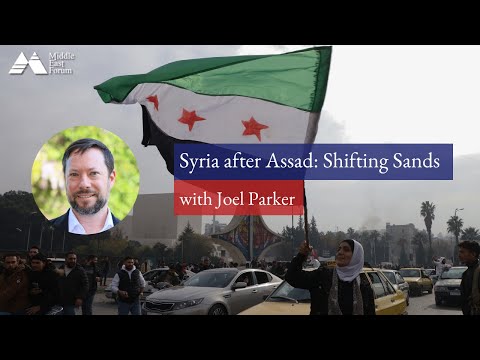 Watch on YouTube
Description
In southern Syria, the Druze community—split between pro- and anti-Damascus factions—has long navigated alliances amid local Sunni Arabs and shifting regime forces, all entangled in the remnants of Iran's "Axis of Resistance." Yet, Israel's evolving policies over the past few months, from its support for religious and ethnic minorities to tentative outreach toward Damascus's new government, have complicated efforts to dismantle Iranian influence via Hezbollah and lingering Assad loyalists. With the drug trade persisting as a survival lifeline amid economic woes, pushing for decentralization, Israel's initial strategies inadvertently bolstered former Assad regime elements with ties to Hezbollah. How has this intricate web of local actors and illicit economies shaped Syria's post-Assad landscape? What do Israel's contradictory approaches mean for curbing Iran's proxies, stabilizing the border, and resolving the region's unresolved tensions?
Dr. Joel D. Parker is a researcher at the Moshe Dayan Center for Middle East and North African Studies at Tel Aviv University. His work focuses on contemporary Syria, the Levant, radical politics, jihadi ideology and music, and youth movements in the 20th century. He is regularly cited across a number of print and broadcast publications and he is a regular commentator on Israeli, Syrian, Arab, and Levantine politics. He holds an M.A. in Middle East History from Tel Aviv University.
You can follow Joel Parker on X at: https://x.com/J_d_parker
Transcript Automatic captions
Source: Automatic captions from YouTube, retrieved October 18, 2026. Automatic captions are machine generated and may misspell names and terms; check the video before quoting.
0:11 All right. Hello. Good morning and welcome to the Middle East Forums weekly podcast series. My name is Anaf Kalam and I will be moderating today's discussion. Now in southern Syria, the Drews community, split between pro and anti- Damascus factions, has long navigated alliances amid local Sunni Arabs and shifting regime forces, all entangled in the remnants of Iran's axis of resistance. Yet, Israel's shifting and evolving policies over the past few months, from its support for religious and ethnic minorities to tentative outreach towards Damascus's new government, have complicated efforts to dismantle Iranian influence via Hezbollah and lingering Assad loyalists.
1:00 With the drug trade persisting as a survival lifeline amid economic woes, pushing for decentralization, Israel's initial strategies actually inadvertently bolstered former Assad regime elements with ties to Hezbollah. How has this intricate web of local actors and illicit economies shaped Syria's post Assad landscape? What does Israel's contradictory approaches mean for uh curbing Iran's proxies, stabilizing the border, and resolving the region's unresolved tensions?
1:33 Joining us to discuss all of this is Joel Parker from the Moshi Dian Center for Middle East and North Africa Studies at Tel Aviv University. Welcome, Joel. Thank you so much, Anaf. Basically, your question just uh gave my whole lecture away. uh you you're you're so detailed and so precise and so correct uh in all of these how you set it up. that that's literally what I wanted to talk about is how Israel's policy has been both and at the same time ad hoc and um has tried to in a sense um adjust to both changing circumstances and frankly a changing a change of heart a change of heart within let's say the the the mainstream consensus this I mean when we talk about Israel first of all we have to understand there are uh several different viewpoints there's you know always going to be the extreme
2:34 right there's going to be the center and there's going to be the left of center there's going to be you know the defense department you know the establishments kind of viewpoint and there's going to be you know people on the street and there's going to be academics like me and we're all kind of in different places but I will say you you're correct that initially when so let's just go back and rewind the clock a little bit and then I'll move up to the present. Back in December, um a major major change happened in Syria. Really a revolution. The revolution came to a sort of a head uh in 2011.
3:09 The Syrian people, many Syrian people rose up against the uh well rose up in in favor of reform initially but the Arab Spring momentum kind of became uh a self-fulfilling prophecy whereas people call started began calling for the end of the regime the regime of Bashar al-Assad which was inherited from his father Hafas al-Assad and essentially goes back to around 1970 um which even with even deeper roots in the bath party and that was a one it was essentially a one party dominated rule kind of a socialist uh system that was very state-led economy um and one family and essentially from most people's point of view one minority kind of began over time to control things uh so that minority as most people may have heard by now is the Aloe minority and they represented about somewhere between 12 to 14% of the population uh and were concentrated on the coastal area of Latakia
4:14 and that's where the Bashar Assad kind of base the the Assad family base came from and they were gradually um put into top positions in the army and the government and over time there was a sense among the Sunni uh Muslim and Arab majority uh the sense that this minority was kind of calling the shots. Now it wasn't totally true in the sense that there was no Sunnis. There were lots of Sunnis actually in the government. Bashar Hafaz al-Assad was very clever about putting you know the foreign minister as a Sunni and this guy as a Sunni. It was almost like uh def a de facto sectarian government where they they put Sunnis in this position and the Drews in this position and the Kurds in this position. So they tried to distribute positions to where everybody would be part of the the government without actually calling it a sectarian friendly government. So over time the government itself the the style itself became you know increasingly stale and brittle. was very similar to like an Eastern European style undercommunism
5:17 um for most of the 70s and 80s 90s even there were points in which we thought there would be ah you know an opening and uh in in fetak as they call it in Arabic so there was there were points when we thought maybe there was a breakthrough you know there were times in the '90s when kafas al- Assad was negotiating with Israel for a peace deal uh that was in the wake of the Oslo Accords um those were heady times when you Itamar Raenovich, my own PhD adviser, uh was at that time the ambassador to the United States from Israel and he was saying, you know, let's do let's let's give up the Golan if we have to like if it's if it's peace with Syria, that's one of the things they're asking for is they're asking for the Golan Heights, which I'll pause for a second and just explain, you know, for the general audience that uh the Israeli held Golan Heights today was captured in the 1967 war and then essentially recaptured in the 1973 3 war and in 1974 the armist disagreement that was hammered out by you know Nixon and Kissinger with the Assad regime and at
6:20 that time the Israeli government uh under Golden Mayer has held uh until well until recently but you know one of the one of the new things is that the the Syrian government at that time they they agreed on an armist line and there was a demilitarized zone. And it was, you know, UNI the UNIFIL UN was there and is still there actually. But the um the the demilitarized zone was kind of a buffer zone between like Syria proper and the Israeli held Golan Heights. And on both sides of the Golan, we call it actually the Syrian Golan and the Israeli Golan.
6:53 On both sides, you have Drews uh populations living there. The Drews population didn't actually flee from the Israeli held side as most people know, but there were many other uh groups like Sunni Arabs who actually did flee uh and became refugees inside Syria. So there was this kind of constant sense that Syria needed to get back the golden heights and in the '90s Israel had a moment brief moment where it was willing to actually give up the golden heights. uh but Hafazal Assad under pressure also interestingly this is a very interesting point we'll get back this is a fascinating point Hafaz Assad had a foreign minister Farukq al- Shara who actually is the uncle of the temp you know transitional president today Ahmed Alshara who was one of the most intensely anti- um giving up of the golden heights like he was telling Hafas al-Assad you in no way shape or form should you ever uh be willing to give Israel back the golden heights never or give give Israel the golden heights at all. You know, he was actually they're
7:55 trying he was like we have to get it back to Syria. And Kafaz al-Assad um in a recent biography by Khan Coughlin of of the of Bashar Assad noted that like in a conversation he had with Bashar Assad said that his father actually said that was one of the things he regretted was not actually um making an agreement with Israel. And in fact, Huff was the last said he would have probably given Israel the golden heights. Uh if it had been, you know, if he had could rewind the clock and and do it over, which is kind of funny because um today, so I'm kind of jumping around here, but but moving forward. So the the Syrian civil war 2011 starts in 2024 December. um Ahmed Alshara who was at that time known by the world as Abu Muhammad Albulani the head of HTS Hayat Al Sham essentially from most people's perspective a terrorist organization that had been fighting the Assad regime and to make a very long story short they had roots in al-Qaeda um but they had distanced themselves from al-Qaeda and
9:00 focused on the war against Bashar al-Assad so this guy Abu Muhammad Adjulani suddenly becomes the the man of the hour. He has this amazing 10-day conquest essentially, but it was almost a bloodless conquest because this the Syrian army just gave up. He would come to Aleppo, the army would flee. He came to uh Hama homes, there was there was some fighting there. There was some fighting. Don't let's not say it wasn't bloodless, but there was very little fighting relative to what you would expect. people, observers like myself with popcorn were watching and going, "Okay, this is going to take probably days, if not weeks. He's probably going to lose. He's going to maybe maybe hold on to a small area." No, it just boom boom boom boom. Suddenly Bashar al-Assad sorry Bashar Assad was fleeing to Russia and Ahmed Oshara as he as we all now know him uh was the was entering in Damascus with basically you know people were throwing rose petals at him and and and congratulating him for sealing the victory for the rebels. The rebel side
10:02 had won the war. But that's where things kind of got complicated because the Israeli side uh initially was just shocked. I think there was not much to say other than wow. Um I myself as someone who was always a bit more partial to the rebels was was was I was about elated. I was actually like in tears. I was watching people uh dancing in the streets and I was amazed. I couldn't believe it. Um, and I was talking to my Syrian friends and they were all just like, you know, also like just they couldn't believe it. It was just something so so incredible. I I I try to like pinch myself and remember that this moment happened.
10:46 The Israeli government was taken by surprise. And Israeli governments typically, no matter what who runs them, they don't like to be taken by surprise. And I don't mean just October 7th taken by surprise. I mean, just in general, like when something that dramatic happens to a neighboring country and you weren't aware of that it was going to happen, you weren't anticipating it, it it just kind of it's like it takes it pulls the rug out from underneath your comfortable chair. Um, and so the Israeli government initially started scrambling for some kind of policy. And so they're thinking like, okay, this HTS, al-Qaeda, you know, and he even had like at one point in his life uh ties with the guy who was the head of ISIS.
11:30 Um you know, um so what what do we say here? We say that the Israeli government said, "Okay, well fine, Bashar al-Assad is gone. We didn't like him that much, actually. Um but let's try and keep Russia around because Russia is like maybe the adult in the room." And um that was going to be tricky because um Russia was definitely not friendly to the Assad to the rebels. And in fact, there was a Washington Post report that came out a few weeks after a week after the the um success of Ahmed Al- Shara saying that the Ukrainian intelligence had been helping the HTS group develop drone technology which is something I think quite interesting. Um and that shows that there was probably some also western intelligence involved. We know now that Robert Ford, the former ambassador to Syria, had met with Ahmed Oshara a couple of times before
12:34 um you know this fantastic coup d'eta, you know, that happened. So there's probably a lot of stuff behind the scenes that we'll find out later what was happening. Um I saw an Iranian report that was maybe false, but it was saying that the Mossad was even helping. I don't know about that. But I think that there was some awareness among the intelligence agencies of what was going to happen. And I think that that um Ahmed Ashara passed through some vetting stages if you want to say that. I mean nobody got out a drone and just killed him. So, you know, we know if he was really that bad, like probably somebody would have done something and and you can see so subsequently there's been there was kind of a a quick shift. You know, the German the Germans were among the first country that kind of said like, "Hey, you know what? We got a whole bunch of Syrian refugees that we wouldn't mind if they went home uh sooner rather than later." and they were one of the first countries to come and
13:36 kind of shake Ahmed Ashara's hand and or or not shake his hand to be to be perfectly uh technically clear. Um but you know they they were they came and they were like okay you know what this guy maybe we can talk to him and in fact so what happened was Ahmed Oshara turned out to be the guy who could talk the talk way better than anyone thought way better than I thought. And I mean I had I was pretty optimistic, but I was surprised that he was saying all the right things. He was like hitting every note, you know? I mean, he was definitely like, you know, the singer you want in your band. Like he was the guy who was like doing it and and he was and everything he said, you know, we don't want sectarianism. We don't want any we want a new Syria. He keeps using this word new Syria. New Syria. And it's a buzz word that a lot of Syrians are buying into. a lot of western um countries are buying into and and um Donald Trump, you know, to fast forward until basically like uh I think it was May when Donald Trump came to Saudi
14:38 Arabia, was it May? I can't remember. um when he did his kind of whole Middle East trip and literally met with um Ahmed Al Shara in Riad uh you know at the kind of um how would you say arranged marriage uh set up by Muhammad bin Salman um and and they shook hands and in fact it was kind of like a a funny kind of thing like Donald Trump I kind of met him and I don't think he had much personal interaction but when he did meet him he was like, "Wow, this guy like he's he's like, you know, he's he's sharp. Like, he he looks good. He sounds good. He's he's like polite, and he's refreshing, and he's new, and he's like, you know, he seems to be fine with me, you know, like I don't know. He he didn't get fired, you know, he wasn't." So, Donald Trump, the opposite actually.
15:32 When Donald Trump likes somebody, he hires them. Uh, and that's the thing is, you know, Ahmed Ashara essentially got hired by Trump. I mean he Trump is like all right you know what we're dropping sanctions we're moving on Ahmed Oshara is the guy he's going to bring in like you know normalization with Israel he's going to come into the Abraham Accords and that was the kind of the idea and Israel back going back to Israel Israel is left in the dark actually by the way Trump's uh tour of the Middle East did not include Israel and that was something that Israeli press talked about quite a lot in fact there were people who noted very specific specifically that Netanyahu was left in the cold while Ahmed Alshara, this guy who used to be part of al-Qaeda was shaking hands with Trump and that was uh inside I think certain circles es especially maybe in the right uh wing of the spectrum people were almost like burning with rage over this over this fact but they couldn't deal they couldn't like really be angry about it because it's Trump and Trump is Israel's
16:35 best friend right now um and has since he was elect, you know, since the f his first presidency and, you know, now, you know, continues to be considered to be Israel's best ally. You know, America is Israel's best ally, but like the kind of Trump specifically is the best American ally in, you know, the American relationship. So, so I think that there was something kind of a shift that had to had to happen. It wasn't something that Israel wanted to do, but there was a kind of like a realignment. Um, it was kind of like, you know, almost like the a dog on a leash. Like, you know, the dog doesn't necessarily want to go this direction, but eventually if you pull it, it will okay go, okay, guess we're going this direction, so it'll start going that direction. And that was that was kind of how Israel was initially.
17:19 They were very skeptical of Ahmed Oshara. I will say there was some some warming up to him because of his language and his speech. But, uh, the idea was that okay, well, we'll let Ahmed Oshara stay in power, but we want a weak decentralized Syria. Not and I will say this very clear. I don't I don't think I didn't hear from anybody in Israel the idea that we should break up Syria except for maybe with the respect to the Kurds. There was kind of a brief moment when there was this idea of maybe Rojava, which is how the Kurds call northeastern Syria, maybe Roosevelt should be like its own country or at least have like a lot of autonomy.
17:59 But in terms of the other areas of it wasn't even really thought of that like, you know, the Alawise should have really their own country or that the Drews should have their own country. I mean, that was just not even like talked about. The idea was that maybe Syria should be like kind of decentralized with some, you know, semi-aututonomous zones. And interestingly, Ahmed Ashara was one of the main anti- you know, he put a lot he poured water on that on that idea a lot. He said like, listen, no, Syria is going to be centralized.
18:33 It's going to be and it always, you know, pretty much was like uh so Damascus is the center of of Syria. He said this is going to how it's going to be and that's that's the end of it. problem is like you can say that but if if you have people armed with weapons and they have groups militias that are very well organized you can say Syria is united but it's not really like in the in the sense of Max Vber's kind of state like you know having a legitimate monopoly of violence over every part of the the border no Ahmed didn't doesn't uh Ahmed doesn't have that and I think this last few days we've seen that uh very clearly Clearly, so maybe I'll I'll stop here and you can ask me if you want like to go in more into like what's happened in the last few days or you whatever question comes up. I just that's maybe my my general point is that I think there was a major evolution as to how Israel viewed Syria, going from hoping for it to be a decentralized state to realizing it was probably going to be a centralized state and following the Trump lead in the sense uh on this.
19:40 Uh well, thank you for that. I uh that was a fantastic breakdown both for a general audience and also for uh some of our uh uh more in then viewers in our audience. Uh but yeah, no I I was going to ask exactly about that about some of the events in the past few days particularly with the skirmishes between um Israel and its recent strikes on Damascus over the Drews question. Mhm. Uh, how might this affect the future of uh potential long-term deals with this new Syria and Israel? And how do you see this affecting any uh any chance, if there ever was one, of Syria joining the Abraham Accords?
20:30 Um, okay. So, first of all, the short answer is it's it's going to slow things down if but but I don't think yet that that it's off the rails. I think that and and yesterday there was a point in time in which I actually did think like okay, we've just we've just blown up the tracks. There's no more tracks. Like the train can't go anywhere. But now I think that it's just it's stuck. The train is stuck and and it will eventually keep going. But let's talk about specifics. that's very vague and you know jingoistic um specifically so what hap what's happening in southern Syria is a is a bit of a a mystery to a lot of observers because even people I know uh and I have contacts like journalists friends who are in Syria talking to locals moving around trying to get as accurate a picture as possible accur accurate of a picture as possible who who told me uh that they felt that Most of the Drews in southern Syria were leaning towards allowing government the
21:34 Syrian government to to kind of like extend sovereignty. I mean, it's Syria, you know, it's like it's not like it's not like a question. You can't say like, you know, well, I don't want Syria to be Syria, but they they were kind of like coming around to the idea that the Syrian central government was going to be in control of southern Syria. And that's just, you know, that's that's it's a state. So, you know, it's it's like they weren't like thinking they were going to have their own autonomous state or something. And, you know, these journalists and and even locals that I talked to like believed that that was However, there was at least one group uh a faction of Drews that uh was vehemently opposed to this idea. And this is a group led by this uh she or spiritual leader. I mean, it's not necessary, he's not like a military leader, but spiritual leader. name is every a lot of people know him she hikmat al- um al-hri so she al-hri is kind of the this guy who has longtime ties with with the Assad regime in fact
22:37 uh there are like lots of rumors that he had ties with uh and the IRGC and in fact and even this is something I I've heard from credible sources not like just you know random people but credible sources say that Uh he's got people in his entourage who are involved in the captagon drug trade which was the major one of the major pillars of the Assad regime towards the end because it had almost no money. So they were getting all their money from from drug running and producing literally pills that were being sold all over the Middle East and even in Europe. Um and so there's some question as to like what his kind of group is. And some people say that they were comprised of a mixture of criminals, former Assad regime people and some maybe not so bad people who just didn't want to be part of the new Syrian regime. Okay, so let's maybe give them the benefit of the doubt and they have have they have some
23:39 contacts with the Israeli Derus community, especially in the Golan Heights of the Israeli held heights, if you want to call it Israeli Golan Heights. Um and so basically this is the thing. um analysts were saying okay so you have this one rebel group everyone else is on board with the state and I think even people inside uh and this is so this is a theory I read today that um people inside uh Ahmed Shara's like inner circle advised him that a since you met with uh since you know we had representatives meet with an Israeli representative in Baku and Azarbaijan last week and there's this kind kind of like understanding that the state is going to extend its sovereignty into southern Syria. And there was this mis it was actually a misunderstanding from what I understand that that the the Syrian regime thought that the Israelis were giving them the green light to extend security forces into southern Syria. And the second problem was that
24:43 Ahmed Oshara was told by his advisers or understood that most of the Drews are actually pro-Syria. They're pro-state. So just send in some people and don't worry like there's going to be minimal fighting you know whatever minimal kind of resistance and the one pocket of resistance this sheh al-hri you know he's a criminal anyway so you should fight him and get him you know arrest him or whatever and and that'll be that um so there were several miscalculations and and I think also there was a grave miscalculation uh that I'll explain at least my perspective this is something that I've said it actually not many people noticed. Um the first wave of of forces that Ahmed Alshara sent to Suea which is the dominant the main uh Drew's majority town in southern Syria.
25:34 So Ahmed Alshara A so basically Ahmed Alshara sent this like group of jihadi fighters as the first wave to go into Suea. And these guys, my theory is that these guys are the most hardcore and they're also, frankly speaking, this sounds bad, but they're like willing to die. Like they're like the believers and they brought in their their da they brought in their like trucks with with Quranic verses and they um and they came in and they did kind of like they humiliated the Drews. They they the ones they captured, they were like there were images of them shaving their mustaches and they were trying to really like push them down and make them know that, you know, we're in charge. We're the Sunnis.
26:17 We're the the true religion. You guys are the heretics. Um and it was just awful. It was awful. I mean, people have exaggerated there wasn't it wasn't like a blood bath. They didn't kill everyone, but there was there was back and forth shooting. There was firing. them and and many of the this first wave of people actually a lot of them were killed. Um there was the Drews were very the the armed Drews were ready for them and they actually did kill a lot of the the first wave of people that came in. The second wave of people that came in were uh the kind of like official army people and they were much more organized, much less extreme. Uh and they were also probably a little bit less hope, you know, ready to die. And they in fact apologized. They showed videos of themselves apologizing to this to this uh local population saying, "Listen, like we're sorry. We didn't actually mean to do crazy stuff to you guys, but it was a little bit too late." It was like it just was a it was just a mess. And by this time all the Drews in Israel had already seen what was going
27:22 on. They knew what was about to happen and they were all their worst fears had been confirmed and they just freaked out. They like, you know, they cut a hole in the fence in Israel and came in uh to help fight their brothers and they don't care about this crazy uncle Shehikh Al-Hijri that he's, you know, bad guy. He's for them. He's he's their guy and they definitely sure sure don't want to see like some nutcase you know jihadi shaving off his mustache you know like that's like you know I don't know it's like a lot of you it' be like you know I don't know like I mean you know you might I don't want to use like a negative analogy but like you know maybe you have like a a criminal relative but you still don't want them to get beaten up by the KKK or by the neo-Nazis or something like so that's how they viewed it like like these guys are bad guys, but you know, even if my friends over here are not such good guys, like these guys are worse and I'm not going to let them kick, you know, kick the the butts of my, you know, family members. And so that's what I think drove uh some of the
28:25 policy that Israel uh and and steps that Israel took. But also, don't forget Israel has several truths, high-ranking officers, including generals. And there was even one general um Rasan Ali who who who's who's the head of Kat, the organization responsible for bringing in like aid to Gaza. He threatened to quit. He said, "I'm I'm quitting. If if Israeli tanks are not going into SUA, I'm done." I mean, it was, you know, it was like an idol threat, but it was a threat like and he went public with it. I mean, you're a general in an army, you don't go public with stuff like that unless you're like really upset.
29:00 And I think that was the message. And there was there was actually a member of of the Knesset the parliament here that went over the border. I mean ostensibly he was trying to call back like Drew's fighters or Drews from the Israeli go on heights. He was telling him kind of like guys like okay I understand that you're upset but let's not do this. Like we can't just cut through the fence and start fighting on the other side. Like this is you know there's two countries here. We have to respect that. Um but he was like actually also like going to give them moral support and saying but you know what like if you can do something in the next few hours like go for it. Uh it was it was just a mess.
29:36 And then and Israel I think so this is the thing that a lot of people don't know. Um the Israeli army was seeing massive wave of fighters from the regime coming towards the border with Israel. And I saw Etana which is like a military analyst site. They were saying that there's about 12,000 regime fighters heading to, you know, from east to west towards Israel. 12,000 fighters. And I think that was one of the reasons why Israel went from u a few kind of missile like like symbolic you know drops of bombs here and there to like suddenly they started like bombing convoys and they sent this this huge bomb that blew up the entire Ministry of Defense building which was I I assume they told I mean they did hit it twice before they blew it up but like I assume they told everybody to leave it because I didn't hear from the Syrian side any casualties, which makes me think like Israel must have told them like get out of there. Still, I mean,
30:39 it's it's it's a very symbolic and hu it was a huge explosion. I mean, apparently there was like a convoy of diplomats nearby. I mean, it's it was a big big deal. And I think the US was taken by surprise uh at the at the verocity of verocity of this of this attack. But I think it it had to do with the fact that Israel was um suddenly realized uh there could be a blood bath here. If 12,000 regime fighters end up surrounding or attacking I don't know what, however many Drews fighters, this is going to be a one-on-one fight and it's going to be it's going to be a blood bath. There's going to be possibly thousands dead. Um and that I think was something that Israel was not um so in a sense I would to give Israel the benefit of the doubt.
31:23 Uh, I think that they probably did prevent um a worse blood bath. Um, though at the time I was very nervous that Israel was going to end up actually doing the opposite. Now, kind of zooming out a little bit in the broader context of Israel's fight against Iran's axis of resistance, how do these local dynamics in southern Syria and northern Israel play into the efforts to counter the proxies like Well, so that I mean that's an interesting point. Um, you know, I don't know exactly to what extentah has like um ties inside Syria today. I think that that's one of the one of the major changes that's happened in the last year really is that uh went from almost having like free reign inside Syria to now um not only not having free reign inside Syria, they don't have um I don't think they have very good um access to
32:28 weapons. you know, obviously Iran can't send weapons over land to to Hezbollah. Um, there probably are ties, but you know, I would say that from what I from what I gather from from the experts I've talked to who are really more knowledgeable than me about like the captagon trade that still exists, I would say that there's probably a lot of like um economic stuff going on like illicit weapons and and drug trade. Um, as far as like actual military action, I don't think I mean, listen, Hezbollah probably has a reason to to do whatever they can to to put a thorn in the side of the new regime, but I don't know what they're doing. I mean, I I did see a tweet, by the way, from um I think I don't know if it's his grandson. There's a guy in Nasala's family, Hadi Nasalla, on Twitter. He's very very popular, but he he was hinting that there's something dark about to happen, which and he says it might be the end of Syria as we know it. And I mean, I don't I take everything he says with a grain of salt.
33:30 He's a probab guy. He's a Lebanese guy. I don't know what he knows about Syria, but to to from what I could gather, um it's possible that Hezbollah will exploit the current situation to um try and forge an alliance with especially this Alhitri group who used to be who it's very well documented. He had very close ties to Bashar al-Assad and to Hzbalah and other figures. So it's that's well documented. So ifah wanted to use this moment to infiltrate that group or to join with that group or to help fight against um or even just to escalate the violence to draw Israel into a fight against um Ahmed Ashara. Any of these scenarios could create a very very different dynamic. And in fact, right now, this again, we're like you said, we by by uh the time this is this comes out, uh we could be seeing seeing a different situation. I'm I'm very worried this
34:32 could be a very bloody weekend. So, um you know, that that is something I'm very worried about. I don't I don't have any specific intelligence, though. Now, uh you you brought up something there that I was I was about to get to next here. Uh the captagon trade in Syria as I understand uh hasn't been fully eradicated under the new Hayat Al Sham government. Uh can you explain first how it became a survival mechanism for many during the Assad era and why it's still influencing the calls for a more decentralized state?
35:10 Sure. I mean that that is really like um a good question. Captagon. Captagon is something that was uh at one point several bill was well it had several billion dollars worth on the street value. I don't know if it was bringing in literally billions to the regime but it was bringing in thousands and tens of hundreds of thousands for sure and maybe even millions of dollar well probably millions of dollars. And um and the thing is like a a lot of people were involved in the trade and that was what made it like um maybe uh great for for people because uh what it happened was you had government employees who were making like very very little and because of inflation and the devaluation of the Syrian lera uh their their salary was just not worth very much. So let's just say like if they were hired at a certain amount the devaluation of the LRA meant and the inflation meant that like you know people were getting by with like the equivalent of like $30 $50 a month for an entire family on a on a
36:13 government salary. So if a police officer is making $50 a month and they they're the bread winner for their family like uh even even assuming that things are cheaper than they are like let's say in the US or something you can't really survive. So, so people were were turning to various means of extortion, sometimes even kidnapping, um, some and and certainly the Capagon trade. The Capagon trade was trade was seen as like almost like the least evil of the options of, you know, kidnapping, murder, outright, you know, breaking into someone's house and stealing their stuff. I mean, you know, just smuggling a few drugs that you're not actually even taking like to, you know, from one place to another. like that's not, you know, who who cares, you know, you're not you're you're just the mule. So, you know, that's like that was really like the way that a lot of people were making ends meet. Um, and so when when he came to power, like that was one of the things he said was that I want to I wanted to quadruple the government salaries from day one. That
37:18 was like his promise. He's like, everyone who's working for the government should make four times as much, a 400% raise. Uh in fact he did just last month in June finally was able to get the finances together to to make it a a double raise like 200%. And that was something that you know he had initially really I think I from his heart I think he hoped that he could do you know four times as much but in reality the e Syrian economy is just in shambles and uh government employees are still in a dire dire straits and uh because the state hasn't fully um extended itself across Syria in an even way. You have areas, pockets of Syria that are really left behind right now, even from government jobs, not to mention like, you know, the private economy, but it's a it's kind of a chicken and an egg thing because if you have the the the government funding there, you have, you know, better roads, you have better electricity, you have better internet, you have better everything, so you can actually produce things. Um, and if you don't have
38:20 government support, you you end up with like just, you know, literally literally living in the dark. Alrighty. Well, we are uh we're approaching the end here. Uh now, I'll leave you with this question here. Uh so with so many unresolved elements and ongoing uh border tensions and uh uh things that could very quickly escalate to be very bad situations plus the uh Iranian influence. What do you see as the most likely scenarios for resolution in the coming days, months, weeks ahead?
39:01 Well, I think that um I think that there's going to be a lot of challenges ahead. Actually, I I'm I'm you know, I've actually always for the last seven months, I've tried to be like the optimist to be honest. I'm I'm not so optimistic. I'm actually quite pessimistic. I feel like that the um the recent clashes and the fact that the the way that the Syrian regime kind of bungled its um ostensively correct move to to have Syrian state forces control all of Syria. um it just bungled it up and it made it a big mess and instead of doing it in a professional and clear-headed way, it turned towards the worst worst kinds of sectarianism which in turn will spark counter sectarianism.
39:55 And we've already seen today uh on you know Thursday the 17th of of July like um reports of uh Drew's retaliations against local bedwin populations which is again sparking even more sectarian sentiment in Syria and it what all it does is it it weakens the central you know authority of Ahmed Oshara who until now has been seen as kind of like the guy who always says the right things and essentially does the right things. So now we're seeing him as the guy who maybe still says the right things, but we we know we know he doesn't always do the right thing. And that is a huge um problem because that was, you know, Bashar al-Assad, the Syrian people didn't turn against him because he didn't say the right things. You could read every speech that Bashar Assad ever said and you would probably agree with like 90 something% of it. Like he just says like good stuff, you know, like you know, I want everyone to be healthy. You know who does who doesn't what you want somebody not to be healthy like everybody want sure we should all be healthy I mean
40:57 like he says very general things everybody agrees with so so that's so Ahmed the fact that he says general things everybody agrees with isn't enough you've got to do the right thing and if sectarianism sp sp sp sp sp sp sp spirals out of control u and you lose control over this militia and that militia and this tribal group and that bedwin group and this you know over here and over there things start um things start really shaking And it's very difficult to kind of like to use a very dumb metaphor to put Humpty Dumpty back together again, you know, once he falls off the wall and he breaks apart like what are you going to do? So that's why I've for the first time in the last seven months I'm actually like extremely pessimistic. Uh so I hope I'm wrong.
41:41 Actually I I prefer to be the optimist. Well, um on that not so positive note there, we will uh we unfortunately Yes. Yes. Um so on that note, we have unfortunately reached the end of our podcast for today. Uh I want to thank you again Joel for a fascinating breakdown overview and uh for sharing your insights. Thanks. Thanks for having me on. Nice to meet you.
42:14 Yeah. Yes, of course. Now, for our viewers and listeners, if they want to follow more of your work and more of your research, is there somewhere where we can direct them where they can go and follow you? Um, well, first of all, I'm on X, uh, just look for my name, Joel D. Parker, or you can find me at the Diane Center at diane.org. and, you know, hopefully I'll have more stuff coming out and, you know, various places, but, uh, I'll probably put that up on X. I'm pretty active there. All right, sounds good. Now, for those watching on YouTube or um listening on Spotify, I will be sure to put those links in the podcast description below.
42:55 Uh as always, I thank you all again for your viewership and for your support, and I hope you all have a wonderful day.