
Webinar or Talk
Daniel Pipes: President Trump’s “Ultimate Deal” - Is Israeli Palestinian Peace Possible?
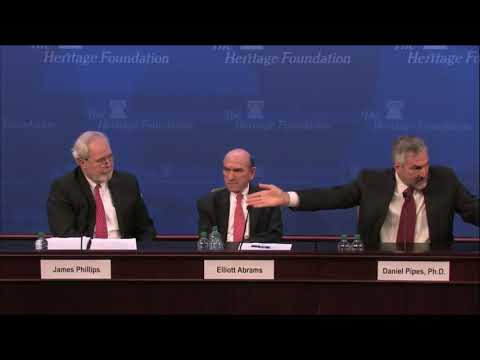 Watch on YouTube
Description
No description.
Transcript Automatic captions
Source: Automatic captions from YouTube, retrieved November 16, 2026. Automatic captions are machine generated and may misspell names and terms; check the video before quoting.
0:00 and our next speaker is dr. Daniel Pipes he is the president of the Middle East forum which he founded in 1994 to promote American interests in the neverending debates over Middle East policy he's one of the world's foremost analysts on the Middle East and Muslim history and he's been far ahead of the curve in diagnosing policy problems particularly in identifying the threat of radical Islam long before 9/11 the Washington Post has called him perhaps the most prominent US scholar on radical the Boston Globe concluded that if pypes as' admonitions had been heeded there might never have been a 9/11 and those are strong words he's a graduate of Harvard University seems to be something very common here with the both the BA in PhD in history and he's been recognized as one of Harvard's a hundred most influential living graduates he's taught at Harvard Princeton Chicago the US Naval War College and Pepperdine University he's worked at the State and
1:04 Defense Department's held two presidential appointed positions testified before Congress and worked for five presidential campaigns Daniel's a prize-winning columnist formerly for the New York Times syndicate and now writing independently he's also written twelve books and his writings have been translated into 35 languages his website Daniel Pipes org is among the most accessed sources of specialized information on the Middle East and in Muslim history he has a stellar record of anticipating Middle East crises for example in 1993 within days of the signing of the Oslo peace accord he wrote Arafat has merely adopted a flexible approach to fit circumstances saying whatever needed to be said to survive the PLO has not had a change of heart merely a change in policy enabling it to stay in business until Israel falters and when it can deal a death
2:07 blow in 1995 he wrote about radical Islam unnoticed by most Westerners war has been unilaterally declared on Europe and the United States al-qaeda invited him by name in a September 2006 video to repent and enter into the light of Islam he declined saying and he said I'm faithful to my own religion to my own country into my civilization thank you for for being such a faithful exemplar of all those ladies and gentlemen gives me great pleasure to turn the floor over the Daniel Pipes thank you so much Jim and good afternoon ladies and gentlemen what he didn't mention is I worked here for a summer in 1984 and what Elliott didn't mention is that last time we did
3:09 an event together was 1971 so and replied to the question before us president Trump's ultimate deal is israel-palestinian peace possible my answer is yes but I would like to propose a completely different approach I do not think that the existing approach which goes back thirty years of peace processing about which you've heard quite a bit now is gonna work it can be improved perhaps which I think the Trump administration is doing it's improved version but it ultimately will crumble because it depends on Palestinian acceptance of Israel which has not come about and is not coming about and therefore that is the topic that needs to be addressed that cannot be addressed in diplomacy that means needs to be addressed in a very different way so I'd like to take a step back before proposing a an approach and I'll start by giving you three dates well actually six dates first three and then another three the first three are 1865 1945 in 1975 the end of the Civil
4:14 War World War two and the Vietnam War all of those were conclusively ended wars it ended was nothing more the South never rose again the Germans didn't rise again and we didn't try and go back to Vietnam let me give you three other dates 1917 1953 in 1967 the end of 1918 the end of the First World War at the end of the Korean War and the end of the six-day war those were any day the Korean War could restart any day that could be hostilities between arms in Israel the difference between these two sets of dates is the sense of defeat in the former there was a sense of defeat it was over and the latter there wasn't simply to lose a round of a war is not to have a sense of defeat giving up on one's war goals means being defeated and that's what we Americans experienced in 1975 victory I would define as imposing one's will on the
5:19 enemy the enemy gives up you've prevailed when you take this and apply it to the palestinian-israeli conflict what one sees is that for 45 years from 1948 to 1973 the Israelis were seeking victory after that since 1993 since the signing of the Oslo Accords in the white house lawn they have not been seeking victory they have been trying various different fancy approaches appeasement unilateral withdrawal putting out brushfires but they haven't been seeking victory the peace process has been dominated has been dominant in those years the emphasis on diplomacy on assuming that what Arafat said on the White House lawn in September 1993 was valid that the Palestinians now accepted Israel the war was over but it wasn't and it isn't it continues so what is needed is an
6:25 approach that confronts this irreducible problem of Palestinian rejection ISM Palestinian rejection ISM goes back a century it means saying no to Zionism to Jews to Israel no no no no political contacts no economic relations no personal relations no it's fractured it's no longer as strong as it was a century ago but is still there Palestinian rejection ism is the core of the problem and it is what needs to be confronted and there's only pointed out there's this delusion dude a bad leadership due to international support I would add Islamic doctrine Israeli security services mentality there is this delusion that exists among the Palestinians that they can defeat Israel that they can cause the Jewish state of Israel to disappear that that needs to be confronted that is what we as a great power looking at this conflict need to deal with so what I'm suggesting is that the US government should adopt a policy
7:28 which encourages the Israelis to win to win as in 1865 1945 1975 to end the conflict by winning by causing the Palestinians to understand that they gig is up and they lost it's over done with when they're really upset they write a very strongly worded letter to the editor so you know we're unhappy ok but enough with the UN resolutions however many there are and there were very many against Israel enough with building up militaries enough with the campus deep BDS enough over it's done I'm hoping that some president this one or a future one will say to a staff yeah diplomacy isn't working we've been at this for decades it's not going anywhere is there some other alternative and yes there will be another alternative which is what we call Israel victory and as you heard in representative De Santis bio he is co-chairman of the House Israel victory
8:33 caucus they're now 32 members they're 26 members of the Knesset Israel victory caucus we just began at a year ago under the auspices of Greg Roman who was sitting here the director of a Middle East forum and EJ Kimball was sitting parallel at the other side who's the head of our Israel victory heard in Washington we're building the political base for it and we're building the intellectual base by giving talks like this having studies commissioning studies bringing this up as an alternative to the existing paradigm and let me emphasize that it is an approach it is not a number of policies we're not saying to state or not to state I have my own opinions but that's not the point the point is that israel needs to convince the palestinians that it's over the conflict has been resolved by the fact that israel is a flourishing powerful state the palestinians have a very oppressive and weak polity that isn't working it's a long term effort
9:43 the goal is not to change policy in the next few months but it is with time to put something else on the table that fits the historical pattern you don't end wars through negotiating i mean think of vietnam it didn't end through negotiations it ended by the north vietnamese army coming in and taking over I asked how war's end Wars end when one side gives up and we have close relations with Israel as representative de Sena said we share interests and a moral base with it it should be designed we want to win we should help it win and the ironic thing is that once the Palestinians give up then they can go on to build something good when they give up this foul irredentist goal of eliminating the Jewish state then they can build their own polity economy society and culture and so in the long run the Palestinians will actually gain
10:46 even more than the Israelis yes the Israelis will not be murdered on their way to the pizzeria and will not face this barrage of hostility United Nations and elsewhere but they live the good life the Israelis do the Palestinians don't they live under oppression they will be able to build once they give up this rejection ISM once they move on to something that's more constructive so I hope you will join us in advocating for this approach with your members of Congress intellectually I think m'as a new paradigm that pulls us out of the mire of this endless processing that goes nowhere then in fact is even counterproductive I would argue to you that Palestinian Israeli relations are worse today than they were 25 years ago when the Oslo Accords were signed so we need something new we need new thinking I offer this to you as new thinking and as a way for the ultimate deal to be achieved Thanks well thank you Jane oh oh I will open up to the
11:54 floor after I ask one question and and the thing that troubles me is that in a lot of the analyses of peace prospects there's an assumption or a presumption that you know the Palestinian Authority is the be-all and end-all and I think it did many analyses don't take into account what I consider to be the malign hammerlock that Hamas has on exactly what kind of negotiations are going to come going to produce and and I would say that even if you could have assumed that tomorrow the Palestinian Authority and Israel negotiated a perfect peace deal that satisfied all there are various prerequisites whatever those may be that the next day Hamas could explode it with another round of rocket terrorism and it to me it seems like peace really is impossible until the Palestinians themselves come under more unified government and I
12:58 wonder if fear what either one of you or both of you think of this you know triangular and then now we have this lonex state moving at the challenge Hamas and Gaza I mean how can there be peace given all these cascading radical movements by my analysis over the past century 80% of Palestinians have been rejectionist and 20% have accepted Israel and the goal must be to expand the twenty percent to forty sixty percent so it's not nothing don't start at zero start at twenty not that and that twenty percent has been very important over the century and so the goal and my goal is to encourage increasing number of Palestinians to recognize that the conflict is over I'm less focused on leaders I'm less focused on polities such as the Hamas one and the PA I think you want a change of heart you want to get people to
14:01 recognize that it's no longer worth their while to engage and say suicide attacks because it's futile yeah so long as you think that you were part of a movement that's gonna lead to the elimination of the Jewish state well it's worth worth doing it but if you you see this futile you're not gonna do it so I'm looking much more at the at the populace than at the leadership I'll just say a word about the leadership I think what you're saying is points to a real problem which is somebody has to do that negotiation whether it's tomorrow over ten years from tomorrow and the Palestinian leadership today has a declining legitimacy this is partly because they won't hold elections because of Hamas I mean that is President Abbas was elected in 2005 the Parliament was elected in 2006 and those were the last elections and Fatah the facto party will not hold elections presumably because it's not confident that it will win those elections but
15:06 that creates a situation where you have a Palestinian leadership which whose democratic legitimacy has been severely undermined and which is looking over its shoulder at Hamas knowing that let us suppose it's signed a compromise we know exactly what a mosque would say yasser arafat wouldn't sign you signed your traitor that's obviously gonna be a very attractive proposition for anybody in the Palestinian leadership today so that makes the possibility that this leadership will sign such a deal much lower I would add to that that the Palestinian people have not been prepared for the compromises that any any agreement would require so that you get Arafat backing away in 2000 and you get Abbas backing away in 2008 I think because they genuinely wonder whether I don't know whether those numbers are right today but they worry that in fact the majority of Palestinians would
16:09 reject those compromises which would of course be rejected by Hamas and Islamic Jihad and other groups okay and let's go at this point to the floor we'll ask this gentleman here and then I'm Laurie Amity is there any Palestinian in any leadership position who has basically said oK we've lost now what happens to us and if one does where does this rule apply yes there are bus I made comes to mind Khalid Abu Tama comes to mind and there are plenty of others but they are part of the 20% that has no power I'm encouraging the US government to encourage the Israeli government to take
17:12 those steps within legal political and moral bounds which will encourage the Palestinians to change their behavior let me give you one example two days ago an Israeli rabbi father of six was murdered in cold blood obviously the Israeli government is going to try and find the murderer but one of the Israeli leaders Naftali Bennet suggested that's not enough that because this rabbi lived in what's called an illegal outpost on the spank that outpost should now be legalized to say okay you know you murder someone here is what we do in response that's the kind of thing I'd be pointing to that would send a signal rather rapidly that murdering fathers of six is not really a helpful step for the Palestinians in fact it is yes hello Mariah bass and I work at the Heritage Foundation thank you so much so my question although we're dealing with the question of whether peace is achievable is what are the us's next
18:15 step should be and I wonder if it there's a way maybe this sounds cynical but if there's a way for the u.s. to somewhat force both parties to finally sit and take these peace talks and process actually seriously versus nitpicking on small details whether of importance or not on borders and so forth would be for the u.s. to take a stronger move in either reducing or cutting the aid that it sends financially to the Palestinian Authority which is supposed to be going to helping fund infrastructure fund schooling and education and yet has proven time and time again to actually help the Palestinian Authority pay off terrorists and so forth so is that a good next step that would actually force both parties to come and seriously take the peace talks well seriously I sort of agree with you the implications about 50 percent that is I think I do not think it is sensible for us to force the parties to come to the table if they don't want to negotiate because you won't succeed and there is there are
19:18 prices to pay when we do that one price is it's always bad for the President of the United States to fail at anything anything it's bad for him it's bad for the country and it if you have endless negotiations that don't go anywhere it creates kind of cynicism on the part of Israelis and Palestinians about the whole question of peace so I would not say well if you don't go to the table now right now we will cut this part of aid that part of it but I would look at the aid program in the way that Congress is doing I mentioned tailor force and the question of Unruh again think we should start rethinking not with the goal of saying you know our purpose here is to cut the aid really low but rather say is the way we are giving aid actually helping the possibilities of long term peace or not and I'm against the negotiation so I complete hundred-percent disagree anything that's easier okay yes this man in the back here my name is David had
20:23 been on the board of the Middle East forum I wonder if the speaker's could forecast what they expect Palestinian leadership and Palestinian governance to look like one year from now and let's say 10 years from now this violates the famous line of Yogi Berra right never make predictions especially about the future one year from now it doesn't I mean because of President Abbas is aged Palestinians are thinking about succession issues so that's a question of one would have to assume that he will not 10 years from now be the Palestinian president and the head the head of the PA the PLO and the father party one year from now a lot you know the assumption would be it will look pretty much the I think Palestinians are trying to figure out now how changed is Washington there is a story in The Jerusalem Post
21:29 today saying that the Palestinian that the PLO which is officially the part that negotiates with Israel in charge of Foreign Affairs the PLO is thinking of saying we're not going to work with the Americans anymore the Americans there has to be an international effort at negotiation and we're going the Israelis have and the Americans have killed as low as so what it's reasonable for them to say those kinds of things the truth is that no other country could substitute for the United States in trying to convene negotiations whether it's a good idea or a bad idea the French can't do it the British can't do it the Russians can't do it it's not sensible so I think you'll hear a lot more of that rhetoric but I and and you know the Palestinian ambassador in Washington was recalled but I gather he's been sent back or his being sent back so they'll be there'll be a lot more friction but I would suspect that you're from now things will look very
22:32 much the same I found it amusing and and very happy that the Palestinians have decided to boycott the United States made my day as for what things will look like in the future well should the existing paradigm be continued with the peace processing which I call war processing it'll look the same may not be a boss but will be someone who is in that same tradition of rejection ISM harder rejection ism or softer rejection ISM but rejection ISM and will still have the same conditions we have today only if there's a complete shift will there be a prospect of something better but at this point that's only something to be hope for there's no signs of it behind her I'm darling Jackson with the National black Republican Council I also remember their artists foundation as
23:36 well I want to say can you hear me oh good I want to thank the entire panel for taking the time on your busy schedule to bring forth the scholarly data to us audience and we really appreciate it very much Milan wanna ask a question to dr. pipes you are mentioned that Israel would never be accepted due to the Palestinian rejection ISM and of course it's hard and soft you just mentioned that and you said go back more than a hundred years which will bring us somewhere around the 19th century nineteen hundreds so now we're in 2017 and my question to you is with with the with the bloom or the boom of social media how does that affect the the Palestinian rejection is it's more harder or was it more softer what's the impact of social media I would say it's it has led to it becoming harder people tend to talk to their own you you are in discussion with people who share your
24:38 views and whatever it might be and therefore you tend to get more excited and stronger in your in your feelings so I think the as you can see in this country left and right have become harder more hostile to each other I think you'll find the same elsewhere let me point out there that that we're talking about Palestinians we're not talking about Arabs we're not talking about Muslims one of the striking things that happened that representative Santis noted is the lack of response to the Jerusalem step and what's most especially striking is that the Arab states of which there are 22 the Arab states were quiet I mean yeah they made the modest condemnation the Saudis called it irresponsible but they didn't want to deal with it and there was this extraordinary New York Times piece of a week ago which had the tapes of a Egyptian policeman calling up talk-show hosts and saying leave Jerusalem alone because remarkable a policeman calling up talk-show host saying stay off this
25:41 subject it's not an Egyptian national interest for you to talk about this and that was I mean we only have that one concrete incidence but clearly across the board they weren't talking about so this is not arab-israeli this is palestinian-israeli it's a very different and whereas there so many more Arabs and Israelis and so many more tanks and so much more everything in fact the Palestinians are a very very weak enemy they have no economy no military to put it simply and Israel looms very large over them so winning a war is rather simple not talking about winning against Morocco or Malaysia talking about the Palestinians the Palestinians alone what's so striking also is in contrast to the Arab states being quiet is that the hotbeds of hostility were in Iran and Turkey and in Europe does this man right here I'm Frank Olson I'm with the Center for a free Cuba my question is how did the policy of President Obama tour Iran
26:46 impact on the israeli-palestinian situation and how is the current policy of President Trump impacting on the same the main impact of the Obama Iran policy was oddly enough to produce the kind of rapprochement between Israel and many of the Sunni states because they have a common enemy not Obama Iran that common fear of Iran of its support for terrorism of its support for war has led to what appear to be improved relations I'm not even talking I mean one assumes there are lots of secret meetings but you can see this in the tone of comments Daniel just mentioned the reaction to Jerusalem it's striking to me now when there is a terrorist attack in Israel
27:50 the Saudi official sided reaction on Al Arabiya as always we condemn this attack we condemn all terrorism this is unforgivable and period that didn't happen ten years ago so I think it it's that is a oddly beneficial impact I don't think there was much of a long-term impact on the israeli-palestinian situation if you think of it there were eight years of no negotiations despite considerable efforts by the President and especially by Secretary of State Kerry in the Obama's second term tremendous amount of time put in on this but nothing happened so I would say I think it just kept the process going weekly for another eight years but had no significant impact on it as a historian I savor the ironies of history and one of them is that the huge amount of money that we paid to the Iranian government
28:54 created a rise in expectations that led to the outbreak of revolts in the last few weeks looks like they've been suppressed but it was a factor that in the long term I think harms the Iranian regime more than hubsan another irony is that us-israel relations I tend to like it when US is a relations are not so good because when they're really good as for example during the Bush years Elliot don't listen to this Bush George W Bush years the Bush administration would make demands of Israel such as to be technical leaving the Philadelphia corridor which were dumb demands that the Israelis because of the flourishing relations just felt they had to do but when their tensions as there were during the Obama years then the Obama administration makes all these demands and the Israelis happily ignore them so in general I like tense rather poor not
29:59 terrible catastrophe yeah you know I that's a two-hour question answer but I would take exception on the detail of Philadelphia where I would argue that Ariel Sharon as a general came to the conclusion that if he was going to get out of Gaza defending what is actually a line was simply militarily nuts so I don't think it was actually something that he did because of American pressure I could think it's something he did for military reasons but that does you raise it to okay oh this man right here thank you very much for coming I'm max Donigan junior at st. Mount st. Joseph in Baltimore Maryland yesterday President Trump he had a press conference with the Norwegian president he got a question regarding a comment at General Meade he said that war is coming and
31:03 specifically you know with his strategic where he is in Norway you would think it's with Russia but where do you see Russia especially making strategic movements in the Middle East in the next few years I think Putin to a surprising degree has been able to reinsert Russia as a great power in the Middle East and I think part of that was the Obama administration's policy in Syria to failure to push back and behind that I think also was it's focused on striking a nuclear deal with Iran everything else came second so I think the Russia's is back and I don't think it's back to the extent that it was say before 73 I don't think it has much of a role to play in peace negotiations but as a security
32:08 force I think it's back definitely in Syria and it has a growing alliance with Iran I see two major vulnerabilities one is the fact that Moscow has aligned with Tehran and has created hostilities as in so many other places and secondly Russia is a declining power it's demography more graphically and economically going down so you know good luck make hay while the Sun is out but China is the real issue not Russia Russia is transitory Russia I mean China is going to be the problem of the future much much more serious okay this man right here yes maybe dr. pipes addressed this in passing with reference to enough time natales Bennett's recommendation but how do you get what we're talking about the population how do you get how do you expand that
33:10 20% and in the foreseeable future oh I'm sorry my name is Luis Morano I forgot to identify myself in the foreseeable future especially in terms of considering Abu Mazen's advanced age would you anticipate any Palestinian leader non rejectionist being able to survive physically as well as politically my focus is for the reasons you're implying not on leaders but on the populace reducing that 80% rejectionist element to something less than 50% so that eventually a non rejectionist leader could survive but no no no it's a long term project it'll take time it'll take step by step one palestinian after another coming conclusion that hoping to eliminate Israel is a forlorn dream it's just not going to happen well let me ask a question where do you get
34:14 the 80/20 yes I haven't seen that I have it from a lot of Statistics I have a web blog entry on this going back to the 1920s various surveys that have shown this be happy to send it to you and I think if you looked up 20 percent Palestinians my website Daniel Pipes the doric you'll see ok about 10 different surveys and historical researches that point to this number there was there was what I would call a positive effort under Salam Fayyad as Prime Minister that is an effort to build I'm not quoting but as he put it more or less we need to build Palestine despite the occupation forget the occupation that's Israel's business our business is to build institution by institution to
35:17 create a government to create an economy it is a it is a sort of Zionist concept that is the Zionist movement had no way of knowing would there be a Jewish state in 1918 after the war or in the 30s or in 1945 or in 1960 all they knew is Bill built build you have to be ready if and when the day comes which is I think essentially what Fayed was saying now he only won to his party won two seats in the Palestinian legislature and he was ultimately forced out forced out by the Fatah party of which he was never remembered I just there is impressionistic evidence I will have to look at the data impressionistic evidence I have heard from a number of Palestinians that younger Palestinians are more concerned with building a future than they are with some of the old formula like our future can only
36:20 come when Israel is destroyed or even perhaps like our future can only come when there is an independent sovereign Palestinian state they're more concerned with how do I get an education how do I get a job how do I raise my children which is precisely what in a sense we would want we would want people to be thinking about less about politics and less about Israel and more about their own society but I think I mean that's the right question I'd say one thing is for sure that percentage if it is 20 percent cannot expand if a lot of money is being given to the people who whose life's work it is to make sure it can't expand for example by paying you a large amount of money if you try to kill Israelis I mean that should be obvious and it can't expand if we continue the Unruh model in which what we're telling you is no no no despite the fact that
37:24 you were born in let us say Jordan or Lebanon ten years ago you're still a Palestinian refugee with the thought of quote going back clothes quote so we are we are by directing money in American money American taxpayers money to those institutions practices expenditures hurting very much the cause of expanding the 20% to 80% for anyone interested the title of the blog is how many Arabs and Muslims accept Israel I began it in 2003 and been following it for 15 years now see I think we have time for one more question of this man in the back here thank you very much my name is gif annecy with United State of Africa 2017 project task I was outside briefly and somebody here asked me out there whatever did I thought about what you are doing I said Oh most of what they are saying it's not of interest to me I know about that etc
38:26 etc I said what Elliott Abrams made a statement which would be the future they will either my they're not gonna match with Israel but they will have to match which Jordan because small states like we know in Africa that's what we're trying to further are not viable and very soon the Palestinians will understand that okay okay and if maybe at this point if I could just ask the two of you just to sum up your your comments and if if you had to you know advise our president Trump how how to proceed on this issue what would you say in just you know to talk to or three things well the president clearly from everything we can see now is still focused on trying to get a negotiated a comprehensive agreement what's called the final status agreement something that eluded every president since
39:30 Clinton I think that's very unlikely and I think it would be more useful to focus on more pragmatic ways of improving the lives of Palestinians Palestinian politics and the the medium and long run chances that Israelis and Palestinians and Jordanians and Egyptians kisses Gaza is out there too will be able at some point to live together in peace or let me just or to live a part in peace which may be more realistic the Middle East is a flame there are civil wars in Libya and Yemen and Syria and arguably in Lebanon and Iraq and Afghanistan in Turkey there is a near Civil War Sinai has something close to civil war there's anarchy their problems all over it is remarkable that we're still talking
40:33 about a problem that is 70 or 100 years old when there's so much going on when there's so I mean think of the Syrian refugees half of the Syrian population of some time 22 million has been displaced internally or has become refugee outside the country huge numbers far far beyond the numbers of Palestinians which was six hundred thousand back in 1949 and this is not 49 this is 2018 so given this fact given the Iranian rampage of aggression given the fact that turkey hitherto a major ally has become close to a rogue state given the dramatic developments taking place in Saudi Arabia or I think Mohammed bin Salman is undertaking a a transformation wishes to undertake a transformation as deep as that of say Meiji period in Japan or auditer period in Turkey given all that's going on I would say let's outsource the Palestinian issue to
41:37 the Israelis and let them take care of it and let's focus on the much bigger more dramatic and more dangerous developments are taking place in the region and with that I'd like to invite the audience to join me in thanking our speakers for a very presentation thank you