
Webinar or Talk
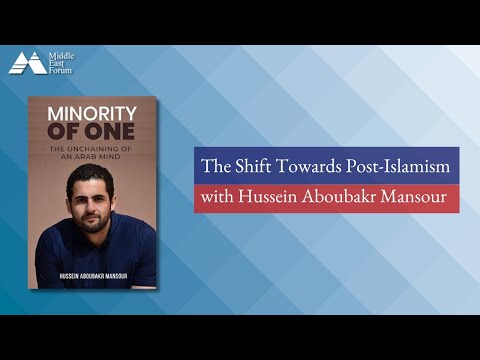
"The Shift Towards Post-Islamism" with Hussein Aboubakr Mansour
 Watch on YouTube
Description
Islamism may appear to be in decline in the Middle East but it is adapting. Movements that once sought caliphates have shifted their strategies, sometimes, shedding overt ideological commitments in favor of pragmatic governance. The recent transformation of Hayʼat Tahrir al-Sham in Syria offers a case study of a post-Islamist Islamism where Islamists claim to prioritize state capacity over a rigid ideology. Is this a tactical shift or a genuine evolution? Does it weaken or strengthen Islamism? How should policymakers respond?
Hussein Aboubakr Mansour, a Milstein Writing Fellow at the Middle East Forum, is an Egyptian-American analyst who focuses on Islamist ideology, Muslim antisemitism, and American universities. He grew up in Cairo, where he from an early age was attracted to Salafism. Later, the Egyptian authorities targeted him when he pushed back against antisemitism, leading to his emigration to the United States and political asylum. Mr. Mansour has worked as an assistant professor of Hebrew language at the DoD’s Defense Language Institute. He has published in Commentary, The Hill, Mosaic, and Tablet. His autobiography, Minority of One: The Unchaining of an Arab Mind appeared in 2020; he calls his Substack The Abrahamic Critique and Digest. He studied at Menoufia University in Egypt and holds an M.A. from George Washington University.
You can follow Hussein on X at: @HusseinAboubak
You can follow Hussein's writings on Substack at:
https://critiqueanddigest.substack.com/
Transcript Automatic captions
Source: Automatic captions from YouTube, retrieved October 20, 2026. Automatic captions are machine generated and may misspell names and terms; check the video before quoting.
0:09 good afternoon and welcome to the Middle East forums weekly podcast series my name is anaf Kalam and I will be moderating today's discussion islamism may appear to be in decline in the Middle East but it is actually just adapting movements that once sought to establish caliphates have shifted their strategies sometimes sh getting overt ideological commitments in favor of pragmatic governance ha Al Sham in Syria for example offers a case study of a post islamism where islamists claim to prioritize State capacity over their rigid religious ideology is this a tactical shift or a genuine Evolution does it weaken or strengthen islamism and how should policy makers respond joining us today to discuss this and more is Hussein abubakr Mansour who is a milstein writing fellow at the Middle East Forum his autobiography titled minority of one the unchaining of an Arab mind was published in 2020 and his writing has appeared in a number of
1:14 major Publications he currently writes for a substack Blog titled the abrahamic critique and digest on these issues Mr Man Mr Mansour will speak for 15 minutes followed by 15 minutes of Q&A from the audience and if you if you'd like to ask a question please feel free to use the Q&A box located at the bottom of your screen to type your question and with that I will turn the discussion over to Hussein abubakar Mansour welcome thank you very much ANF and thank you very much uh for MEF and uh for your audience for um having me today um to speak on uh such an important um yet ambiguous and obscure subject I think no one was expecting in the Middle East um or in nationally for 2024 to end with such a dramatic turn of events uh in the Syrian Civil War we're talking really about the the end of a major chapter uh if not the the uh important chapters of the Syrian Civil War I think days will um
2:19 will tell uh but this is not just a story about Syria this is obviously a story about the region at large uh and about a a the history of the islamist movement or the islamist movements or islamist ideologies uh which now we're talking about almost a century long um of historical political social and development sham um as you as you mentioned which is the um organization that was led by uh who was known then as Ahmed julani or now known as Ahmed Shar the interim president of Syria was a radical um islamist organization jihadist uh uh really um that emerged from the Syrian Civil War this is just to give some some background for our listeners um and traced its Origins back to Al really uh which was a former affiliate of alqa in Syria uh and before founding an nusra alra front or ja actually Alani
3:25 Al himself uh worked for um the Islamic State he served Islamic State he actually left Iraq to Syria in order to start a the Syrian Branch or chapter um of the Islamic State uh afterwards after leaving the Islam State becoming a a a a independent umra FR repeated uh many attempts to unite with many Syrian opposition factions islamist um and jihadist um and then it reprehended into which later then um evolved under uh Jan's leadership or's leadership um to HTS or what's known in the media HTS um um AEM with this Evolution uh uh we saw towards the end really starting from 2018 maybe a little bit before that um we saw H HTS uh change its style um have some evolution in Outlook um in the way they formulate their objectives in Syria
4:28 and in the way um the operate they don't of course a a they didn't change from the tenants or the core elements of um their islamist ideology but they still really represent a significant shift within jihadist movement it's really hard to remember if there's anything like that um in memory um in terms of their pragmatism almost ruthless pragmatism um to transform themselves into this kind of a a political jihadism that then outgrew itself in into becoming uh the rulers of of Syria uh we've seen them shifting their focus from theological Purity which is was really always the um emphasis and the core uh a Obsession of jihad especially Salish jihadist groups we saw them Shifting the focus towards day-to-day politics day-to-day uh governance um and then ultimately with their rise uh with their outing of Assad uh Assad and then coming to power in Syria uh we saw them
5:33 really a a coming out of their identity as a jihadist movement or International jihadist movement [ __ ] whatever the last remnants um of that at at least uh what appears to be so uh and we see them now as a movement um or really not now but since they came to power in Syria a as a movement no longer aligned with International jihadism that is their FOC is domestic it's internal um they talk about Syria they talk about building Syria um this of course was a as I said a dramatic development uh uh for a lot of people um and then people started following really the developments in Syria and the the words of Ahmed Shar the various steps that he's been taking in order to consolidate his power inside Syria talking into various uh factions Syrian Syrian political factions and even conducting a a conversations and dialogues um whether with the uh the Kurds or the alawites or the Christians
6:40 um in Syria and to other various groups promising uh what seems to be this a harmonious Syria or harmonious Syrian a a a nation state that will re-embrace um its various groups of course this was a very new language especially for a former uh jihadist and what's really provoked now the question is um these shifts are genuine are they only tactical shifts while they consolidate um the power of Ahmed over Syria and his jihadist milu and after which we'll see a reversion back to the all familiar face of islamism or jihadism I'm not here to defend uh ahed or to defend islamism at all but I'm here at opening the possibility or trying to um entertain the possibility that what happened in Syria truly represents a an evolution that we're witnessing right now in the islamist movement ASF said in the introduction of witnessing this post
7:43 islamist islamism uh and this doesn't mean that there is a a um a change in core identity tenants um of islamism but perhaps in the way that it today operates um islamism always ad a a a adapts it always evolved actually all of its history is a history of evolution um of adaptation islamism was never really a static movement from its beginning islamism adopts the various modes of a a acceptable legitimacy of prevailing political paradigms When the islamist Thought uh and movement started at the beginning of the 20th century with the high tides of nationalism um islamism presented itself mostly as an almost a a pan nationalist uh er a movement for Muslim at the mid century when a a the prevailing Paradigm of political legitimacy um in many parts of what was then the third world were kind of revolutionary anti-imperialism and various forms of leninism we saw
8:46 islamism evolve uh exactly to adopt these prevailing paradigms of legitimacy we saw islamism becoming leninist becoming revolutionary adopting the language of anti colonialism and anti-imperialism trends that continued specifically in the 1970s with the uh development um for instance of the Islamic revolution um in Iran that shows these Tendencies clearly um after the end of the Cold War and the a a the kind of victory of neoliberalism democratization um human rights we saw various islamist groups namly the Muslim Brotherhood in many Middle Eastern countries trying to make themselves into legitimate political actors becoming political parties trying to compete over elections trying to claim that they are um for democracy and this is when we witness a large movement in the western Academy Western diplomats Western policy makers almost sympathizing uh with Muslim Brotherhood with islamist groups seeing them as somehow erode to democracy in many Muslim societies um at the end of this uh era we saw things
9:50 like the rise of Hamas into governance um in the Gaza Strip we saw of course A A A the rise of Muslim Brotherhood movements into the parliaments of various Muslim countries Egypt Jordan Morocco um and many others and ultimately reaching uh the rule turkey of course um is the most important example um Egypt is the second Malaysia is is is another um but basically we saw this tendency towards EV Evolution constant adaptation to whatever the prevailing Paradigm now today we have to ask ourselves in order to understand this moment what are the Prevailing paradigms of legitimacy today globally we'll find that we're going of course into a moment of Crisis even in Liberal will established liberal societies such as the United States you have a lot of talk about postmodern post- liberalism uh now if liberalism itself is going through this crisis of faith that is have a lot of people including a a a many major thinkers in Wern societies John um Gary for in the
10:55 UK for instance who no longer believe in liberalism as a a complete a or a total ideology um it's very it's very hard to imagine um that these developments uh are not going to reach many of the Muslim and Middle Eastern societies have always been at the receiving ends um we see various trends for example in El Salvador of the rise of the mode of the state capacity nationalism we can think about the gulf countries are the same thing in which efficiency development and state capacity actually determine the legitimacy of the state not really democracy Not Human Rights not any a a a clear and total ideological ideological claim if we look at the language of Ahmed and you look at actually many of his movements including his diplomatic movements towards Saudi Arabia even now we have signals um from the Iranians that they have been conducting indirect conversations with the with Shar Russia might reach an agreement about the fure
11:59 future of their presence in Syria too we'll find this a a move towards an emphasis on state capacity governance building over a the ideological Purity that as I said earlier the jihadists were were known for does this Evolution um means that we're now seeing something that will come out completely out of the ideological origins of islamism and works its way towards the postmodern moment in which we're in and which you have influence into technology and state capacity or so on or are we going to see something like what happened with Hamas um in Gaza which basically you have an adoption of the prevailing political Paradigm which was democracy in the case of 2005 Hamas afterwards then Hamas reverts back or becomes uh this predatory uh jihadist group that then Contin completely destroys um democracy that is the question that I actually don't have answer to and I'm not going to pretend to prophesy or say that I have answer to
13:02 I think the most important or the most wise uh step is actually to consider um both possibilities um I think we should look at Ahmed the new government in Syria with Extreme Caution given uh their Origins their ties to alq their origins in the Islamic State their actual history of real war crimes that were committed during the uh uh civil war in Syria and of course their ideological uh loyalties that we're familiar with the people that we H they have um inside their meu I think it's very important to look suspiciously cautiously Israel should not really I think Overlook the possibility of replacing the Shia axis of resistance with another Sunni axis of islamist resistance that has Hamas turkey and Syria in it so I think it's very important to maintain caution uh given the long history um that we have with islamist and jihadist groups but I think it's also very important to just stay open for the
14:06 possibility that we might be seeing a certain shift um uh that we haven't seen before or we're not ready for or we haven't really a a a a we haven't really witnessed in a way a that opens a possibility of having a political system that came originally uh from islamist groups maintain many of the trappings of islamist identity but is willing um to uh conduct itself politically regionally in a very different way there are signs of this I think the connection with the Saudis the way that the current Syrian government made it very clear their wish to align with the security of the Arab Gulf and security of Saudi Arabia I think that's a comforting element but to go back to my first point I think caution in dealing with these groups and the current situation in Syria is uh the best uh approach and the best policy at the moment thank you uh thank you very much and uh what a fascinating topic and uh to match that fascinating topic we have a lot of very
15:10 interesting questions coming in so I will begin with one from International lawyer Andrew rosemarine from the UK who asks totalitarian religious movements like all totari totalitarian movements in order to take power and keep it always always persecute opponents is the annihilation of the totalitarian belief system the only way to stop the persecution of opponents uh I believe so but as I said earlier we have to remember the moment in which we're currently in all major intellectual systems today are going through uh major crisis you see this even in people who are on the left um I mean it's very hard today to meet anybody who still confesses orthodox totalitar and Marxism you have various decompositions of Marxism into various forms of cultural Marxism Marxism of critique and criticism this kind of EP a Marxism of philosophy and epistemological investigation so on and
16:12 so forth um same thing we see similar tendencies in liberalism H so there is a possibility H that we are going through a moment in which all of these modern a a major ideological system that are basically decomposing into various components and this could be also the fate of islamism as I said it could be I'm not saying that this is where we're going that is islamism which was also one of those big modern totalitarian ideologies of the 20th century um that R true havoc in many parts of the world might be also decomposing into various components H what those compon components could be it could be for example a a component in which it's decomposing to is identity politics you see this specifically in Western Societies in which islamism at least for some parts I mean you still you have organized islamism you have big islamist organizations with ties to Global Muslim Brotherhood Network Finance power so on and so forth but I would bet if you go on University campuses especially with a lot of the young Muslim and islamist activists who yet second and third
17:15 generation I I you will find a form of islamism or on their own adaptation of islamism as a form of identity politics uh especially within the American uh the American context so that's let's say kind of an offshoot or a decomposed or a kind of a product so I think we we might the way that this happened to Marxism happened to liberalism happened to a lot of these major ideologies of the 20th century um this also could be happening to islamism you end up with these various decomposed components uh that were once held together in one big total ideologies but now kind of desperate um and and doing or going their own different ways all right thank you now Daniel pipes would like to ask well first he begins thank you Hussein what do you think of the argument that erdogan not Shara will decide the future path of Syria I think it's a possibility I mean I from what I've seen I think Ahmed Shar seems to be uh politically shrewd Savvy
18:20 I mean we're talking about a young guy maybe I have some sort of a bias towards him because he's my generation despite that I completely stand against everything that he stood for but his is shrewd he proven to be is shrewd politician with their islamist jihadist um this man outlived Bin Laden zahiri Zara um he outlived Abu Bakr Al bagdadi and he ultimately outlived politically at least Bashar Al Assad himself um I would imagine that he definitely a a is not a does not seem to be an opponent and also all what he's been doing since he came to power his extremely clever way of signaling whether to Arab states whether to the West um trying to achieve as much legitimacy as possible all of this testifies to his shrewdness again doesn't mean that I I'm not cautious about him or think that he is a possible Ally um but that tells me that erdogan I have no doubt that erdogan ultimately
19:25 would like Syria to become this client Muslim brother who State um in his orbit I think it will we might actually see some intelligent out maneuvering from especially if he's able to secure the backing of the Saudis the the Saudis the jordanians the gulfies are definit definitely do not watch a do not want a Turkish client Muslim Brotherhood State on their borders uh we can actually you can for instance we can look at the situation of the or the position of the uee as kind of an indic hater where things are the uee which is the most Stanly anti-islamist Arab country today I mean they it's very hard to exaggerate how much power and money uh since the Arab Spring the UE have been putting regionally and globally to counter islamism and islamist movements they were extremely upset when the at the beginning of a a the development when Bashar Assad fled out of Damascus leaving HTS in power um the amadis were
20:28 a a almost uncompromising in condemning um HS but with time passing you saw them kind of starting to talk to to them hosting figures having dialogue and I think this is exactly because they understand that this is now the reality it it's their interest first of all to prevent the return of Iran um into Syria and at the same times ifar andas are in power anyways to try to guarantee they don't become that Turkish um satellite state and hopefully also maybe to try to manage the situation in which they don't become another security risk for the entire region all right thank you now Ryan Maro would like to ask is Ahmed Shara moving from the al-Qaeda type salafi category to the Muslim Brotherhood type category that is more gradualist and permits elections do you think he will successfully straddle the line and maintain widespread support or will he end up alienating all camps would holding elections cause HTS to
21:32 Splinter uh I think this is an excellent question I think the biggest challenge for Ahmed sh is exactly consolidating his power um especially among the milu uh from which he came so he had a big Coalition of sophist groups jihadist groups um that supported his coming to power now these groups have to be contended with them seeing a very different program playing out than the one they had in mind the one that the salafist jihadist uh jihadist fantasize about D for example destru destroying all the Shia shrines that Syria had a a putting a severe restrictions at least at least at best putting severe restrictions on women and minorities and Christians so on and so forth now as they are watching one of their own come to power and that program actually not unfolding that is for example one of the first things that alar government announced is that they will actually maintain the the Shia shrines in Syria in order not to antagonize Iran any further which I think was of course a wise decision um
22:36 they had made all of these declarations about commitments to security and and kind of the the freedom of uh The Limited Freedom that already exists of of Christian groups in Syria so on and so forth this is ultimately I have no doubt given the way that this is progressing a a seem that it will definitely alienate parts of his uh jihadist Camp h that brought and Coalition will he of course this means that there will be internal power plays he will have to survive probably any Discord that emerges including maybe even coup attempts um and then he will he may be able to Tri triangulate a a gaining new basis of support of a moderate syri or non-islamist syrians who are just happy to see Bashar Al Assad goes happy to see um Saudis and qataris and emiratis coming to build power stations to restore Electric iversity that in many parts in Syria didn't really exist anymore um if he can bring some of these changes uh Without Really upsetting the Rhythm of Life of
23:39 the average Syrian he can Bank on a lot of that new support and allow him to triangulate out of that extreme jihadist support that could be a a a possibility so to go back to the beginning of the question he's he seems to be a a a moving out of that Salish jihadis M toward something that looks more a like a Brotherhood type for sure and I've seen a video of him walking with his wife in his recent trip in Riad I was actually shocked uh that she was not entirely wearing she she looked more like a Muslim Brotherhood a wife of a Muslim Brotherhood leader um than a Salish jihadist leader so this again this it could be a possibility ultimately my goal of of all of this to say yes the the ideological changes that we might by seeing might be might be right thank you now Jerome Stern would like to ask now you said HTS accepts the various groups in Syria including the Christians has that acceptance been extended to the SDF Syrian Kurds who
24:42 control nearly one-third of the country it it didn't because obviously here we're talking about a uh probably one of the biggest challenges if not the challenge for the new Syrian government uh SDF is very I think first of all they are very right to be suspicious of course of um of hgs I mean if you have your own autonomy and your own a a a troops and you're supported by the United States I don't see why you should accept or lay down your arm in order to accept the rule of people who were only yesterday salafist jihadists um so of course SDF has the right to to to their current position at the same time I have no doubt that the Syrian government while they also are not going to compromise on kind of this uh reunified Syria uh I think they are a and very careful not to start another conflict H immediately that then they will alienate a lot of their supporters and will actually hamper their ability
25:43 to consolidate power and gain that support that they need uh that I talked about exactly how this will play off it's unclear but we have here other elements let's remember that there are a lot of things involved in this picture the EU is heavily involved the United States there's no doubt of the United States at least indirectly H involved you have many parties that have direct interest for the success of Al Shar government the EU for instance let's remember the destabilizing massively destabilizing effects of the Syrian Civil War and the EU countries things that are continuing till today we're seeing the road that's been happening the past couple of days over Germany uh uh for instance um all of this ultimately was a cause or kind of down the stream from the events of the Syrian Civil War and turkey at the Same by the way as well have had M major problems recently uh because of the um discontent of the Turkish working class about the uh large presence of Arab refugees and Syrian refugees um in the country there
26:46 are a lot of people who want to see alar succeed uh in order to possibly alleviate some of these problems that they had whether the EU with the Turks um these parties are directly also involved I think many times uh with SDF so we might be seeing some sort of mediation through which an agreement will be reached to a a a mediate or avoid confrontation direct confrontation between this Char the Char government SDF okay thank you now uh we have a question from ASD haar who asks what might a uh Syrian political interactions with a new Lebanese government look like that's a great question the question is we we'll see I mean this is really one of the most important relationships for Syria and one of the most actually scarred and traumatic relationship both parties um have a long history uh of very bad relations with each other Syria occupied
27:49 Le Lebanon for a very long time um they were directly involved in a lot of the violence destruction Civil War the killings um that happened in in Lebanon I was just talking to Lebanese friends and and they told me how the Syrian Army killed many of their their own family members at the same time it was actually a a the fighters of hisbah who often committed some of the worst atrocities against the syrians uh during the Syrian Civil War in order to to protect uh the regime of uh Bashar alassad um obviously we're talking about a a transformed situation that radically transformed the past few months given the decline of the aess of resistance due to the various blows of the Israelis including of course the major one in Lebanon with the capacities and Leadership and the power of hisbah itself and of course um the fall of Bashar Al both sides currently whether the Lebanese government or the syrians um they have a direct interest in
28:51 stability uh the sea Israeli Jets hovering their uh uh over their heads uh none of them H want a a um a more or further Israeli military military operations on their side of the borders and and none of them would like to see the Iranians returning especially not anytime soon if you really want don't want the Israelis bombing you so probably this could a a a a form a mutual ground um on which some sort of understanding can start um a relationship but ultimately it will take time for the Syrian government to stabilize to build that trust that requires a a that is required to forge relationships especially with a neighbor like lebano right thank you very much I think we have time for maybe one more here and just to kind of tie all this together and wrap up uh I know you touched on this and you mentioned this in your earlier remarks but it seems like the big question uh regarding Syria right now uh it's a question from Jay Lewis
29:56 who asks has HT TS really changed its stripes and moderated or is it still a radical islamist organization with an intent to put up a smoke screen to deceive the West well power changes people um you can't it's it's it's impossible for such a drastic change in the fortunes of anyone uh to leave them unaffected uh HDs was as I said they started at this small terrorist group various affiliations Affiliated to Affiliated to uh the Islamic State becoming independent ruling their own little territory for a while and now becoming um first of all ending what is in effect uh uh was in effect the bloodiest chapter of the Arab Spring the effects of the the the the outing of Bashar Al Assad has been an exeler by the way acceleration across the middle east from the Arab Spring generation who saw itself defeated and destroyed in many other places um I have seen many of
30:59 my friends who are by the way radical secularist liberal anti-islamist whether libanese Egyptians from various areas actually celebrating despite the fact that Ahmed is the person that we know he is and it but celebrating with tears um when Assad left just because of the intensity that that such a development meant um HTS rode that wave this this was kind of how they are still I think in a period of honeymoon with a lot of people who are actually willing to Goodwill to them uh and coming to power in such a drastic drastic way I don't think that this would leave anybody unchanged now what kind of change exactly that that is the question is it a change for the better is it a change for the worst could be a change of the wor for the worst uh we don't know again I'm going to go back to the example of a Hamas in in Gaza I think it's a it's a very Illuminating example other than
32:02 being this anti-semitic anti-zionist anti-western terrorist groups amongst the Palestinians themselves um Hamas was an extremely popular group before they came to power they were known for their social services if you talk to the Palestinians they will they they will tell you that they are not as corrupt as the Palestinian Authority that they actually help and they actually want to help I remember talking to even Israeli intelligence officials who were working uh in the territories at the time and that's exactly what they said they said we would meet with the PA authorities and we we meet meeting with these Crooks and then we'll meet with the Hamas people and despite that they hate us but they looked they looked definitely more decent rising to power of Hamas made them aund times worse uh not better uh than the group they were they we saw how they treated the Palestinian Authority and their officials we saw how they um suffocated a the gazan society and the little bit of a democracy that they experimented with and we saw ultimately destroying really completely to the ground in the last year so this is an example where you have an the effects of
33:04 power um on an islamist movement and a single islamist movement becoming much much worse than they ever they actually were before they actually reached power similar case could happen to Syria or could we we could see Power also putting restraints moderating them and that's basically I you know I'm not advocating that theory but that's what a lot of kind of international relations liberal theor in the United States have always been says saying about the islamist movement the inclusion moderation thesis that when you include them with power it moderates them I'm not advocating that but I'm saying basically we are still going to see what are exactly going to be the effects of Power are they going to become different are they going to become a little better are they going to become much better are they going to become a little worse or are they going to become much worse well thank you very much for uh your insights I'm afraid we have reached the end of the podcast for this week uh we have had a lot of questions come in more than I can even keep track of right now so I thank you for your participation as well and thank you uh
34:06 Hussein for for your insights thank you ah of course now um is there anywhere that you would like to direct our audience if they'd like to follow more of your work uh if they like they can either follow me on X formerly Twitter hassin abubakr manour or they can follow off my substack uh which is the abrahamic critique and dig just uh uh on on on substack I'm going to post the link uh I don't know if there's a chat yeah in the chat right now great and uh for those of you watching in the future I will be sure to drop that link both those links in the video description below now we will be hosting our annual policy conference in May on the week of the 19th in Washington DC we encourage all of you to register and come join us for for a number of insightful panels keynote presentations dinners cocktails and a very good time overall if you have not done so already please subscribe to the Middle East
35:07 forums YouTube channel and our Spotify Apple music Amazon anywhere you get podcasts where you can follow this podcast and watch over 400 of our past episodes we thank you go we thank you all again for joining us and for your participation and I hope you all have a wonderful day thank you