
Webinar or Talk
"30 Years Later: How Russian Jews Have Changed Israel" with Alex Selsky
 Watch on YouTube
Description
In 1990, Jews of the collapsing Soviet Empire began to escape their antisemitic prison in large numbers. Over one million of them repatriated to Israel and made up the country’s biggest, most educated immigration wave ever. They dramatically changed nearly every aspect of Israel’s life, from science to sports. What is their net impact and how will this influence Israel going forward?
Transcript Automatic captions
Source: Automatic captions from YouTube, retrieved November 12, 2026. Automatic captions are machine generated and may misspell names and terms; check the video before quoting.
0:00 okay so uh hello to everyone from uh we have very very little time so i'd like to uh start uh immediately uh you can see i've prepared a few illustrations for you to make it more interactive so a russian speaking jews in israel israel is from former soviet union so just to start the whole story i would like to make a very short introduction think of next fact all the prime ministers of all of them are either first generation of those who were born in russian empire i mean before the soviet union or second generation of those who were in russian empire why i'm saying that in the beginning because when we speak about russian-speaking jury about post-soviet jewry it's not immigration it's repatriation because they come home because they were dreaming about
1:03 israel they were thinking about israel and when they come to israel they definitely feel that they came home and you can see this picture which i think is very touching that shows uh a brother and sister that mets when the brother made aliyah and his sister were here for many times so just for you to understand this is the former soviet um the biggest country on earth uh more than 30 million square kilometers which is three times the united states i don't want to even count to compare to and um 30 percent of the olim including 70s and including 80s including 70s and 90s come from russia about 30 percent from ukraine about 10 from other european states which is moldova belarus and the baltic states and about 30 percent from a caucasian in central asian states which is azerbaijan
2:07 and uzbekistan and kazakhstan so on and they added actually 15 percent jewish population when they came about 80 percent of the olim were asking us 20 from uh what we call mountain jews and a boheren jews now um democracy as we said in our identity uh seventy percent of them are jews meaning their mother is jewish about 10 percent is second generation to jews a son or a daughter to a jew about 10 percent third generation and about 10 even less poses um very zionist very patriotic uh ninety percent in the polls last year say they are zionist which is higher any percentage even beyond other israeli groups the religious identity 65 percent today consider themselves
3:11 secular about 28 traditional but five percent about two percent ultra orthodox i don't have time to explain why so we will just run with uh with the data economy uh the economic views are um the older generation uh thinks welfare and the younger uh are very liberal in the matter of just give us the instruments and we will give us the open market and we will get whatever we want um they have the highest participation in the labor force in israel about 90 percent their academic education when they came was highest out of every other about 50 percent with academic education almost twice from israeli average almost a master degrees majority
4:14 it had education in exact scientists engineering and life sciences many of was integrated within the labor market with israel in israel and definitely during the first 10 years many of them didn't work in the field and we know all these stories when the professor of physics was cleaning a street this is these stories unfortunately were true economic status you see this uh wonderful uh painting by elizabeth um uh showing a kind of uh a zoya charcoal showing kind of a poor family of olivium from former soviet and this is definitely was right in the first 10 years but after that definitely i think that majority full majority of the younger generation is the middle class and the older generation still are more poor and and depend on on aids but on the other hand we have those
5:18 who made money outside and then came with the extreme wealth and we have also those who came in the beginning of 90s and then left and made money and came back and if you want to see the contrast so the next picture this is the mention of jew that had made money in russia and then came to israel and and made israel its home this is in the man is valerie kogan the owner of one of the biggest airports of uh russia uh settlement sorry for that settlement the majority live in big cities where the labor is but big part in the periphery galilee golan negev judea and about 30 percent of the citizens of judea and samaria and west uh jerusalem the jewish neighborhoods of west jerusalem are from the former soviet union and those
6:22 who came from big cities went primarily to the big cities 30 percent of jews above the green line as i told you are from former soviet union politics and this is definitely a very interesting and uh relevant they're very right-wing definitely the older generation uh why very briefly they come from a superpower mentality a real politic you defeat your enemy and you don't negotiate no trust to you and in europe against any concessions very patriotic i understand the value of nation state of the jewish people and they will not give up um you see in this picture as the prime minister meets uh veterans of the world war ii jewish veterans from the world war ii ruling from the former soviet union and this nice young man next to the prime minister is his former advisor who is speaking to you now this picture is nine old they're very active politically in the national level you definitely
7:26 know that after six years from the beginning of aliyah the russian-speaking illinois created their own party head by nathan sharansky then the symbol of the russian of the soviet jury and avigdor liberman created his party in 99 and until today their voting is in the following way they are about mandates let's generalize which 70 percent of them go to likud in israel which is a victor liberation party about 20 percent mostly the young generation vote for the center parties about five percent vote to shas and the and mountain jews who are sephardic a and very very little support to left those primarily who are younger and um okay international connections well as you may understand um
8:29 the orleans from the former soviet union has very very very various backgrounds and they there are those who come from russia and ukraine and baltic states who are today members of the eu so they're part of and we have those who come from azerbaijan who understand iran and we have those who came from uzbekistan and georgia who definitely understand more asia and turkey and today we have another million of russian-speaking jews who left to the north america so every family of israelis from former soviet union has family in united states and canada in so that internationalism is very very wide and in this picture you can see a former uh foreign minister victor liberman speaks with the president of russia putin you definitely can see that they speak the same language not only in matter of security a huge contribution to security um well definitely i think that we can consider their political views and
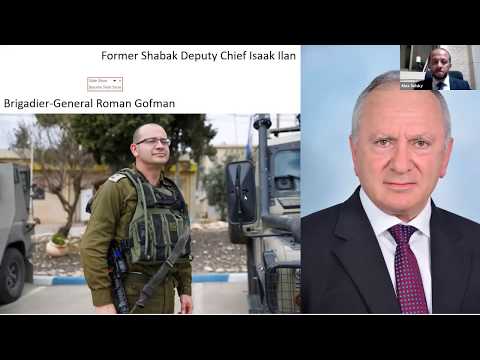
9:33 as a contribution to security but half percentage of recruitment to idf one of the highest to combat units today had percentage of in technological units officers as myself intelligence and cyber took years of suspicion and the stereotypes but definitely today it's all over uh shin bhatt you can see on the right side of this picture the former deputy head uh shin bet it's hakilan born in the soviet union in georgia and on the left you can see brigadier general um today he's brigadier general already a roman goffman who definitely is one of the most popular combat er senior officers many engineers were integrated in military industries many of those who were working in the industries in the form of soviet union definitely space is another area of security where the engineers from the former soviet union
10:39 were integrated when they came to israel um science you can see this uh very nice professor michael zinigrad who is director of the university of shimon in uh generally if you go to chamron university i think that half of the speaks russian between themselves um a lot of researchers and academic uh in academic institutions in the first line like weizmann institute and technion from the former soviet union technology and high tech well you can see on this picture dr kira radinski who was named one of the most influential scientists in israel and one of the most influential israeli science young scientist in the world definitely many engineers and medium level managers in israel high tech and they brought boost to low-tech industrial industrial engineering and technical professionals um
11:43 i know that's uh i read some interview on schmoyle donnerstein the owner of uh one of the biggest uh you know locking company and he says that you just get into our plans and you hear only russia um medicine 30 of doctors from the beginning of 19th until now are those who came from the former soviet and they soon retire which makes a huge problem of shortage in israeli um medical system you can see on this picture professor leonid edelman who is former head of israel medical association i think the most symbolic and popular of all of them a government meaning professional level um unfortunately not represented enough proportionally a management position with few exceptions and i think the biggest exception that i can remember is the professor eugene candel who was born in moscow but
12:44 made his academic career in a american then came back he was former head of the national economic which i was spokesman of when he was the and he was netanyahu's nominee to be the head of the central bank of israel media well there is a terrorist and very very wide russian speaking media in israel one two tv channels three radio stations uh lots of newspapers and definitely we today already can speak about very wide integration of a russian-speaking journalist within the mainstream israeli media here you can see alexandre lucas who is the enter of the white tv the biggest online portal and biggest online tv station in israel in mainstream media you definitely can see junelabson in 12 and anabarsky and marie and dan dobin
13:48 and galatz and so and so on it will it will definitely rise uh social media influencers the most influential i think rated for many years as the most inflation and i think the one of the most the funniest guys in israel his name is evgeny whoever understands follow him you will like it um well definitely culture this is the building of gesher theater in jaffa one of the most theaters today um sports well if you speak about sports you definitely must speak about chakmat so this is boris gelfin the grand master who is almost the champion of the world um and i would like to say a few words also about these stereotypes um that's you know during first years people spoke about law a lack of loyalty that you know every ole from the former soviet union is a kgb agent
14:51 definitely today everybody understand that it's total why and loss that we think not like that a contrary to all the stereotypes uh police statistics say that um olymp from form of soviet union are involved in crime proportional to their representation no all the accusations of mafia involvement were not proven all the accusations of uh higher crime of alcohol consumption was not proven and because of the high percentage of secular and high percentage of uh simulated families as i told you before they were accused of being non-jewish and this is also not true as i told you already um and i must tell that many of the stereotypes mainly maintained because of the structure of the israeli multi-partisan political system when every sectorial party maintains uh image of enemy in other social groups in israel um immigration lots of stereotypes about the fact that russian-speaking israelis leave israel this is also a stereotype and
15:55 a lie only about 88 percent left israel primarily to north america to study and to work and make business but also left for good but again we don't know when people come back you know eugene professor kandel was also one of those who thought that left and then he came back and became one of the most economists in israel but definitely more young primarily for economic reasons people live and we really hope that they will be back er one word about the future i think that in the future the contribution of the second generation of the olim from the former soviet union will be much higher than the first generation because they will be fully israelis they will be more traditional they will have more connections they will have more financial resources and their families and friends in former soviet union north america and europe which they connected to will also be much more influential in
16:58 that in those countries so definitely i think that uh they will be a much more influential i finished and if you a questions i'll be happy to answer hey thank you so much for that what are the views are those the questions to answer yeah i'll be asking them though okay good okay what are the views of the russian community on democratic norms such as free such as free speech judicial independence and free elections i think this is another stereotype definitely jews who came to israel they understand democracy definitely the second generation so sometimes they are accused of not understanding democracy just because want water they want to the state to take control not meaning that not to
18:01 freedom to the citizens but definitely be organized and and to control the situation and to definitely in a state that fights the enemies so i think there is uh it's a stereotype that they don't have a democratic mentality can you give us an idea of the numbers and demographics of the remaining jews in the former soviet union yes yeah well i can just read the questions to answer so far can you give us an idea of the numbers and of the jewish communities remaining in russia in the form of soviet union well very roughly it very depends who you ask what you consider jewish we speak about about 800 000 of jews and parts of their families okay i think we lost them again
19:17 there you are are you back with us hello hello we lost you for a moment hello stacy can you hear me yes well i will hi can you hear me now yes okay want to read the question so you
20:33 want me just to uh to read an answer okay i'll read the next question what is your personal story regarding your aaliyah huh stacy i cannot hear you i think we lost him again i'm so sorry about this technical difficulty okay can you hear me i would be happy to
21:35 answer those questions that i got because they're amazing sure of course why don't you pick two questions and then we'll have to do that okay so i think this is a very good question you have painted a rosy picture of integration of russian but we recall reading in real time of the difficulties professional russians especially doctors hadn't been obtaining israeli licenses because of more uh strengthened israel requirements and could you come comment so first of all i would like to comment there are no russian immigrants in israel there are russian-speaking jewish israelis who repatriated to their homeland russians are in russia where jews my mother's last name is israel that's the last name she was living with in a former soviet unit now concerning rosy picture of integration yes i told during the first decade there were lots problems and many of the educated people
22:38 were not integrated in the field of work but these times are very much over i mean definitely today every young generation of those who either came in a very small age or grew up in israel i came when i was 16 alone i don't consider myself you know i consider myself israel i grew up here so i don't have any problem with integration but again yes there are you um fights between every group in israel i don't see that there is any but i think in the governmental sector yet there are more problems but i'm not sure their problems of integration are because they're not wanted i think that they just don't want to go to the government professional um positions i think everywhere the russian-speaking israelis want to be integrated they integrate it i i don't think that that there is any
23:40 problem of stopping them and if there is it's very marginal i think it's it's not relevant to 2020 um what about useful ties of rational link to arabs as clients of russia i think i think those who knew arabs are retired already but definitely there is a very well understanding of the arab worlds from russia definitely from the former soviet union how significant the russian mob in israel today come on guys it's not serious i told you all these accusations are false no any evidence we had about russian monk uh do russian jews from the recent allies feel discriminated against as i told what is the inter marriage rate between russians guys i don't like the word russians there are russians speaking israelis russians are in russia and also you must understand that the israelis
24:44 who came from the former soviet union only 30 came from russia many of them came up from russia and it's a very big those who came from uzbekistan or azerbaijan are very very different to those who came from russia from saint all right mr zelski i'm so sorry we have come to the close of our webinar thank you again so much for joining us thank you and again uh he's from thank you tune in on wednesday for mr perry's weekly update at 3 p.m eastern on all things israeli as well as dr amatsya bahram's friday at 1 pm eastern speaking on iraq and turmoil turmoil what does the future hold uh be sure to check out our website our youtube channel and soundcloud for recordings of past webinars thank you all for joining us and i hope you have a wonderful day