
Webinar or Talk
"Energy in the Eastern Mediterranean: The New Frontier" with Thanos Davelis
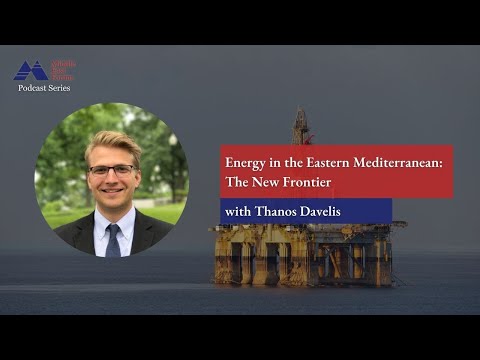 Watch on YouTube
Description
The discovery of natural gas off the shores of Israel and Cyprus has transformed the eastern Mediterranean into a critical energy hub. It has also seen unprecedented cooperation (the 3+1 framework of Greece, Cyprus, Israel and the United States, and the Eastern Mediterranean Gas Forum in particular), which has magnified the region’s role. Great projects, including the Great Sea Interconnector, the IMEC corridor, and the Amalthea Initiative, make the region a nexus of innovation and collaboration. How did this transformation unfold? What does it foretell? What might impede its potential?
Thanos Davelis is director of public affairs at the Hellenic American Leadership Council and the host of “The Greek Current,” a daily podcast focusing on Greece, Cyprus and the broader Eastern Mediterranean. He holds a B.A. from Loyola University in Chicago.
Subscribe to "The Greek Current" podcast here:
https://hellenicleaders.com/greekcurrent/
Transcript Automatic captions
Source: Automatic captions from YouTube, retrieved October 21, 2026. Automatic captions are machine generated and may misspell names and terms; check the video before quoting.
0:09 all right good afternoon and welcome to the Middle East forum's weekly podcast series my name is anaf Kalam and I will be moderating today's discussion we are pleased to be joined today by Thanos stelis director of public affairs at the helenic American Leadership Council and the host of the Greek current podcast who joins us to discuss the topic of energy in the Eastern Mediterranean Mr davelis will speak for 15 minutes followed by 15 minutes of Q&A from the audience and if you would like to ask a question you can do so by using the Q&A box located at the bottom of your screen to type your question and with that I will turn the floor over to stavis Anna thanks a lot uh thanks for the invite it's great to be on the other end of these podcasts I me one doing the the questioning so uh thanks for that intro and thanks for letting me speak on this topic a topic that I think is extremely important as the region essentially the Eastern Mediterranean
1:11 evolves you know over a decade ago there were very few people in Washington from you know Capitol Hill to the state department to think tanks who were talking about the eastern Mediterranean as its own distinct region and today the Eastern Mediterranean has emerged as I mentioned as one of the regions of the world where exciting new energy economic and diplomatic initiatives are taking place you know initiatives that are setting this region apart and drawing the attention of many from diplomats to thought leaders like yourselves policy makers Business Leaders and obviously energy giants like noble axan toal and any and you know energy was obviously the Catalyst for all of this as the world took note of the region almost 15 years ago after energy discoveries were made off the coast of Israel with the Leviathan gas field and Cyprus with the Aphrodite gas field and as we saw you know this sparked a flurry of diplomatic activity and interest in the region originally around finding ways to exploit these discoveries and bring them
2:13 to Market and this also coincided with Greece and Israel developing closer ties and soon we began to read about proposals like the eastm pipeline that would bring East Med gas from Cypress and Israel to Greece and the European market and with Russia seizing Prima almost 10 years ago the East Med energy soon took out a new dimension being seen as a key way to break the dependence on Russian energy in the region something we'll come back to as we look at the importance of countries like Greece and its Port of alexandris in northern Greece in the wake of Russia's fullscale invasion of Ukraine in 2022 um as gree Cypress and Israel began to work closely together over the last decade and a half they also expanded their Partnerships to the point where they touch on almost all vital issues so when you look at some of these trilateral meetings you see that they're talking about the economy they're talking about security they're talking about tourism they're talking about all kinds of stuff and the relationships are really getting deeper and deeper and we
3:16 may not have known at the time but gree Cypress and Israel were really laying the foundations for the Eastern Mediterranean as a region in and of itself and the trilateral between the three countries has expanded to include other countries in the region we've SE trilateral with Egypt uh we've seen Partnerships develop with Jordan with the United Arab Emirates and the discovery of more energy more gas in the zor gas field in Egypt's exclusive economic zone kind of refocused attention onto the region again and really made it an energy player on a global scale um the crowning achievement I would say of this cooperation stemming from energy has been the eastm gas Forum whose Charter was signed in 2020 and it institutionalizes the regional Partnerships we've been talking about even expanding them as you know in addition to Greece Cyprus Israel and Egypt it's brought France to the table Italy Jordan and the Palestinians into the fold with the European Union and the United States as permanent observers uh so as these Partnerships become
4:18 institutionalized organizations like the East Med gas Forum are setting the standard really in the region for how to conduct energy diplomacy and deepen Regional ties and there are some who've even compared it and still compare it to the European coal and Steel Community a project that I'm sure most of you are familiar with that laid the foundations for the European Union that we know today a project that many see as probably the greatest peace project in our recent history as Europe was a war torn continent um and since the European coal and Steel Community and you know the expansion of the European Union we've seen largely a continent that's been at peace uh but I want to shift us from the East men to to Washington where obviously none of this went unnoticed you know in the previous decade we saw Greece Cyprus Israel that partnership lead to the first Regional us Congressional caucus the Congressional helenic Israel Alliance caucus and eventually in 2019 we saw the passage of the landmark Eastern Mediterranean security and energy Partnership Act a
5:20 bill sponsored by former Senator Bob Menendez and Senator and now nominee first Secretary of State Marco Rubio that redefines how Washington looks at the broader region and you know this new focus on the region also saw the United States get much more invested in the trilateral between Greece Cypress and Israel adding a new dimension to this partnership through the 3+ one uh which then secretary Mike Pompeo actually participated in and you know while over the last four years we haven't seen secretary blinkin play a direct role in the three plus one during his time as secretary and that's somewhere that I think he could have taken a more Hands-On approach key figures in the administration like assist Secretary State Jeffrey Patt have worked closely on the region through his work as assistant secretary for energy resources and have really maintained the spotlight on it especially as you know Russia's invasion of Ukraine made breaking the dependency of countries in the region on Russian energy sources a top priority and the East Med obviously is set to play a key role as we look ahead uh in
6:22 the proposed IMC Corridor that will effectively link up the region with India through the Middle East and into Europe through Greece and is designed to be an alternative to China's belt and Road initiative and I think with you know since we touched on Greece this lets us moved to the the only NATO member in all of these initiatives we've been discussing uh which is Greece which along with other countries in the East Med has become integral when it comes to building out this next stage of a regional architecture that is transformative you know stepping back a bit I think we need to look at the role that Greece has been playing in transforming the region while the financial crisis is dominated most developments within the country over the past decade we saw at a bipartisan level among both you know the left and right with the cities that government during the crisis and with new democracy now we've seen a focus on relations you know with Israel on deepening ties with countries in the region um Greece's strategy has been outward looking it's been looking at the East Med as a region and its unique geographic location helps
7:25 it serve as a Gateway into Europe and has become the natural ENT entry point for energy whether it's LG arriving at ports like alexandris in northern Greece or you know gas that is coming through the transit Adriatic Pipeline and being shipped North into the Balkans and you know the tap the transera pipeline and the port of alexandris a port that really was you know catapult catapulted into the Limelight after Russia's invasion of Ukraine they're the result of a number of key Investments That Greece made as it cultivated its relations in the region you know with the tap in place Greece and bu ARA set out to link Bulgaria to this network through the igb pipeline in addition Greece managed to finally put you know the Macedonian name issue behind it with the Presa agreement a deal that opened up the Western Balkans to Nato and to this new energy and economic infrastructure being built so suddenly all eyeses R northern Greece with its ports of alexandr and saloniki and after Russia's invasion of Ukraine these Investments That Greece made began to pay major dividends not just for Greece
8:28 but for the West and the region alexandr with its new floating regasification unit is bringing American LG and sending it North into the Balkans additional infrastructure is being planned to connect North Macedonia to this grid as well a grid that will eventually link up with Ukraine and bring energy from the Eastern Mediterranean into Central Europe and Beyond natural gas Renewables are also starting to play a key part in this equation and Greece's role in expanding that grid is critical as initiatives like the vertical Corridor take shape now all of these developments have also brought Greece into the 3 C's initiative so when we talk about the East Med we're talking about a region that reaches from you know the Baltic as a result of the three C's initiatives to India through the imech corridor and a focal point for that is you know Israel Cyprus and Greece and Greece's Port City of Sal saloniki uh so I want to take them over here I want to take a moment here however and kind of pivot to Renewables and look at the region Beyond natural gas because natural gas may have
9:31 been what kicked everything off but you know the East Med pipeline hasn't come to fruition as I think a number of people may be expected um and some of the most important projects that we're now seeing that are underway are electricity interconnectors that are going to link North Africa with Europe via Egypt and Greece through the Euro Africa interconnector and the Middle East with Europe through the great sea interconnector that's designed to connect the grids of Israel Cypress and essentially ending the energy isolation of both Israel and Cyprus uh so with natural gas effectively finding its own way to the markets these projects have taken on a new dimension highlighting both the efforts to physically connect the region but also the potential for new energy sources to take Center Stage especially Renewables after all electricity cables are much cheaper to lay down in pipelines and they have a clear future as the electrification of the economy has become a key Target both for Greece and Cypress and others in the region uh this is also opening up the
10:35 possibility of physically linking you know through interconnectors countries in the East Med with countries like Saudi Arabia with Jordan and there doesn't seem to be a ceiling in my opinion on the potential benefits these projects can have in ending the energy isolation of certain countries in the region as we mentioned or bringing clean energy from North Africa into ear Europe and up through the vertical Corridor now obviously a lot of these developments over the last year have been overshadowed by War either in Ukraine or the war that broke out in the Middle East after October 7th and it's hard to point to a country in the Eastern Mediterranean that's not impacted directly by what's happening in the Middle East in the post October 7th world and what challenges this presents uh but I think one of the things that this has highlighted is the importance of the relationships that have been built over the past decade and I think that we are seeing that reopening the door to that era of regional cooperation is going to be a must uh moving forward now one of the main strategic goals it seems of Hamas on October 7th was to
11:39 disrupt the process of regional integration that we were seeing and that's really been embodied in initiatives like the Abraham Accords the East Med gas Forum or the IM Corridor and while it may have put a brief halt to some initiatives the war in the Middle East has highlighted as I mentioned the importance of these relationships you know deepening them particularly the 3 plus1 format that we mentioned which we think could lay the groundwork for peace uh and with that I want to turn our attention to Cyprus uh a country lying at the crossroads of the Middle East Africa and Europe and which sits like an aircraft carrier almost in the middle of the East Med and you know when this war was in its early stages we saw immediate dividends of all of these uh this diplomacy this energy diplomacy that's transforming the region I mean Cypress was quick to present a human Aran Corridor U it rallied a number of countries together including you know the United uh the United States the UAE the UK U the European Union Germany the Netherlands Italy to set up the Amalia
12:42 initiative to get humanitarian Aid through two people in Gaza and last year we've also seen Washington another European capitals really rushed to Athens and nikosia asking for help with evacuations from Lebanon and from The Wider region none of is possible without you know the close ties that have been developing over the past years now there is an elephant in the room here that I think we need to address and that's that's turkey and we can't really talk about the eastern Mediterranean without addressing its role in all of these developments now unfortunately turkey's president erdogan through his policies has managed to alienate almost all of his neighbors taking turkey from a stated policy originally of you know no problems with its neighbors o on to a policy of essentially having only problems with its neighbors and uh we saw quickly a deterioration in the early 2010s of relations with Israel which was a catalyst for Greece and Israel uh to develop much closer ties uh We've saw relations break down with Egypt that
13:45 he's trying to mend now we saw relations break down with a number of other countries in the region as well and it's commitment to the so-called blue Homeland policy which runs against basic international law and sees at Lake claim the maritime zones that fall within those of neighboring countries not just Greece and Cypress but also Egypt um has been a problem for a lot of countries in the region uh but I think what's important to note here is that countries in the region haven't closed the door on Turkey rather this response is simple you know play by the rules and the door is open for additional cooperation um that includes you know simple things like recognizing Cyprus um SE ing its provocative behavior in the aan um mending ties with countries in the region that it hopes to to work with uh so there is a way forward there uh and a door is open and now looking ahead initiatives like the 3+1 and the East Med gas Forum are even more important as
14:49 we start thinking about this post October 7th world and I want to turn to something that you know assistant Secretary of State jeofrey pite said earlier this year in Wasing Washington uh that October 7th showed us a contrasting vision for the region and I'm going to paraphrase him here you know One Vision from Hamas which is violence and Terror and another Vision which the US and its allies have been working on is to propagate one that focuses on Economic Opportunity on cooperation and on energy transition and I think the last few years have shown us that we really have to start thinking bigger in terms of how we cooperate looking beyond the East Med into you know the Balkans through to Central Europe to the gulf uh the Middle East and all the way to the Indian Ocean even uh so I think the incoming Trump Administration and the B Administration and its remaining months in office have a chance to re-engage with the region in a way that can build on these successes and president Trump's nomin or president-elect Trump's nomination for the position of Secretary of State Marco Rubio means that an individual with a
15:53 Clear Vision for the region could be in a position to shape US policy around that so there's going to be a lot of exciting things to look out for um and hopefully we'll be able to chat about it again but I'm uh think that my 15 minutes are up so I uh happy to happy to questions all right well thank you that was uh very insightful uh your topic is not one that we cover a lot on this podcast so it's good to get some insight from uh from Greece now I'll start with a question uh something that you touched on here a moment ago it sounds to me like every everybody including turkey would be better off if Turkey cooperated and as you say played by the rules uh what does Eran seek to gain by not doing so I mean ultimately I think you'll have to ask himim what he's trying to gain from it but if you look at the things that have been coming out of anara uh the things that we see are you know policies like the blue Homeland that I touched on so if you look at a map of
16:56 what turkey tries to lay claim to in the Eastern Mediterranean you'll see uh a map that you know encroaches uh and seems to want the aan half of the aan to be Turkish it's a map that shows Cypress without an exclusive economic zone um it's a map that you know makes it all the way to Libya somehow disregarding uh Greece Greece's exclusive economic zone as well and we have the illegal Libya turkey memorandum from 2020 uh to point do so I think a lot of the moves that we're seeing are are moves that uh are quite concerning and we have to take them you know for what they are I think you know someone shows you who they are believe them the first time and I think we've repeatedly failed to do that with aroan and um I think it's time to uh to see it for see for what for what is absolutely um now now I will move on
17:59 to a question here from Steven Miller who asks some people have mentioned floating LNG as a lower cost alternative to a pipeline any progress on that so Greece has actually been uh at the Forefront of a lot of developments on LNG if you look at uh the port city of alexandr for example a new regas uh new fsru floating regasification uh unit was just uh just went operational recently uh so that's going to take American LNG LNG from from around the world up through this network that we've been describing a network that's seeing you know bringing the East Med into the Balkans it's connected to Bulgaria it'll eventually connect to North Macedonia North Macedonia and Serbia have made agreements uh around this issue and to take it further north uh the idea is that this could reach from Bulgaria to Romania and ultimately to Ukraine so uh on gre's side there's there's a lot of exciting developments
19:02 when it comes to LNG there's also the floating regasification unit at uh atusa which is further south operational for a while um so at least on the Greek front LG um is a a key part of the equation and I think is becoming more and more important all right thank you now um we have another question here from Stephen Phillips who asks why is Lebanon not included in this Eastern Mediterranean partnership I mean that's that's a great question and I think uh you know Cyprus has good partnership has a good relationship with with Lebanon as well I know Greece does too so Greece has traditionally had Greece and Cyprus have traditionally had you know open dialogue and good communication with Arab countries in the region um they have strong ties to um to Israel as well so I think that you know Lebanon has a lot of
20:06 issues internally that I think probably are the subject of another podcast um but essentially I think once you know Lebanon figures out how it can deal with the challenge that is Hezbollah and uh how it can essentially become a normal functioning State then you know I don't see why the door wouldn't be open to further cooperation with Lebanon to Bringing Lebanon in uh in this equation well well thank you now uh you kind of touched earlier on uh well uh just the just the expanse and the reaches of these Partnerships going all the way to India to the Baltic now more broadly uh how does the Eastern Mediterraneans rise as a critical energy Hub influence the broader geopolitical relations with say China or with Russia so I'll tackle Russia first um I think the East Med emerged early on as something that at least in Europe and in
21:10 the US people were were talking about the region uh having potential to break uh the dependence on Russian energy and I think the findings whether they were in Israel or Cyprus weren't at the scale but the Egyptian fines were but since this gas has kind of been turned into LG and shipped around the world um to sell have the interesting development where interconnectors um a lot of uh the cooperation that we're seeing today around Renewables that's you know connecting Egypt to creit creit to the mainland through these cables uh the potential to connect Cyprus to Greece through cables and then to Israel uh the potential that exists with Saudi Arabia as well um to be bringing energy through cables and through other means into the region you get a region that I think is already breaking the dependence on Russian energy uh Bulgaria for example would have been in a very tough spot if you know the igb interconnect the igb
22:13 pipeline that connects the T to Bulgaria from Greece wasn't in place uh and wasn't been wasn't operational uh When The War Began so uh on the Russia front I think there's still work to be done obviously but um I think they're rising to the challenge there uh China's a much interesting interesting question uh because uh China isn't a malign actor in The Classic sense that Russia is and so there is a challenge there in you know how do you deal with Chinese investment um but I think that there is a clear sense among countries in the region at least you know in Greece and in Cyprus that uh the China the China element has kind of got to be marginalized or if it's already there marginalized or you know not uh not entertained um but yeah the I think countering both of those malign actors is going to require an active Presence by the United States in the region so
23:15 without a clear policy from Washington and like clear engagement uh I think it becomes much harder for countries in the region to you know stand up to bigger players like China right thank you now um Greece is in talks with Israel to develop a two billion Euro anti-aircraft system and a missile defensive Dome not unlike the Iron Dome system uh what spurred the uh the need to modernize their military and what uh how does turkey feel about that well I mean the need to modernize Greece's military is uh one you had a 10-year financial crisis where there were almost there weren't very many moves that were made to upgrade so Greece is really in need of upgrading its military if it wants to be this pillar of stability that we've all been talking about uh in the region so if it wants to participate in joint missions if it wants to be uh a leader in that
24:18 space you know ultimately it has to it has to upgrade uh a lot of the the defense systems that it has whether it's you know updated f-16s f35s gets you name it but obviously I think the need for an iron tone comes from the constant threat that you have on the other side of the aan from turkey and I think let's recall that since the mid 90s you know turkey has had a cases belly or a caal war uh openly declared against Greece if it chooses to extend its nautical miles from six to 12 miles which is something that's enshrined in international law and the UN convention on the law of the sea um you have you know up until recently it was only a year and a half ago that we were talking about you know Turkey conducting over 10,000 airspace violations over Greek Islands over inhabited Greek Islands we're not talking about you know a space that's you know disputed airspace we're talking about over inhabited islands where you know that was happening Ann happening annually uh you had daily overflights so
25:22 and you had rhetoric from from Ankara that was essentially you know erdoan saying we're going to come come at night uh one day or that their Rockets could Target Athens if they wanted to um so I think that there's a heightened sense sensibility around security issues in Greece especially with the neighbor that they that that's on the other side of the aan um you know it's not like Denmark and Sweden for example um and that gives rise to the need for you know upgrading the defense and the cooperation with Israel isn't you there have been you know talks in the past about creating a type of Iron Dome that could counter you know drones uh there's active cooperation at uh an airport facility in Greece where there's joint training that happens uh we see joint training across the board both in Greece with Israel and you know Cypress and Israel and the three countries together um the three countries with the US and
26:24 with other partners that we've seen in the past like the UAE at the inos exercises that took place annually so uh none of this is new now how turkey feels about it you know you'd have to ask them but uh I think the need speaks for itself when you're looking at it from the point of view of of Athens now uh in response to uh in response to their modernizing of their military Technologies uh do you expect turkey to uh do the same thing maybe uh purchase more uh Russian anti-aircraft uh batteries or anything of the sort I mean if they want a additional us sanctions then they're free to to buy additional you know s400s or or other Uh Russian military or Chinese military equipment but um I think turkey's angle is different turkey is trying to boost its defense industry it wants essentially to use what it's buying to inform its own defense industry and
27:29 produce its own you know fighter jet for example which we saw a brief test of uh recently but uh yeah I think I think turkeyy is also looking to modernize on that front and there's no no surprise there thank you now um moving back to Washington you you briefly touched on this as well uh how do you think that an incoming Trump Administration with his cabinet picks will differ in terms of their policy with regards to this uh Mediterranean uh energy energy boom so I'd like to think that there is you know a sense of continuity and we saw it you know at the tail end of the Obama Administration uh we saw it in the first Trump Administration where significant moves were made uh to deal to handle the region uh to approach the region really I mean some of the big successes that we talk about the East Med uh energy and security Partnership Act and in 2019 I mean Congress passed that during President Trump's first uh
28:33 first term and you have leaders that led those efforts like Marco Rubio who's now a nominee for Secretary of State um I think a lot will depend on who is appointed in what positions uh there were key people that were in the state department last time Trump was in office like you know Wes Mitchell who is one of the architects of the East Med that we're talking about today um but I think Marco Rubio probably is one of the people with a Clear Vision for what uh what it takes both you know to counter the malan influences that we talked about Visa China and Russia in the region um really put an emphasis on the Eastern Mediterranean uh and sees the potential and the opportunities that are there uh for what's really an exciting region I mean you know the East Med act if you look at it in and of itself you know something that Marco ruo LED uh a lot of it has to do with you know redefining the US role and the US approach to these meds so I think that you might have some key people that
29:36 could thread the needle um and take on a much more Hands-On approach than we've seen over the last four years from secretary blinkin but you know a lot remains to be seen all right well thank you very much now we have unfortunately reached the end of our podcast for the week I want to thank you again Thanos for taking the time to uh to inform us on this topic thanks a lot of course now uh for our audience is there somewhere where they can go if they want to follow more of your work yeah absolutely um they can follow our podcast uh the Greek current we're a daily podcast about 10 minutes a day uh we do a deep dive on a an issue that relates to the Eastern Mediterranean Greece Cypress the broader region um and you know we cover economic stories geopolitical uh and all the breaking development so uh we have guests on every day that are experts in their field and um you know if they want to do
30:39 a quick 10-minute hit every day to catch up on the East Med I think that's the perfect place and it's called the Greek current the Greek current great so uh in the future uh for those of you watching this on the YouTube channel I will be sure to link that in the video description below but until then we thank you all again for joining us today and for your participation if you've not done so already please subscribe to the Middle East forums YouTube channel where you can watch over 400 of our past podcast episodes now we thank you all again for joining us and I hope you have a wonderful day thanks