
Webinar or Talk
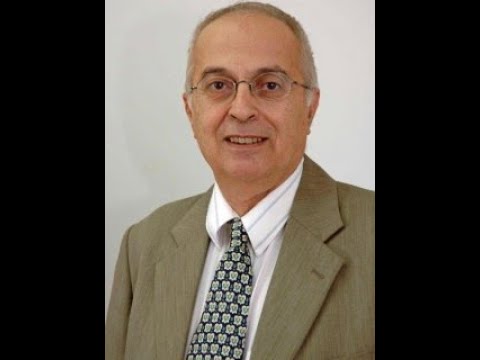
Iranians Debate the Nuclear Deal with David Menashri
 Watch on YouTube
Description
Whether or not to return to the JCPOA (the Iran nuclear deal) is a huge issue in U.S. politics; and so too in Iran. What are the primary camps arguing for and against going back to the JCPOA’s limitations, what are their motivations and arguments? Which side will the Supreme Leader likely support?
Transcript Automatic captions
Source: Automatic captions from YouTube, retrieved November 9, 2026. Automatic captions are machine generated and may misspell names and terms; check the video before quoting.
0:00 Good afternoon and welcome to the Middle East Forum speaker webinar series and podcast. I'm Stacy Roman and I will be moderating this discussion today. We're pleased to have David Manashi, Emiritus professor in the UN uh at the Middle Eastern and African history department of Tel Aviv University join us to discuss Iranians debate the nuclear deal. Professor Manashia will speak for 15 minutes and open it up for questions. Should you wish to ask a question, please use the Q&A box located at the bottom of your screen to type your question. And with that, I will turn the discussion over to Professor David Maybe you could unmute. There we go.
0:45 Yeah. Can you Can you It's okay. Yes, we can hear you now. Thank you. Thank you very much, Stacey. Uh it's uh good to be with you and thank you for the invitation. Let me start by saying what I believe it's obvious already that Iran is a is a very complex country. Uh there are usually people speak about Iran in terms of black and white but there are many many colors in between.
1:20 There are many groupings. There are many tend different tendencies and there are even different basic differences between groups. Not only in terms of more pragmatic or more extremist but also in terms of the basic of Islam, how Islam should be interpreted, implemented and if the ideology that runs this regime is purely Islamic or what we I think we can see recently is more mixture of religion and nationalism the tradition of the Persian now mixing with ideology but what both of them think that Iran is a superpower Iran is the major power in the Middle East when I speak about this complexity
2:24 let me give you one example from my own experience uh recently two years ago I was notified by friends that the book that I have written in the early 90s on Iranian education has been translated into Persian and uh with cooperation with the Supreme Council of Cultural Revolution which is the most one of the most extremist radical councils that was in charge of of uh Iranian culture and uh education and society.
3:02 And I didn't know about it. They don't ask permission to translate. But uh when I saw the book, well I was really amazed that first they praised it in a ways that I am really humbled even to quote uh as a book that is considered the best book on Iranian education. and they praised my conclusion even if some of them say that the Islamic ideology was a failure. Uh and of course they eliminated any sign that I am an Israeli but they knew exactly what to eliminate. So they knew that where I'm coming from.
3:45 So I'm saying it because it's you can see things that you can't even imagine. And I checked further and I saw and I knew about some of them that they translated many books by Israeli commissions like Professor Eton Colberg's book on Shiism. You know, imagine that the capital of Shiism translates a book written by a professor at uh Hebrew University. So you can see this kind of uh things that may appear on the surface as contradicting their basic lines. So but it's important for us to remember that not always what we see in Iran in what it really is. And I'm try I will try in this short presentation to touch upon some of the and I of Iranian politics uh and and not competing with the news that I'm sure all of you follow but try
4:50 to somehow give a wider picture of Iranian society and the internal conflicts within different parts of society and even within the regime. Uh in addition there is in Iran a civil society that is unmatched by any other country in the Middle East. I would say now recently 10 years ago we saw the Arab spring but Iran has many Arab springs or Persian springs and it has been known by its repeated uh involvement of people in the political process. Just to remind you that Iran is the only country in the Middle East which has had two big revolutions in the 20th century. Constitutional Revolution in 1906, Islamic Revolution 1979, students uprising since 1999, 2009, 2017,
5:55 2018, 2019 going into the COVID 19 that basically stopped this process. There are three points also should be said in the We call this revolution Islamic revolution, Islamic regime. But I beg you to consider that it was Islamic only in the Islamic meaning of the word Islamic or religious. The the roots of these revolutions have not been religious. They've been social, economic, political, cultural, that has been hijacked with the revolution to make it an Islamic revolution. I lived in Iran the last two years of the Sha's rule doing studies at at Tehran University.
6:53 No one would uh convince me that the people went to the streets because they wanted to return to Islam. There was such a thing. But the people were fighting for two basic issues, and freedom, welfare and liberties, social justice and political justice. So far it has not materialized. The second point when we speak about it is important to keep in mind that although there is one Islam, there are many interpretations of Islam.
7:36 Not only Sunni and Shiites, but within each of them. Here I can quote a leading Iranian intellectual that after saying these things had to leave to the United States, Abdul Karim Souch. He said there is no one interpretation of Islam. There is no one interpretation that is better than the other. There is no final interpretation of Islam and there can be no official interpretation of Islam. Namely, even Islamic regime cannot tell you this is the only way to understand Islam. Why? Because that's what I happen to think. And to give you an example, the most leading Ayatah in Iran in 79 was sent to house arrest until his death six years later. The man that Ayatahi picked up to be his successor Ayatari was removed from grace and put under house arrest until he passed away. So there are even within the clerics there are differences. The third question that
8:41 we have to keep in mind and which we should have known is any revolution even any new regime that comes to power they cannot really follow entirely what they pledged and promised in opposition upon coming to power. tend to change and they when they faced with the harsh realities of life they change their policy not voluntarily but because of the difficulties they are facing. Here I give you couple of Hmeni said they will fight with Iraq until victory and after eight years he changed his mind and he said it would have been sweeter for me to drink poison than signing an agreement with Saddam Hussein but we don't have a choice.
9:43 Iran changed its constitution to allow Ayat who did not qualify to be supreme leader to allow him to be nominated selected as supreme leader and this supreme leader in 2013 he termed this heroic flexibility and allowed doing business with the great Saturn namely the United states. Iran was fighting Saddam Hussein because they said Saddam the Bas regime is secular and national and who was his best friend if not Bashar al-Assad the leader of the Bas regime the same Bas ideology in Syria.
10:32 So you don't have to look into really uh dedication to the dogma because dogma is subject to change. The only dogma that remains valid. The only ideology that I think this regime has is the survival of the regime. You can call it ideology, you can call it policy, but it's the only thing that remains uh all the time. so but how much to be pragmatic to change in what field in what rate on these there are different factions within Iran. One of them we call uh radicals extremists hardliners. The other one we call it pragmatic realists.
11:23 The political science professors would always call it realism. uh that consider the realities of times. I would not call them moderate however but there are relatively more moderate than the other one. And these two camps struggling for power. The extremist hardliners they have few advantages. First they speak in name of God. Well, it's very convenient in a religious society to tell them what is the true will of God. I don't know how they know, but probably they have direct line.
12:04 Second, they have the military power. they are not hesitant to suppress people. When you have a leading ayatah who say that whoever thinks that Islam is religion of mercy doesn't know what is Islam for God's sake you start everything saying in the name of God the how you can say Islam is not religious of mercy and he said Islam order us to take a sharp sword and cut the tongues and heads of people who speak or act against us and they don't hesitate to do the c the leading candidate to the presidency today Ibrahim Risi he was a member of four men ordered the execution of four or between four and 5,000 people in 1988 he told them there are too many people
13:07 in jails we cannot afford it if they are execute them. If they are not guilty, free them. And close to 5,000 people have been executed because not because people who have been already tried and imprisoned and some of them are about to be freed from prison and they have been executed. So this is the mercy that we see from this regime. The other advantage that they have, they are confronted with naive enemies. And here I ask to apologize to my American friends at the head of them, the United States of America.
13:49 Consider if Iran Iranians asking themselves which is the country which has made the greatest services to Iran national security to the Islamic regime's national security. One answer is unavoidable. It is the west American le coalition that fought Saddam Hussein and broke his military power in 1991 that returned to Afghanistan and removed the Taliban, the enemy number two of Iran in Afghanistan on the east side.
14:25 Returned to Iraq in 2003 to remove Saddam Hussein. 2009 did not intervene when students with people were struggling in Iran for freedom, the green movement. 2015 with the first with the nuclear deal, 2018 with retreating from the nuclear deal and 2021 the way America is if this will be the end to the nuclear deal. All of them have done have been done or almost all of them. And it doesn't matter if it's Democrat government administration or Republicans who speak about Bush the father, Bush the son, Obama, Trump, Biden.
15:12 Because I think that what we see in this confrontation between Iran and its enemies or the United States, I call it the weakness of American strength visav the strength of of Iranian weakness. Iranians are weak but they are being allowed to think that they can dictate the rules of the game. now in in Vienna re re-engaging to mix to fix this uh deal. The Iranians don't even agree to sit with the Americans in one room, but they ask for uh all kind of uh uh concessions. unfreeze the their their body and so on and so As we see in say in Hebrew, righteous
16:18 people their work is done by others. I say here in parenthesis that the Iranian strength, the power that we see in Iran today in the region is not entirely because of the west or because of religion. treat the Iranians more seriously. They have a great educational system, science, technology advance. The world did not allow them to buy. They produced and they learned. And I think that we Iran should not be dismissed as a third backward country. They have also history, heritage of running and state, culture and many other strengths that they have.
17:17 The other strength of Iran is they are sharks in diplomacy. You know the two things that Iran is known for is they invented chase and they invented or they are good in weaving carpets. In weaving carpet you have to think on each and every dot the tactical way. In chase game you think strategically and they know how to combine the two mainly when they are confronted with others who are not as I don't know or mature in try in thinking for long term and thinking only on the tactical tactical side. Now another strength and this is the last thing that I want to mention is that the the the extremists control the country. They control the institutions of power.
18:21 For the first time they have speaker of parliament who was commander of the revolutionary guards. It's going to be probably a president who is very close to the revolutionary guards and very extremist hardliner. they have the supreme leader. So if you control the executive, the judiciary and ris is running for president is the head of the judiciary. So you have the judiciary, the executive, the legislative and the supreme leader.
18:58 Everything is behind you. Now I think what is important to think to consider when we speak about these elections these elections are not only about the presidency is now 82 although in my age he's few years older than I am more than few years maybe but I don't consider him very old but he's already 82 we don't know much about his health and it's clear that now that they are electing a president for one four years that can continue to another term of four years all previous presidents have been two terms except for one that had been assassinated and one who has been impeached in the early days of the revolution banis and raji they have to think about the succession and the presidency and the judiciary and
20:03 the legislative have the rule. So I think that the cloud of the supreme leader is looming over the elections and they have to make sure not only to and but also to perpetuate their their uh Iran is trying to give an impression of uh democracy but it is theocracy. Iranians have gone to elections more than any other nation that I know.
20:41 Every four years presidency and second round of the presidency and you have every four years much less council of guardian council of experts and so on and so forth. But this is not this is not real democracy. They changed the meaning of the constitution. The constitution established a forum council of experts uh has the right to overview the elections.
21:22 what they've done rather than overviewing or uh controlling the they are overviewing and controlling the In every four years elections you see hundreds of people in the marginless thousands of people being disqualified without even rationale without even explaining the rationale. There have been close to 600 candidates Seven of them remained. This may still change when with the pressure that there is on but still they disqualified all the leading reformist Two of them remained and they are not well known.
22:13 On the other hand they kept the leading radicals or extremist. I can see you as I understand that I have two minutes or a very short point. uh it's uh you know ultimately if you want to end with a happy note or more positive the whoever is going to make the change in Iran I think are the people of Iran the young people of Iran who are now very frustrated very disenchanted and uh few years ago there was an article in uh the newspaper when an ayatah warned the young people not to cross certain red lines and to obey to obey true Islam. A young student whom I don't know wrote back a fascinating article
23:16 but I'll come only to the punchline at the end. He said you preach us to obey true Islam but who is to define what is the true and false Islam and he said the problem is not that we are not following this or the other way we are young and we want to live the problem is due the clerics in the oneway street you are driving against the flow of traffic now if you have driven ever In Iran, you know that you can drive against the flow of traffic. It's the most crazy traffic, but not for a long time. So, I think the hope of Iran is by the young people of Iran. Thank you.
24:01 Thank you so much for that. Uh that was a fantastic explanation. The first question we have in is from Marvin Clemel. Uh should the United States pursue a renewed JCPOA agreement with Iran? Uh if not, what is another possible track to prevent Iran from getting a nuclear weapon? is at war. It's tough question. You know, I must uh that some most I think people in my friends in the Middle East forum were not happy to hear in 2015 when Obama reached close to agreement.
24:39 I was not against this agreement and I thought that it's a bad agreement but bad agreement is better what is better this this bad agreement was better or no agreement but you had this agreement the Iranians for them this was not enough just to remind people I know that people here are well informed the implementation day was January 1st 2016 the deal was it's easy to remember the French revolution July 14th 2015 few days before the Iranians hijacked an Iranian American boat with Marines soldiers and humiliated them.
25:41 Two days after the deal, Ayat's website has shown a picture with iron fist with airplanes and tanks and the what was written there was against said that Iran that for Iran and mostly to United States it's part of our DNA. So the idea was that you go to the deal, the Europeans come in and then but that's not what the Iranians thought. But when you have a deal to withdraw for a unilateral, it's another mistake. I think that Obama rushed because he was at the end of his term and he wanted to do the deal and Biden now is rushing because he is at the early stage of his term but it is the end of the term of So I think you had be more patience why you have to do the deal now with someone who is after after June 18 he is not in in in office. So I don't have simple
26:48 answer to it but I I'm not happy with the whole cycle of events. Thank you. And from Stan and Nora on the flip side was Donald Trump's strategy against Iran a realistic one with the maximum pressure. I don't know what was the Trump's uh Trump's uh well he came with maximum pressure. The Iranians came with maximum and they won. I I I I I can't be polite with you. You You could not You know that the Iranians have different ways to keep their people under their power.
27:26 I feel pity for the people of Iran. Uh people don't understand what does it mean when parents don't have money to buy food to their children and money was and they continue to help all kind of adventures from Syria to Yemen, Iraq, Lebanon, and now we hear more and more about Hamas that they praise the Iranians for supporting us and giving us. So if you don't have money for food or medicine, take this unfreeze money and put it in the in the med medicine to give to your people. But the people don't have a voice. The people can can do demonstrations then they have done it more than others. But I don't think that is retreating from this from the deal uh was the best solution. But if you retreat from the deal, why you have to chase them to do the
28:29 deal with you? He said publicly. I can give you better terms. So what what signals and another point in the midst of all these and it's again it's not against Obama or against Trump and I'm not uh I'm not American citizen. I'm not going to preach you which has this better. Obama threatened the Iran if they will cross red lines with using chemical he will react. They crossed. He did not.
29:05 Trump threatened that if they will fire American or drums or whatever in the Gulf, he will react. What happened? They shut down sophisticated drone and what happened? Nothing. Then on the top of it, both of them rightly from perspective of the United States possibly they say they want to go out of this region and they already started to retreat. How you keep your relations with your allies? What you say to Saudi Arabia and also to Israel when America is withdrawing?
29:44 Let's add to the Iranians hutzbah and they can demand more. Understood. So from Len Leven, does the average educated middle-class Iranian feel a strong hatred toward Israel? And and also uh how do they feel about the JCPOA that the average population? The average population were very happy with the 2015 deal. so happy that the regime appealed to them publicly. Don't show your joy because the they will think that they have managed to have a good deal. You know the government tells his people don't don't be joyful don't show it. So of course they were happy because they believed you know they are they want to decent life.
30:40 As I said the earlier at this stage of my talk, the revolution was not about this or that regime. The sha's regime did not give them to breathe. But this you know under the sha regime speaking against him was a crime. Today to speak against the regime is a sin. I don't know which one is better. So I think this is the frustration of the people. They would love to have this renewed deal, but the the men who was at the head of it, the president and the foreign minister don't carry any weight now.
31:26 So, this question has come in a few different ways from multiple viewers, but is the Iranian leadership rational in the sense that self-preservation is their most important goal, or are they more interested in destroying Israel than staying in power? Well, let me say a word about about Honestly, I don't think that the average Iranian wakes up in the morning and says, "How can I destroy the state of Israel?" It's not the case. I'll give you quote from President Rouhani just three years ago. He said the problem number one of Iran is not Israel, is not the United States, is the environmental problems, the deterioration, the devaluation of the currency, the unemployment.
32:16 the daughter of Ayatah Pakanjani who was president his she went public saying what we want from the from Iran from Israel a leading Iranian intellectual you can chase him you can find him on internet professor Zeba Kalam the there's a video that went viral viral that he was trying when you enter offices in Iran you have to step on Israeli and American flag. He was going pushing people to go behind the flag, not to step. And then he went to the television station say who commissioned us to say that to Israel and to fight Israel? Why we have turned to be in Persian and they say we have been uh the the dish that is warmer than the soup. When you have a soup, you have this plat. Why the plat is warmer? Why we have turned to be more pious than the pork? Why we are more Palestinian than the Palestinians? This is the view of
33:18 many many people in demonstrations. Last year we saw students in university going behind around the flag of United States. So that's not for for Iran for Iran. Israel is an easy enemy to claim leadership of the Muslim world. They have to raise the flag of Jerusalem. And they are doing it very seriously. And it's not only the ideological side of it because they've Islamized the conflict with Israel. It's now kamas is doing it with Jerusalem.
33:52 But they are now around the borders of Israel. They are in Yaza Gaza. They are in Lebanon. They are in Syria and even in Yemen. Israel's interest because of much of our imports goes from the seas. interested. Well, unfortunately, this is our last question. I apologize to our viewers. We have quite a few fantastic questions in that we can't get to today. But from David Lavine, if Iran was actually able to develop or obtain a nuclear weapon, what would you predict would change in tan's behavior visa v Israel or the rest of the world?
34:28 Well, I I don't want to even think about it that people like Ahmed Nijad who went after his elections week after his election in 2005 to the UN and gave a speech at the UN in which he said when he came back he he spoke about the mahi the messiah and so and so forth. He came back and an Ayatollah was sitting with him and asking him about his impression from the General Assembly. He said throughout my 27 minutes of speech people told me and I noticed myself that there was an aura of light above my head with God protection. People who speak in such terms cannot get close to to this bottom of nuclear weapon. If they will use it or not, I don't know. But it's going to be a different Middle East.
35:27 Other countries will seek and get nuclear weapon. And I think that it is a first priority of the United States with Iran is to stop this march towards nuclear weapon. what I said that is deals were not good not good enough it doesn't mean there should not be a deal that the main way that you can stop Iran is through negotiations but honestly I don't know what will be the administration in three weeks in Iran and how they will treat it but I know one thing radicals extremists hardliners they are open to wisdom at the end I said earlier, people regimes don't retreat from dogma voluntarily, but when they see that the price that they have to pay is beyond what they can pay, they will usually find a way to go Thank you.
36:30 Thank you so much. Unfortunately, we've come to the close of our webinar. I thank you again, Professor Manasherie, for taking time to speak with us today. Thank you. For our viewers and listeners, please be on the lookout for our weekly webinar offerings email coming out over the weekend. We will not be having a webinar on Monday. Thank you all for joining us and I hope you have a wonderful day.