
Israel Insider
Israel Insider with Ashley Perry
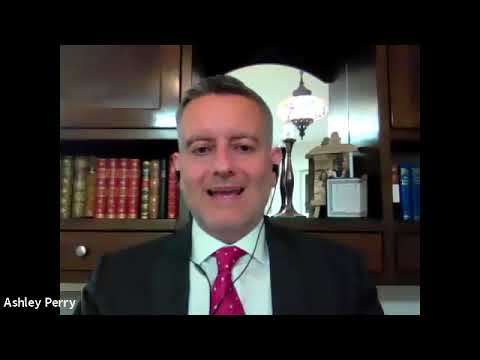 Watch on YouTube
Description
That the Haredi (Ultra-Orthodox) community has at times openly flouted the lockdown rules has generated widespread anger towards it, leading to a strong majority of Israeli voters not wanting its two political parties to be part of the next government. What does this mean for Prime Minister Netanyahu and his most loyal coalition partners?
Transcript Automatic captions
Source: Automatic captions from YouTube, retrieved November 10, 2026. Automatic captions are machine generated and may misspell names and terms; check the video before quoting.
0:00 All right. Hello and welcome to the Middle East Forum speaker webinar series, Israel Insider with Ashley Perry. I'm Stacy Roman and I will be moderating this discussion today. We're pleased to have Mr. Ashley Perry, advisor to the Middle East Forums Israel office, join us here each Wednesday at 3 p.m. Eastern to update us on all the events going on in Israel. Mr. Perry will be giving us a briefing on current Israeli affairs for 15 minutes and open it up for questions. Should you wish to ask a question, please use the Q&A box located at the bottom of your screen to type your question. And now with no further ado, I'll turn the discussion over to Mr. Ashley Perry.
0:33 Thank you very much, Stacy, and good evening from a very snowy uh Israel. We're currently under a bit of a blizzard, something that we were promised uh the last two weeks, and finally it happened. Um there's been a few power outages, so I hope that doesn't happen uh during the next half an hour. So, let's try and get through it. Um, obviously there's lots to talk about with the elections, with what happened uh with uh an Israeli uh uh crossing over the line into Syria. We can talk about that. We can talk about many other issues. But I'd like to focus tonight a little bit on uh something that we've touched on many times in the past, but is is is extremely important for these upcoming elections, and that's uh the issue of the ultraorththodox community in Israel and specifically the parties that represent them. First of all, a little bit of uh statistics.
1:22 Around 12% of the Israeli population are what's called uh ultraorththodoxim. Kharedim is the Hebrew word uh that is used by the community themselves for what's generally called ultraorththodox black hats. You know that that sort of uh uh community which um you know there is in the diaspora in the US in the UK and elsewhere. um ever since the 80s basically uh there was always ultraorththodox parties in the history of the state of Israel mostly uh they represented uh in in in in Judaism at least in Israel let's say to a certain extent socially there's two major groups there's Ashkanazim and Safarim it's an oversimplification but it's one that's used in the state of Israel Ashkanazim tend to mean central to Eastern European jewelry and safarim means anything from the uh the Mediterranean basin, North Africa, Middle East, um the Balkans, Turkey, etc. For many years, the only ultraorththodox party was the Ashkanazi
2:25 party, which is today known as uh United Torah Judaism. Uh and ever since the 80s, a new party was formed called Shas. uh started after the very charismatic Rabbi Ravi Ysef who was the spiritual head uh until his uh he passed away a few years ago. The difference between the two parties um I mean there's many differences in their outlook and etc. But as far as where they get their political base from the Ashkanazi uh Kharedi party largely in fact almost solely gets its votes from Ashkanazi Kharedim. uh there's two parts to it.
3:03 There's the kidic and there's the Lithuanian the non-hasidic branch and they work together sometimes uneasily because there are major uh difference in world view outlook which rabbis they listen to etc etc but they know that they're stronger together uh they pulled for many years anything from six to eight u because I said they they sometimes do try and reach out to other communities but very minimally so and with uh with a minimal amount of success the other party sh which were formed in the 80s try to do something uh far greater. They try to reach out beyond the ultraorththodox community, beyond the khedi community to what's known as the traditional public uh or the modern orthodox or national religious public.
3:48 Uh why they were more successful is a difference in the worldviews between the Ashkanazi and the Safari world. Whereas the Ashkenazi world generally regardless if you're secular or or whatever you are, you tend to remain in one solid box to a certain extent. I'm oversimplifying obviously, but there's very much a black and white world. You're either this, this, or this. In the Safari world, it's far more blowing of lines. And you can find in one family someone who wears a black hat and other people who don't even wear a kipah. Uh maybe they'll even go to the synagogue together and then one with a black hat will go home and have a Friday night dinner and learn.
4:24 Whereas the person perhaps without a kipah uh will go to a nightclub. Uh it's not seen as strange. Uh in that community there's a great respect for uh religion for tradition. You you'll find people as I said who you know won't keep kosher but will put on to fill in every day or you know well it'll be a sort of uh you know a combination of things. So Shas understood this community, understood the great potential of tapping into that community because over half of uh all Israeli Jews are from the Safari community. And at the heyday, Shas uh I believe I think the most they got was around 19 or 20 seats, which was a tremendous achievement under Arya Derry when he was really known as the kingmaker in Israeli politics and as we saw he crowned the left or the right whichever side would give uh his community the most benefits he would go with. The interesting thing about chass is during election time they always try and appeal to this traditional voter this uh national religious but then when it comes to actual policies they almost
5:26 solely uh devoted to the khida community uh as we saw today came out with a nice um election video again targeting those traditional not necessarily religious uh voices by saying you know we are your party you can trust us you can rely on us and to a certain extent they they get a certain uh they get a certain amount of success with that. They're usually the more powerful of the two parties. Interestingly, they're usually led by the other. Usually decisions are made by the Ashkanazi party and sh follow on to a certain extent. Um but basically the most important thing about these two parties today is they are the foundation of Prime Minister Netanyahu's election victories. And when we say election victories, we're not talking about in the actual election, let's say in the government forming. Uh because as we discussed before, uh prime ministers are not chosen on election day. Governments are not formed on election day. They uh they're formed afterwards with all the horse trading uh uh coalition building, government uh structuring. And what
6:30 happened was is ever since he returned to power, Prime Minister Nao in 2009, he's basically relied on the ultra orthodox parties which will give him at least anything from 16 to 20 mandates which are solidly in his camp. And there's this symbiotic relationship whereas uh the ultra orthodox give prime minister Netanyahu what he craves more than anything else which is stability and a continuation of his power. And the other side of the coin is that Netanyahu basically gives the ultra orthodox everything they demand whether it's continued uh uh you know deferment from going to the army because as we know uh Israelis are supposed to do army or national service but ultraorththodox are allowed to defer it basically for their whole life. Uh they get money for the yeshivot their uh institutions of Torah learning. Uh they get many benefits that other Israelis don't get. they get um uh you know better rates when it comes to education, when it comes to housing. Um and for many years these issues are
7:33 basically sort of you know uh certainly not on the center of the Israeli agenda with security, economy etc etc. What we have seen in the last year since COVID uh arose in Israel is a community which has basically flouted again this is an oversimplification obviously there are communities which uh which did follow the rules etc but on the whole it's seen as a community that flouted the rules some of the major rabbis in that community which are listened to um basically decided to open up their schools and educational systems their synagogues uh while the rest of the country was in lockdown.
8:11 And at some point there was a sort of daily diet of pictures of weddings, of funerals, of thousands of people, of schools, bus being uh children being busted in from all over the country, life continuing pretty much as normal. There there were some days when the rest of the country would be in almost some sort of lockdown or high restrictions and you would go to ultraorththodox Haridi areas and you would see schools open uh synagogues open shops open the streets full barely a mass to be seen and it's created a lot of ill feeling uh and probably for the first time in in many years at least I believe since 2013 the issue of the ultraorththodox compliance will be uh part of the main agenda. In 2013, for those who remember, it was the only government in recent memory where the ultraorththodox uh were not in the coalition because of a deal struck between Yale appeared and Napali Bennett basically to keep them out.
9:10 So the question is is how much of an issue is that for Israelis? Well, according to a recent poll, twothirds of Israelis uh believe that the ultraorththodox party should sit in the opposition. Now that's a potential problem for Prime Minister Netanyahu. His numbers haven't uh seriously been affected by it. He tries to remain at a distance. He tries to make some of these deals uh below the surface. there there is a lot of uh sort of um anger about the fact that while the rest of the country are ordered to close schools etc etc prime minister Net has to phone the grandson of the major Lithuanian uh rabbi rabbitical scholar Rav Khim Kioski and ask him permission to close the schools and that was made fun of in one of the uh most popular Israeli satirical shows that was considered excuse me very disrespect ful from the ultra orthodox point of view. Uh but it's something which really ws up uh and at least one if not two parties are
10:16 making this the centerpiece. Uh Avid Leman Leman's beta which class itself as a right-wing secularist party has said that it will not sit in a coalition with the ultraorththodox parties. has made that absolutely clear and in previous elections in fact we went to the first the second set of elections because uh Leeman basically said I will only sit in this government if there is an end to the mass deferment of yeshiva students from the ultraorththodox community and then we started the second the third uh the fourth elections so it is an issue uh my personal belief is that now we're out of a lockdown as uh as we were from Sunday and this Sunday a lot's going to be opened up whether it's schools, whether it's shops, restaurants, uh cultural sporting events that we won't see uh such egregious um uh you know aversion to the law uh uh you know and see these pictures because the rest of
11:18 the country won't be uh in lockdown. We do know that uh as far as the vaccination rates in these communities it's low. Uh in the Arab community it's also low. uh there has been a great movement to try and get as many vaccinated as possible and a lot of Israeli sort of saw uh you know and the fact that they were giving away free cholant which is a a dish which is very much favored by that community if they would get vaccinations. Uh but joking aside what a lot of people are worried about is that there is now forming a state within the state a state or at least a a a large and growing community.
11:55 What we've got to understand is it's growing faster than the rest of the country. So while it's 12% today within a very short amount of time it would be 20 25%. One in two children entering the first grade are haredi which means in in you know what is it uh in 12 years when they metriculate or they finish school most of them don't metriculate they go straight to yeshiva whereas um the rest of the population will have to go to the army obviously Arabs don't but the rest of the Jewish population uh and and it's a worry because the economic effects the billions that are given to this community without really contributing to the uh society to the economy to the defense to security uh is going to be unsustainable. So it is an issue um it's becoming more of an issue the state within the state you know there's been so many programs about it how they created their own health system they created their own welfare system and it's largely funded either by private donors but that's becoming less and less true with the economic downturn around the world but there there always
12:58 f ways to find budgets for this community even when the rest of the country doesn't have it as we saw towards the end of last year when the budget would was not passed because of all these political machinations between Netanyo and Gance and and all these different services around the country uh that could find no funding. Suddenly, just before the uh the Knesset uh was dispersed, suddenly there was a a budget pushed out of the back door at the last minute for hundreds of millions of shekels only for the Kedi community. So, it's certainly uh an issue. Uh we'll have to see if that has longevity towards the uh elections. I spoke to a few politicians who push this issue and they're worried that uh that the attention span of the average Israeli voter will not be sustained uh until the elections and maybe this isn't an issue to run with. Uh but at the moment it's certainly captured a lot of Israelis attention. Um and there will be certainly a a a larger amount of Israelis who will vote on this issue
14:01 than in previous elections on March 23rd. And with that, I'm happy to answer any questions about this or anything All right. Thank you so much. So, um, last week we talked about Bennett being a kingmaker. Is that still the case or is that changed? Very much so. And it's actually, uh, captured a lot of attention. Uh interestingly just after over the last 48 hours a lot of the there's been a lot of infighting uh between uh let's say these four parties that we talked about which have passed these vote sharing deals yes underid Yeshua under liman hope under gdons and yina under nali bennett these are four parties which in theory at least according to the polls could form a government uh after the elections with the help of perhaps blue and white and the Labour party u but they're the they're the four largest parties likely to be the four largest parties and we've seen a lot of
15:02 infighting uh a Victor Leman came out uh with a letter to Napali Bennett asking what exactly his policies are on religion and state uh Gdon Sar's been sniping a Bennett and saying you know who are you going to go with after the elections uh because Napadi Bennett is the only person who hasn't said that they'll go with or not with Anetino. He says I will I will go to the president's office when I'm asked and say I recommend myself to be prime minister which is a bit of a copout. Basically he's leaving it open. He claims uh in his election propaganda at least uh election material I should say um that uh uh you know he he wants to change this government. He he says it's a failing government. uh but he has not committed not to sit under an ato government. So he is the wild card. He still remains the kingmaker as things h as things happen and when polls are put out he could go in either count. Most polls say even with him netting doesn't have 61. Most of them fall very very
16:06 short 58, 59 or 60. But most um polls say that uh you know if you take out the uh the liquid and the ultra orthodox parties that we just talked about and the Arab parties uh there could be a 61 if Yamina and Nafali Bennett joins them. But that would be quite an interesting collection of parties from the far left to the far right um with just sort of one agenda keeping them together to get Netanyao out of office. Perhaps they could argue also to steer the ship through you know the the stormy waters with the Corona virus and the economy etc etc. But on security issues, religion and state and some of the other you know usually hot button issues they certainly don't agree on much. Uh but it remains to be seen as I've said before it would all come down to the numbers but at the moment uh Afali Bennett is certainly a kingmaker. He did say today uh that he feels if he has 15 or more seats he could be a serious contender
17:09 for prime minister himself. Uh but at the moment he's polling around 10 and they say he's dangerously close to slipping into single digits. Now, one of our viewers asked, "Is Bennett being perceived as a corrupt politician at this point?" No. Uh, to the best of my knowledge, there there's never been any any investigation or anything involving Okay. And would Napali Bennett and his party have the power to draw much from the ultra orthodox parties?
17:46 What? What do you mean from the ultraorth population? um possibly with shas um uh Natali Bennett and Yamina have tried a lot of the time to reach out to the so-called as I explained before the safadi traditional national religious voters that uh that may go with shas may there are quite a few in that community that will decide between uh yamina and shas maybe some other parties in the mix certainly could one of them um but yeah he's he's tried on many occasions sometimes mostly I would say in the past unsuccessfully he's tried some things that backfired he tried to bring in a famous soccer player Elio Hana uh to his list in the past who's a very famous uh safari traditional uh very well-known soccer player and that really backfired and in the end he actually dropped out before the elections. Uh they've tried a few other things, but so far um they're not really successful in bringing a large part of Shas's uh voter base
18:51 across to them. Do you expect any kind of ultraorththodox gatherings or demonstrations like the Yeshiva demonstrations in 2014? I I don't remember specifically any in 2014, but there's demonstrations almost every week. Uh some are smaller, some are larger. Uh usually uh as I said that there is this mass deferment for uh those studying yeshiva. And what happens is there are more extreme elements within the karedi world who won't even uh allow themselves or their students to go and get the deferment. So sometimes they are then guilty of not going to the army. It's very easy just to go to the office and get a defirment. But for some extremist groups within that community, that would be seen as some level of recognition of the state, which they don't recognize. So sometimes they don't even do that and then they'll get arrested and then there's massive demonstrations around Jerusalem. Uh you know, they they close the roads etc etc.
19:53 And sometimes, you know, there's a lot of other communities which are not extreme but see this as a an affront to their way of life and the the demonstrations get bigger and bigger. Um so we're seeing them quite regularly. Um whether we'll see the mass demonstrations that we've seen before all depends on whether the army deferment which is probably the biggest issue uh outside of corona you know uh heeding to the corona rules uh for the public as I said you know when when the average Israeli has to has to send their children uh off to the army or national service and they see other communities who are just not putting their weight as you can imagine there's a certain amount of uh anger around that um and so this issue comes up. In fact uh the the the deferment issue is not it was never to be seen as permanent. What happens is the government has to keep on uh recycling it every few years. The high court a number of years ago said that it was unconstitutional to allow a whole community not to serve where everyone else has to serve. Uh and they keep on
20:56 asking the government to come up with an alternative plan. Uh so far every single one has been struck down as And basically the government keeps on asking for more and more time uh to come up with some alternative plan. Many committees have sat on this. Basically Netanyahu's main goal is just to kick the can down the road. He doesn't need to deal with this. Uh so the issue came up again. The the extension uh ran out of time. I believe it was even a few weeks ago. Uh and the government asked uh for the issue to be put off for a couple of months because of the elections and the the Supreme Court gave them that. Um, so it's certainly going to come up again because there's only a certain amount of times you can keep deferring the question. Um, so when that comes back, uh, I'm sure we're likely to see some very large demonstrations.
21:46 Thank you. And a followup question to that, has there been any workable and reasonable attempt to encourage the Harardian Arab communities to accept the need to go into the government civilian Well um there's been a lot of efforts. There were different committees. Shaket, there was the Shak committee. There was many other committees. Um so far the uh the Karedi world on the whole doesn't want to compromise at all. They believe that any compromise affects their um uh to ensure that their children stay in yeshiva. Um there was a law in I think it was 2012 put forward by Israel Betenu a vid Lieberman's party when they were in the government which basically said one very simple thing every single Israeli 18year-old Arab ultraorththodox regardless everybody has to do either the army or national service and national service can mean working in soup kitchens working with the elderly working with youth working with the whatever it is
22:50 disabled I mean the the the national religious community, the women uh tend to go to national service where they work in hospitals and all these different places that I've just mentioned. So his his he wrote one simple law. All 18year-olds have to choose one or the other. And Arabs can go and and do national service in Arab communities. Ultra orthodoxim can do it in their own communities. We're not asking for, you know, anyone to move to other communities. Uh everything will be according to their lifestyle. uh and while there was behind the scenes a lot of support for it when it came to it pretty much every other party apart from all the Israeli members which were 15 at the time uh voted against the law uh even though many of them had claimed to support it. So it just shows that there is a big power in the ultra orthodox communities because the the the vast majority of other parties don't really care about the issues that the ultraorththodox do and they know if they want to gain power if they want to even potentially become prime minister or former government. They know that you need the ultraorththodox because the
23:52 ultraorththodox will give you pretty much a stable government uh as long as you give them what they want on their issues. But there is a light being shone on what exactly this quid pro crow involves and it involves millions of shekels unfair treatment unequal treatment unconstitutional treatment and it's now uh coming to the four uh as I said some parties are focusing on this but you won't find uh Netanyahu Bennett SA uh dealing with this because all three of them know if they all three of them believe that they can be prime minister and all Three of them know that they cannot afford to lose the possible support of the ultra community. So they will not visibly and openly attack them.
24:38 Thank you. Previously you predicted that President Biden would be more supportive of Israel than Obama was. Given his State Department appointments, the fact that he has not yet called Netanyahu in other statements. Do you still believe that will be the case? I still say I still say he'll be more friendly than Obama. don't say he'll be more friendly with than former President Trump. Uh and and yeah, I I I still believe that I, you know, it's definitely to my mind a snub. Uh the fact that President Biden hasn't uh phoned uh Prime Minister Netanyahu. Uh yesterday, the White House uh press secretary said that uh you know, President Biden in the coming days will get round to the Middle East and he'll be the first Middle East uh leader he'll speak to. But you know, Israel has never been just another country. Uh, Israel has always been seen as a firm and strong ally and usually it's one of the first countries to get a call. But I think we're it's relatively unique because we have a prime minister who so openly uh placed himself alongside uh the previous administration and went
25:41 against so openly uh and explicitly against the former uh administration under Obama where President Biden was obviously vice president. So, Vice President Biden is probably keeping this in mind and probably it's more about Netanyahu than Israel, I believe. Um, and I'm sure we'll get round to it. There's there's it will happen in the coming days. Netanyahu himself, you know, tries to play play it down, but it there's no doubt in my mind that it is a snub and I think it's more personal rather than at the uh the level of the relationship. I think you know there's been a lot of contacts at the at many many other levels and I think the relationship remains strong uh but I think at this point it's more of a personal thing between Biden for he saw and when he was in the Obama administration and then uh the fact that uh you know Netanyahos so openly advocated you know uh president for President Trump and vice versa. So I think it's more to do with uh personal issues rather than any uh you know sort of lowering of relations between the two
26:48 So on another note it seems as if someone can cross from Israel to Syria then the reverse would be possible. Uh what does this say regarding the level of border security? Well, we we don't really know enough for for the viewers who who who are listeners who who who don't know what we're talking about. It came out yesterday suddenly uh we heard that the cabinet had to meet in emergency in person, not on Zoom. It's been happening a lot uh for an issue of national security considerations. A lot of debate about it. Then it came out Russia was involved. They said it was a a matter of humanitarian issues and there was all this conjecture whether some of the the missing Israeli soldiers that are buried in Syria would be handed over just like uh in in last year major figure was. Uh and it now turns out that a woman formally ultraorththodox uh woman crossed into Syria. Uh there's there's there's there's reports whether she meant to go because she had a Syrian boyfriend. I've seen that report.
27:46 There's others where she mistakenly passed over into the Syrian area. I mean, I I the few times that I've been up to that uh part of the country, it's not that easy uh to just sort of creep over the border. There are there is a massive army presence. We have a technologically tight uh system, but mostly it's to watch people from coming from the other end. Again, I don't know how. Maybe in the coming days we'll find out. uh our top negotiators uh flew to Moscow yesterday. They just returned and it seems like Israel is going to have to release two uh security prisoners um uh who basically are under arrest because one was spying forbalah and and other security related uh uh uh activities. Uh the big question at the moment is that Syria wants these prisoners to be in Syria and they want to remain on the Israeli side of the Golan. Uh but according to reports, this should be settled in the coming days, but this is sort of out of the blue, this issue. Um
28:48 I don't think it's compromised um the the the border because there's been a lot of attempts to try and cross that border and I know that there's a very heavy presence. Um but maybe we'll learn more details exactly how she managed to get across in the coming Thank you. And in the last minute here, we have a few viewers asking how the trial against Netanyahu Netanyahu is Well, there's nothing new. Uh we're still waiting after that uh you know, last week with Netanyahu go into court and basically uh say what you know whether he he plead how he pleads and obviously plead not guilty. Um we're now waiting to see when the uh when the sort of trial itself will begin. Uh obviously Netanyahu's lawyers want it to be pushed off till after the elections. They say anything else would be an interference in uh the election uh themselves. Uh we haven't heard anymore but uh at the time it did seem like the judges were pushing
29:52 towards that. Netanyahu's lawyers are always looking for some sort of bureaucratic or procedural element to try and push it off as much as possible. And there's been a lot of pressure at least from the media side uh from his supporters especially in the nikood to say to make the case again and again that if um if this case is pushed forward before the elections uh then it will be an interference. Netao uh himself made a very rare appearance on one of the major news channels this week. It was quite extraordinary. Half an hour one-on-one with the major news anchor and he again expressed that his belief that the the case against him is falling apart and there's nothing there.
30:34 so he's he he likes to claim he's confident, but the fact that the uh uh the the judiciary is moving forward with this shows that there there will be a case. Uh but it remains to be seen whether will happen before the elections. Um, but it does seem from the hints that the the judges gave at the time that they may well just wait the extra month or so until after the All right. Well, thank you so much. We've come to the close of our webinar, Ashley. Thank you again for taking time to update us this week. And for our viewers, please join us Friday at 1 PM Eastern for a webinar with Abdullah Boskart, uh, discussing Turkeykey's overlooked campaign against critics. Thank you all for joining us and I hope you have a great day.