
Media Interview
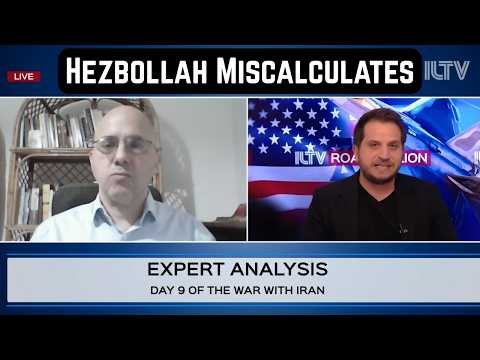
Why Hezbollah Keeps Misreading Israel | Jonathan Spyer on ILTV News Flash
 Watch on YouTube
Description
Jonathan Spyer, director of research at Middle East Forum, joins ILTV’s ILTV News Flash to examine the latest escalation on Israel’s northern front and explain why Hezbollah continues to underestimate Israel’s response.
Spyer argues that Hezbollah’s repeated tactical miscalculations reflect a deeper strategic belief that Israel is inherently fragile, an assumption that continues to shape both Hezbollah’s battlefield decisions and Iran’s broader regional strategy. He also explains why Israel is striking Hezbollah more aggressively than in previous rounds, why permanently dismantling the group remains difficult without broader regional change, and why criticism of Hezbollah is becoming more visible inside parts of Lebanon’s Shia community.
#JonathanSpyer #Hezbollah #Israel
Transcript Automatic captions
Source: Automatic captions from YouTube, retrieved October 15, 2026. Automatic captions are machine generated and may misspell names and terms; check the video before quoting.
0:00 And joining us now is Jonathan Spire, research fellow at the JISS to talk about everything that's happening in the Northern Front and with Hezbollah, where it seems like the fighting has intensified in recent days, has it not? Very clearly. So, I think what because what we're seeing is that of course the IDF has deployed not uh very deeply into the field, but certainly to the first village line. There are two divisions at least now operating. So naturally, this brings with it vulnerabilities. At the same time, we should bear in mind that a number of Hispa fighters also have lost their lives and that we're also in a context of quite bold Israeli actions from the air and involving special forces reaching of course far beyond the border over the last 48 hours.
0:45 Right. And also those rocket attacks have continued. At the beginning they launched a very limited salvo at Israel almost as if to say look we're doing something for Iran. But now it seems like they've decided to commit to that a little bit more perhaps. Yeah, I think so. I mean it's kind of there seems to be a sort of recurring uh error that in Lebanon tend to make going all the way back to the 2006 war actually if you remember with the kidnappings of the and murders of the soldiers that began that war and then also I think with their response on October 8th of 2023 and now again and that error they make is that they seem to uh constantly underestimate the likely Israeli response to their attacks and then be surprised at the extent and depth of the Israeli response. And certainly from the statement made by Shehn Kasim, the current leader of Lebanese Hisbollah this time after their uh attack, there's a sense they've done it. They've made the same mistake that they're surprised. They hit they they
1:48 launch a small salvo and they expect that something small and proportionate will be launched in response. That's not the way things go. a salvo of missiles is an act of war and one side doesn't get to define the extent or nature of the other side's response and Israel clearly it appears wanted in any case to deliver a very serious series of blows to Lebanese in the course of this war with Iran and in a certain sense Lebanese afforded Israel the possibility of that by choosing to enter the war with that relatively small salvo that you mentioned but is it really an error as you say because Hezbollah knows that Israel is more powerful than them and their goal essentially is to have this endless war of attrition that in the end of the day might delegitimize Israel and weaken it.
2:38 So um I ask really what have they been trying to achieve all the time in all of these actions this action the October 8th action you mentioned 2006 that some people have forgotten we in Israel have not is that not the goal just to be endlessly at war with Israel to the point where Israel is delegitimized on the international stage or the Lebanese uh public turns against Israel although I think the Lebanese public is turning against Hezbollah if anything I think we should put the Lebanese public aside from its different discussion. But yes, your characterization of Hisba and Iran's long war against long war strategy against Israel is accurate. The idea is to subject Israel to an endless uh series of attacks and of instability with the notion, it's not quite clear how it's supposed to happen, but with the notion that eventually Israel will collapse. Now the thing is when I talk about Isbollah's tactical errors, they fit with this strategic error as well.
3:37 Where do the tactical errors come from and where does the strategic error come from? It comes from a misreading, a fundamental misreading of the nature of Israel because Hezbollah has inherited in a way from its Arab nationalist predecessors the notion that Israel is inherently fragile and is inherently weak. And there are various explanations they give for this. This fundamental picture is very is a very uh deep one in the conception of Lebanese and this leads I think also to their tactical errors because they think that Israel will be frightened to respond. Hassan Hasallah for example on October 8th had no idea of the kind of extent of response he would get from an Israel furious and hurting after the October 7th massacres because he was still working according to that flawed conceptual map of Israel which Lebanese and Islamic Republic of Iran and their various allies continue to operate under and for that reason they continue to make both tactical and I would suggest strategic errors and also Israel has changed changed a
4:41 little bit the paradigm that it's operating under because after that 2006 war there was an international agreement that Hezbollah has to remain disarmed south of the Lethani and then they slowly but surely encroached and broke that agreement and Israel kind of allowed it to happen and it seems like Israel now is determined to not allow that to happen and being very active in preventing Hezbollah from rearming well you're absolutely right that resolution 1701 turned out predictably by the way many did predict it at the time to be a dead better simply because the forces that were supposed to enforce it, namely the Lebanese armed forces and of course the United Nations interim force in Lebanon did not intend to do so and probably could not have done so even had they wished to do so. So there was nothing preventing Hisbala from being rearmed by its Iranian patron and that indeed took place. Yeah, there has been a change since 2006. There's been a profound change of course since October 2023 in the sense that Israel is no longer try willing to try to deter forces like Lebanese is rather it wants
5:45 to go forth and defeat and dismantle them. Having said that we should be clear that between between intention and effect there still may well be some distance. It's not quite clear even though Israel is hitting Lebanese much harder now than it has done in the past and that's certainly welcome. It's not quite clear actually what the mechanism is supposed to be to permanently dismantle Hezbollah. And in my estimation at least, it's just as likely after this round is finished that Hisbollah will be severely damaged and hurting, but nevertheless still in existence. It's just not quite clear what's supposed to be the instrument to take it out of existence. Short of course of the fall of the Islamic Republic of Iran regime. If the Islamic Republic of Iran regime falls into Thran, then Lebanese will be finished.
6:29 but much less than that and of course without an Israeli major ground action into Lebanon which I think Israel doesn't want. It's hard to see what exactly this mechanism is which is supposed to permanently dismantle his Well definitely for something to happen it has to involve the Lebanese state and the other parties in Lebanon. We did hear from the uh prime minister and from the president of Lebanon more harsh rhetoric against Hezbollah, calling aid to Hezbollah activity a criminal activity, but they just don't seem to have the means or the will to really resist Hezbollah in the end of the day.
7:02 What role uh do you think the Lebanese state, the Lebanese public is playing in maybe weakening Hezbollah or curtailing its abilities a little bit because it seems like that final solution of Hezbollah not being a player is is not likely to come from the Lebanese Well, first of all, you know, you point to a very important uh development actually, which was that, you know, Prime Minister Noah Salam of Lebanon in the last days. I mean, following the Hisba attack on Israel for the first time actually has declared Hisba activity to be illegal. As I say, he's kind of said words which should have been obvious and maybe been said by Lebanese prime ministers in the past, but they have not been. He has declared Hisbala's arms to be illegal. Now, that sounds like a very comprehensive and clear uh statement, but what we're already seeing is that the again the instrument or mechanism that he ought to possess to be able to enforce that declaration, namely the Lebanese armed forces is simply not fit for purpose.
8:05 And what we've seen in the last 24 hours, by the way, are statements from the LAF chief of staff, General Rodolf Hayal, that he's not able to carry out these uh uh these action, necessary action for as long as Israel is continuing in its attacks. And that's a pretty uh fairly feeble excuse, I might suggest. And I think most analysts would agree that the real reason why the Lebanese armed forces is not able or is not going to carry out the dismantling or disarming of Hisba well it's twofold. Firstly because the political will is not there but secondly because as an organization Lebanese armed forces is probably not able to confront Hezbollah headon. Lebanese armed forces is reckoned generally consist to consist of around 50% Shia soldiers in the rank and file and around 30% Shia officers in the officer core. Uh a force like that if it was ordered to confront Lebanese Hisbala would almost certainly simply split in two and the result would be civil war.
9:07 The Lebanese remain terrified of civil war, ready to make every excuse they can to avoid it. As long as that remains the case, those two factors, the lack of will and indeed the lack of capacity, it is simply an illusion to believe that the Lebanese state is going to confront Hezbollah. It's not willing to do so and it is almost certainly also not able to do so. Well, certainly they have trauma from civil wars over there in Lebanon. The country is constantly torn apart by its different factions, the Sunni, the Shia, and the Marinite Christians. But uh we touched a little bit talked about that um public opinion inside Lebanon because the civilians are um being dragged in this into these wars constantly by Hezbollah. Now many of them had to evacuate in southern Lebanon. What are they saying over there at least um you know on the radio in the media about what's going on?
9:54 Yeah, this is something which actually again is quite new and is very interesting which is that for the first time at least that I can remember. We maybe are seeing the kind of barrier of fear uh specifically among the Lebanese Shia community of criticizing Hisba being broken. It's not a new thing by the way to hear Christian Lebanese or Sunni Lebanese being critical of Hisba. in all available polling and you can do polling in Lebanon, you know, suggests that those communities in any case don't support Hezbollah, don't regard it as representing them and don't uh don't wish to uh to support it. But but the Shia community has in the past, you know, solidly mobilized behind his bowl or at least avoided at least observed a certain kind of taboo regarding the possibility of serious criticism of the organization. And certainly a great deal of evidence on media and social media uh would now suggest that that taboo has to a great extent been broken because we have seen ample evidence over the last
10:57 days of Lebaneseia coming out and publicly I mean Lebanese Shia civilians coming out and publicly criticizing Hisba and blaming Hezbollah for the fact that they have been displaced from their homes. It's worth noting that actually for the first time now, Israel is has been warning very large populations, not just sort of inhabitants of this or that building, but very large populations of southern Lebanon and indeed of suburbs of Beirut to leave their homes in advance of Israeli uh attacks. And it's interesting to note that I've seen a couple of examples of Lebanese Shia civilians actually blaming Hisba for that. not blaming Israel saying well okay Israel we of course they regard Israel as an enemy but they say well Israel actually warns us when it's time to leave whereas Hisba when it comes to fire on Israel doesn't give any warning it comes sometimes in the middle of the night to Shia areas to fire on Israel and thus puts you know sleeping kids and babies and and civilians at risk and there is a growing sense I think especially because of the very severe mauling that received from Israel if you
12:01 remember in those last months of 2024 when Israel went on the offensive, there's a very uh clear sense among many Lebanese, I think, that Hisbala, you know, is a damaged vessel. It suffered considerable setbacks and it's prepared to kind of mortgage the future and security of Lebanese people in order to try to win back some of that kudos that it feels that it's lost. And many Lebanese just don't want to be forced to be part of that equation. They resent doing so, being made to do so. They resent being forced to leave their homes for a second time in the course of two years. And it appears they are no longer sufficiently intimidated or sufficiently feeling obligated to observe that former taboo which largely held among Lebanese Shia regarding the issue of open criticism of Hezbollah. And that's a very very notable development. I would certainly the public opinion and the conditions in Lebanon are constantly changing and something that we need to keep an eye on as the war has erupted over there as well. Again, reminder to
13:05 everyone, two IDF soldiers killed on the Lebanon front today, announced today. Jonathan Spire, research fellow at the JISS. Thank you very much for that comprehensive breakdown of the war with