
Webinar or Talk
Islamism's Changing Trends and Ideological Divisions
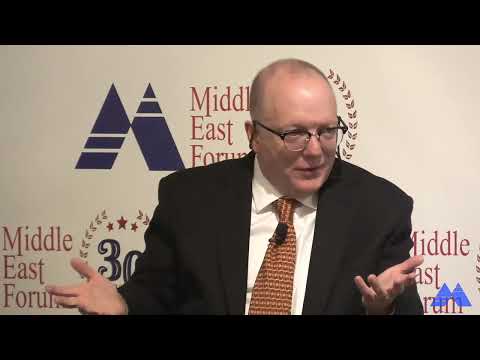 Watch on YouTube
Description
In contrast to 9/11, which spurred a huge American debate over Islam and Islamism, jihad, and related concepts, conversations around the Hamas massacre on Oct. 7 as well as over recent Hezbollah, Houthi, and Iranian aggressions are nearly void of these topics. What caused this change? How is the Islamist threat evolving? Does Europe take a different view than America? What are MEF and other counter-Islamist organizations doing, given a general lack of interest and the scale of the threat?
In the years since 9/11, public discourse around Islamism has significantly diminished, even as Islamist groups continue to pose a serious threat. This panel will explore the reasons behind this shift in attention and discuss the evolving nature of the Islamist threat. Panelists will share insights from their research and experiences countering Islamist extremism in politics, media, academia, and religious communities to examine the current state of Islamism and the work being done by the Middle East Forum to address this critical issue in the face of public apathy and the scale of the threat.
Ryan Mauro is an investigative researcher at the Capital Research Center with a focus on extremist groups and foreign influence operations. He is a counter-extremism and international security analyst with a history of involvement in intelligence, counterterrorism, human rights, academia, activism, law enforcement training, and engagement with policymakers. He is the creator and former director of the Clarion Intelligence Network, a group that tracks extremist activity throughout the world.
Sam Westrop has headed IW since March 2017, when MEF absorbed the counter-extremism unit of Americans for Peace and Tolerance (APT), where he was the research director. Before that, he ran Stand for Peace, a London-based counter-extremism organization monitoring Islamists throughout the U.K.
Dexter Van Zile is managing editor of the Middle East Forum publication Focus on Western Islamism. His articles have appeared in the Jerusalem Post, the Boston Globe, Jewish Political Studies Review, the Algemeiner and the Jewish News Syndicate. He has authored numerous academic studies and book chapters about Christian anti-Zionism.
Presented on May 14, 2024 in Washington, D.C.
Transcript Automatic captions
Source: Automatic captions from YouTube, retrieved October 22, 2026. Automatic captions are machine generated and may misspell names and terms; check the video before quoting.
0:01 Next, we have a panel chaired by Sam Westerrop titled Islamism's Changing Trends and Ideological Divisions. In contrast to 911, which spurred a huge American debate over Islam and Islamism, jihad and related concepts, conversations around the Hamas massacres on October 7th, as well as over as well as other recent Hezbollah Houthi and [snorts] Iranian aggressions are nearly void of these topics. What caused this change? Sam and this panel hope they answer that. Well, thank you very much for for joining us. Uh we were to have a fourth panelist. Unfortunately, he's unable to make it, but we'll be here later today.
0:38 Uh I'm delighted to be joined by Dexter Vanzyle, uh managing editor of Focus on Western Islamism, uh which is the Middle East forum's counter Islamism news outlet. And we also have Ryan Maro of the Capital Research Center, an investigative researcher there. And uh while Dexter and I may not have too recognizable face, you may have seen Ryan on his many appearances on Fox and and uh other media. So um I think between the three of us uh we represent a fairly good collection of expertise about Islamism in the United States. And although in theory I'm the moderator, I'm I'm certainly going to impose some of my own views uh during this panel as well. Um my name is Sam Westerrop. I'm the director of Islamist Watch, the forum's main counterlimism program. Um the subject before us today is an interesting one. Uh I think when I addressed uh the MEF conference last year, I told you how different and interesting American Islamism had become. And now a year later, American Islamism is different once again. And just as interesting,
1:42 October 7th has changed things for American Islamists. And when I spoke to you a year ago or those of you who were here, I was talking about the decline of interest in the Palestinian issue within American Islamist circles. Uh American Islamists once dominated by movements such as the Muslim Brotherhood were now much more diverse. Um the Brotherhood's agenda which often related to to Palestine no longer reign supreme over the American Islamist agenda. We had Deabandis discussing Pakistan. We had Jamaati Islami discussing Kashmir. We had Salafis who weren't interested in foreign policy at all and only wanted to focus on the imposition of the Sharia uh here at in the America and and uh back in in the Muslim world as as well. So mentions of Palestine became almost preuncter for many American Islamists just a year ago. And indeed, such was the the lack of interest in the Palestinian issue that groups affiliated with Hamas frequently complained that Palestine has been abandoned by the
2:45 American Umar, by the American Muslim October the 7th changed the public narrative uh among American Islamists. From my perspective, it seems to have possibly offered a chance for the the Muslim Brotherhood Islamists and their Hamas allies to try and recapture their lost legitimacy and their lost control over American Islam. Just as American Islamism had had fractured or was in a process of fracturing before October 7th, now they regard Palestine and the promise of resistance as a means to reunite, to unify the Umar, to to quote a popular Islamist phrase. Now, I'm not saying um that this is now destined to happen. And one of the reasons I think for this discussion today is to examine this, is to talk about the activism since October the 7th and to work out exactly where American Islamism is and where it's headed. Um and so I think I'd like to start with you, Dexter, because uh Dexter has been busy following some of these campus
3:49 protests with with great attention to detail. And I've now received a few calls from him where he's mentioned he happened to be walking at 3:00 a.m. through the city of Boston with his high vision camera and and a journalist notebook and came across a violent protest to various universities. So, uh, Give us your impressions. All right. I just want to thank everyone for coming and I also want to thank Dr. Violin for supporting the work that I do at the Middle East forum and I've known Dr. Violin for many many years. We actually I grew up in the same street that he lived on at one point in Westwood, Massachusetts. So, um it's kind of sort of a homecoming. But, uh on the way down, I was uh reading I I you know, I I was reading uh Salman Rush's book uh knife, which where he documents essentially what happened to him in August of 2022 and what happened in the months since. And uh he describes the attack that he uh suffered in New York at uh Chiakwa somewhere in upstate New York. And he describes how basically uh
4:53 you know his attacker came down the center aisle of the event. Uh and he basically kind of knew that his attack was probably intent on doing him harm, but he remained motionless. And uh a and the thing was is that nobody in the audience actually had any opportunity or in didn't even lack the imagination necessary to actually try and stop the attacker. And somebody nobody actually intervened until after he'd been stabbed a number of times. And I said, "Well, this is a metaphor." Uh but it it actually is even worse than that because in some instances right now what we have is we have instead of young people like trying to like standing idly by what we see in the United States is that people who are actually cheering the attacker on when he comes to uh the assault on American and Western Um I went to a bunch of encampments and I didn't see very many as Islamists that or people that struck me as Islamist. I saw a few that may have been, but for the most part, basically what I saw was a bunch of misguided young people who were wearing kafias, uh, who basically were siding with Hamas. And one of the
5:57 things, and what I've been saying lately is that what they've done is that they've taken basically the license, uh, uh, that, uh, France Fannon gave to black and brown people in the planet uh, to attack white people during the 1960s and 70s, so to speak, uh, uh, as an anti-colonialist movement. What they've done is is that they've transferred that license and the knife so to speak and put it into the hands of jihadists and say this is for you. It's almost as if it's like a a scene some sort of arthorian legend just some very distorted thing that something Salman Rushy could write about if if he had the the sense. Um but the the the and that's one of the things that I saw when I went to a bunch of these encampments. I would I came back uh twice on uh on public transportation from Cambridge into the city of Boston on a on both on a Wednesday and Thursday night. I saw two young girls uh both shorter than me, which means that they're pretty short.
6:53 Uh and and they gave me quite frankly, if you've heard the expression, I thought there was a good high probability that they were young Jews and they were both wearing kafas. And I think that they could see that when I, you know, applied if my g male gaze at them, I was like, what are you doing? Uh, and I think that they felt a sense of like, yeah, judgment. But I think what and I had told Sam previously that I thought that they were wearing it largely uh as a fashion statement, but I realize now that in many respects that they were wearing it as a talisman as or as a shield to somehow protect themselves from the hostility that would be directed at them as westerners and possibly Jews uh by basically people on the left and also Islamists as well. And and so it's there's a very evil dramaty that's playing itself out in the American left. And I think it it's basically assisting and paving the way for uh ismas. And and I think this is really one of the things that we're struggling with. And I guess one of the the mottos that I've come up with is is
7:58 first you see the kafas and then you're going to see the nikabs. Maybe that's kind of a pmical statement, but in the cognitive war that we are engaged in, I think that it might actually be a useful rule of thumb. Um, because I think that this anti-Israel propaganda uh is essentially really paving the way for and it's part and parcel of of this anti-western ideology. And I've been saying for years that the same techniques used to delegitimize the state of Israel uh uh have basically been used to delegitimize the United States and the West in general. And the thing is is that I think what we're going to see is one of one of the things that we saw in the context of the Arab-Israeli conflict is that some young Jews would actually embrace the narrative of the people who wanted to kill them and say, "Look, all we really have to do is basically make peace with these folks and be nice to them." and they embraced a narrative of Jewish self-reform and everything's going to be all right. And the thing is is that I see what I saw at the encampments was that a similar narrative playing itself out in a larger community of young
9:02 people uh in the west. And um and the thing that really has bothered me, you know, historically I while I was working at camera, I dealt with uh anti-semitism and hostility towards Jews as a moral and ethical issue. Uh but slowly but surely it became apparent to me that it was uh it was a strategic issue because one of the things that the American people were gifted with uh after World War II was a repugnance towards anti-semitism and and and morally and and ethically it was a good thing but the thing was is strategically it was a very very valuable thing because what it did was that it demonstrated to people you know the second somebody started basically engaging in enormous this hostility towards the Jewish people. It was like, "Oh, this is somebody that we need to keep marginalized and this is somebody that we need to keep our eyes on." But if you look at what has happened in the aftermath of the October 7th massacre is that essentially we see large numbers of young people, and I don't want to overestimate the impact of
10:04 these encampments, but we see people who have essentially sided with people who perpetrated one of the worst attacks um on Jews since the Holocaust. And it's a terrifying thing to see. Uh, and I wanted to say to the young women on the the buses when I came back, do you understand what Hamas did to women on October 7th? Uh, and this is and and I and I think if she they they were honest, they would say, yeah, well, that's why I'm wearing the kafia, folks. Okay. Um, and I I think that that might and and the thing is is that there's a fallback position. Um, and the problem is is that the repugnance towards anti-semitism has declined and that's a strategic loss for us. But the thing is is that now people are starting to recognize that the Islamists are anti-American. Uh, and when we see the young fraternity brothers basically standing up to say you may not take down this American flag, you have gone too far. I I think that may in fact actually be kind of like this. It's it's kind of
11:08 like the retreat into Helm's Deep. I I'm like I don't like it, okay? But it's better than than nothing. And I the thing is is that part of the problem is is that and I forgive me, but the stupidity of our intellectual classes has become a strategic threat. And that's one of the things that Winfield Meyers, you haven't fixed it yet. Come on. But um uh just recently, a few months ago, and this was sometime after October 7th, uh I was having a conversation with somebody that was uh Ivy League educated, but uh I said to well, you know, you got to pay attention if you want to look at, you know, one of the things that I have been seeing is is that the status of women, Jews, and journalists declines whenever you start to see large Muslim populations accrete or grow in uh in any city in Europe. And I said, and for example, there was a rape gang crisis in England where thousands of young girls were basically raped by uh men from rural Pakistan. And
12:12 I'm not saying that they did it out of an Islamist ideology, but there was an attitude of contempt towards the non-Muslims who did not veil. And he didn't want to believe it. He says, "I have a very tough time believing that even though this instance, this problem has been very, very well documented." And I was astonished because he is, you know, somebody from that comes from the upper echelons of American society. He's like higher status than me. You know, I'm a, you know, fallen Protestant. You know, my family slowly descended the socioeconomic ladder. And I married a Catholic and became a Catholic myself.
12:48 My dad was an Anglican, but he married a congregationalist. And you know, it was like and uh we were related to, you know, the people who founded Etna Life Insurance. and the money's gone. And here was one of my bettererss behaving in such a manner that I I I almost despared. And I think one of the things that we have to remember is in Richard Landis a long time ago, we anointed me a member of the the team of people who are fighting a cognitive war. Um and essentially the whole point of a cognitive war is to basically make the other guy just abandon his cause. And I think that we are we are seeing the fruits of a cognitive war against American people and the westerners and we we have to figure out a way to fight back against it and that's one of the reasons why I'm so glad to be working here at MEF. So that's it.
13:47 So before I turn to you Ryan Dexter something perhaps to elaborate further on is fighting for a cause. What cause is it when it comes to these campus protests? Is this a far-left cause? Is this an Islamist cause? Is it a genuine merging of the two? Is it multiple causes in alliance? What is what is your impression based on on your your visit? I I think that they're just narcissists that are looking for something to do. And I I I know that sounds awful, but there's a certain purposelessness and and and self-hatred on the part, and I've seen this. I saw this as far back as 2020. Uh I was at a uh and so these leftists, they're not Islamists yet.
14:30 Okay. And but the problem is is that uh I think at a certain point, you know, I've interviewed two Ismile Royer and Umar Lee. They were both young white men who essentially converted to Islam largely because in part they felt guilty about the mistreatment of African-Americans in American history. and converting to Islam gave them a refuge or a way to basically get out from under this the self-hatred and the guilt that they've had for themselves because of their status of as white kids in America. And uh and and Daniel reminded me of Pascal Brookner's book uh the tyranny of guilt. It it it's there's this self-hatred on the part of the West that I think is just uh stupid and and the problem is, you know, is is that not enough people go to places like the Boston AAM or uh Mount Auburn Cemetery. I go to those places on a regular basis to remind myself of the sacrifices that Americans made to
15:33 basically end slavery, so to speak. And uh it's easier. And so there's this self-hatred. There's this ignorance about the fact that frankly the West is best. I'm I'm I'm gonna say that. And I'm not going to say it irony with the irony that Jim Morrison from the Doors said it 30 or 40 years ago. I'm I actually mean it because if you look at the uh these people, they're privileged. They're some of the wealthiest people that have ever existed on the planet.
16:07 and the most privileged people and yet they are essentially siding with a movement that would destroy uh the civilization that's given them everything and uh Jason Damian Hill uses a phrase called legate uh to describe what we have inherited. We are legate of a tremendous civilization and it's as if people are just kind of walking away from the defense of that. uh and they think that somehow by siding with Hamas uh and and ultimately they're siding with Iran. Let's be absolutely clear, this isn't just Hamas. This is Iran.
16:45 Basically, there's a cognitive war that a number of countries have been waging against our young people. Uh but they're siding with these people to get out from under that guilt. And I and I think, you know, somehow we have to say, look, you know, your self-interest at the very least is is under attack. Um, and I think there's two two things. The October 7th massacre basically ex excited a whole bunch of Islamists throughout the world. And then the Colombia riot, for lack of a better word, that excited leftists throughout the world. And the thing is is that I think that the leftists are essentially unable to defend the civilization that they've inherited.
17:29 Okay, this is fascinating both for the reasons you expound but also for the secondary implication or the secondary question which is where are the Islamists? Why are they not front and center with the far left? So Ryan, can I turn to you now? You've been studying some of the groups uh involved uh with these protests really does your experience chime with what Dexter is finding? This is predominantly not an Islamist movement on campus, but a far-left one or a white middle-class narcissistic one. Sure. Uh so what I'm seeing is that there's a few different overlapping uh movements and that's the partially the result of a strategic decision in terms of organization and in terms of messaging. Uh but it's also a reflection of some of the changes that you mentioned earlier that have been going on with it. Islamism and its fusion with uh what is commonly referred to as like the far left, a term which uh I think is increasingly uh counterproductive actually. Um and I'm searching for another terminology. I can't come up with a better one, so I'm going to use it as well. Uh but I've been studying uh
18:32 specifically as many groups as possible involved in the protest as I could find uh as part of my uh job at Capital Research Center. So, I've got this really big report coming out hopefully this week if or maybe next week, uh, where I just kind of break down the movement, the different types of ideologies, the differences over long-term strategies, um, including a a very hardcore center that actually does want to morph it into a domestic terrorism campaign across the United States. Um, and they say that and they're equipping themselves for it. Um but the in in terms of the data uh that I was looking at and what the result was uh the clearest like one-s sentence summary of it uh that I came up with was that over 100 I think actually my count got to about 144 the other day uh different groups that I describe as terror tide including those that support Hamas that's to me a terrorist activity is doing that uh are involved in the protests including all the major ones uh and so while we've kind of grown accustomed to seeing big destructive
19:35 protests and saying, "Okay, well, there's this overarching branding that's going on. Uh, and we'll surprise people by showing how many of them are radical or communist or Islamic extremist." This actually shocked even me because finding over a hundred groups uh as including the report now up to like 144 uh that all are tied to terrorism or openly supporting terrorism not don't have to read into their language like they are pro- Hamas they are pro terrorism blew my mind and when I looked at how these protests were put together and how this the stage was set for and how they were it became very clear that this was from beginning middle and end a pro Hamas operation. It wasn't like a reaction to an event that then organizations that happen to be prepositioned and our extremists took advantage of. Like now this whole thing started with literal protests the day after the October 7th attacks that started being promoted, planned and announced while the attacks were still happening. And that was going
20:38 on and on. And then Students for Justice in Palestine announced on April 20th this big escalation. and everyone uh started paying attention to the escalation. They treat it as some type of new protest. No, this is just an escalation of what's been going on since October 7th simply because it takes a certain amount of time to escalate things. It's all part of the same thing. And so what we saw is that particularly with students for justice in Palestine which is an Islamist group. Uh but many of their members maybe most now are actually radical as they identify themselves anarchists, communists, Marxist sometimes uh democratic socialist in the most extreme end. uh they kicked into gear uh and just as as we said earlier uh their anti-Americanism doesn't get much attention because they're saying so many crazy things that you only have a limited amount of bandwidth to cover and pay attention to. But in the Students for Justice and Palestine toolkit that they gave out that got a lot of attention because they were saying we're going to basically seize the universities and we support Hamas. In fact, they said we are Hamas not just in
21:40 solidarity, we actually are absorbing ourselves into Hamas. Uh there was also a line in there talking about occupy Turtle Island uh which is the far-left uh kind of terminology to basically say the United States does not have a right to exist. You are occupying a native people and therefore all the rationale that they use in order to justify terrorism against Israel at that point comes together and is a justification for war against the United States as well. uh there there's no way using their own logic that you can get away from believing in terrorism against the United States if you're referring to the United States as occupied Turtle Island that is occupying and oppressing the native population there that with a with a corrupt system that needs to be destroyed. Uh so you did have Islamist groups like Students for Justice in Palestine form the backbone of the current movement that we're seeing. Uh and you had groups uh that were a bit more careful in their language as we've
22:41 grown accustomed to that are tied to the Muslim Brotherhood, your typical Islamist groups, uh Muslim American society, for example, said uh directly to their followers that were speaking at mosques after October 7th, they said, "Don't mention Hamas." Like, it's in writing. They said, "Don't mention Hamas." You have an obligation as a Muslim to rally support for the Palestinian cause, to condemn Israel, but you have no Islamic obligation to mention any specific resistance organization or to get into specifics about anything beyond that. And they specifically said like as a reminder, Hamas is a designated foreign terrorist organization. So there's some legal risk you're undertaking if you decide to mention Hamas.
23:25 And so the there were actual strategic orders that went out uh on the part of these big organizations that obviously support Hamas but are smart enough to say we can't actually say that uh to tell people this is the branding that you've got you've got to start using. So they kickstart it and then they incorporate the more radical uh far-left groups, the anarchists, the communists uh that then start really putting things together and then from there you start seeing uh less extreme more like democratic socialists coming in uh and then it broadening out from there. As for what their causes are, yes, a lot of them they say they're there in order to stop a genocide and to promote peace.
24:05 Some will be more explicit in saying well we just oppose Israel entirely. Some will go so far as to say we want to destroy Israel. Uh but then when they start actually talking about the issues which they are clearly not equipped to talk about they shift and that tells you a lot about the intersectionality uh strategy that they have going on that one of my colleagues calls everything leftism. uh which is where basically you strategically enlist every single social justice warrior cause you can find link it to your cause and put together an umbrella umbrella coalition. And so I kept a list uh on my computer of the different causes that they said that they were actually there for. I support uh fighting against Israel and protecting Palestinians because of X. It doesn't just end there. And so what is it that they cite? fighting capitalism, supporting transgender rights, supporting reproductive rights, uh fighting anti-blackness, fighting white supremacism, all just this entire collection of isms all kind of put
25:08 together. Uh and that's a reflection of uh how successful they've been at being able to pull together all these different causes, form a big coalition that then gives them legitimacy and that helps them get mainstream traction. Because even if if you're someone on the center left or in the center, if you have a big coalition saying something, then us pointing out like, oh, well, the leaders of those coalitions are radicals. In the back of their mind, say, all right, but what about all the other members and it is assumed, there's just a natural reaction to assume that, well, a coalition is this diverse and has this many members, then at least part of what they're saying must be true. and and so you you just have to pull them in just a little bit in order to enlist them in your cause. Um and so where do we go from here? What what does this say about the future? Uh what's really stunned me is really the complete absence on the organizational level of any references to Islamic justifications for the protests and even for supporting Hamas.
26:09 It's always in this anti-colonial language. Uh it's not saying, well, you should do this because Islam tells you to. that's just completely dropped. And then even more shocking to me was when I look at the communications that are going on on social media because I'm really trying to get the best understanding I can of what's motivating the next generation to be like this because it's there's deeper things going on other than just one side winning an argument which I can talk about but almost complete absence there too of any Islamic based justification for what they're doing. And so what does that mean? We could say, well, that's because of a strategic messaging decision. Okay, that's true. But you can't get everyone in line like that on and marching with the same message immediately u without fault. So, there's something going on there. Uh and so the question is, does that reflect perhaps a minimization of Islamist influence in revolutionary type movements in the United States? Is it possible that we've actually been so successful in forcing them to censor
27:10 themselves because of the repercussions that they face politically, legally, in terms of law enforcement in being honest about what they say that these other ideologies now come to the forefront and actually the influence of Islamism in terms of driving this type of activity and even driving support for terrorism has actually been minimized because a lot of these Islamists would not be aware of that happening until it's too late because in their mind all they have to do is turn someone into a Muslim or equip a Muslim into remaining devoutly committed to their principles and the inevitable conclusion of that will be being an Islamist that supports the terrorist groups that they support. So in their mind they don't actually have to take that step necessarily of advocating for Islamist principles and advocating for those interpretations because they have the only And so it's possible that you put those two things together and what might have happened, I'm not saying it did, but this is a question that's in my mind I'm struggling with is that actually you've seen a reduction in Islamism's influence in everything
28:14 that you're seeing and that this isn't a strategic decision, the reflection of strategic decision, but an actual reflection of a rapidly changing uh environment that we're only catching right now. Interesting. Now if you have questions for the panel please write down uh on the some paper in front of you should have pen and paper and one of my colleagues will uh oh in fact a change of plan um my colleague Susanna will come to you uh with a microphone if you have a question um just before I take it I just want one follow-up question with with Ryan is your sense then do you feel it's in step with what Dexter experienced that we have far leftists and and non-Islamists on the front line uh but what you're saying is that behind the scenes we still have Islamist involvement in the organization in the funding uh in the infrastructure that has organized and planned uh these right the individual far-left organizations they they have the ability to bring important people to protest to get things going but to actually make things happen uh on a nationwide scale those seems to be uh still be the
29:17 Islamist groups themselves so then they uh basically turn on the lights and and get things going and then uh let the others take it from there. Okay. Okay. Uh questions over there. Yes. Hello. Hi, Judy. Judy Rosen. So, I'm going to move a little bit away from the actual uh protests into a different area, but maybe you can guide me. Um, and this is something that's been bothering me more and more and more. I live in the most polygot um city in the United States. That's Queens, New York. It's a burrow.
29:50 And I'm noticing more and more and more and more. We have more halal stores where they were formerly Jewish stores, more hijabs, more everything um schools, Islamic schools. And and I get on the subway, I feel very sort of I don't know if I should feel nervous, not nervous. You know, you want to sort of uh be part of the community or or feel good, but is there a threat here? Uh how should I'm a leader in the community? Is there a way we should act? What should we do? Or should we let it be? What do you think? What do you suggest?
30:29 Uh Dexter, why don't you try to take uh I think one of the things the real issue is who's running the mosques that these people are attending and that's really one of the things that's very very important and indeed if if you're completely right of course you look for the the the Islamists running the community. Take the halal issue on top of the mosques. who have the main halal certifiers in this country are unfortunately Islam connected. Um so we do have to be worried. Uh where we have you have to be physically worried is a whole different question. Uh but certainly perhaps we should look to some of these areas in say parts of New York and and then it reminds us of the suburbs of Paris or certain towns in northern England and you see where things are headed. Ryan, do you have anything to to add?
31:11 Uh sure. Um the study that I've been doing over the protests actually provides some uh some ability to project what's happening in regards to the physical threat environment and how that's changing. Uh and there basically go through four concentric circles. Uh I won't go through each of them but basically uh there are different degrees of radicalism that resulting from the protests. Um and because a lot of them are saying well where do we go from here? They've got that on a personal level they've got that sense of fulfillment you know beyond anything intellectual just I got that sense of fulfillment. I now feel like I matter. So I now what do I do once this kind of goes away? Um and so the conversation is uh about broadening out a campaign and becoming more militant. Um not so much talking about mass attacks like 9/11, but more targeted attacks at targets that they feel are more justifiable. And so there is a a massive uh shift even from even by Islamic extremists, jihadists that typically love those types of mass attacks into a more Antifa type uh anarchist communist uh guerilla campaign. Um and you can see that in the
32:14 social media activity that's going on where they're passing around guides on how to do different types of criminal uh destructive and violent acts depending on what you feel is justifiable and what is worth the risk. uh and and so my study of the groups uh ends with that bigger conclusion which is that it's not just about these protests or even about these groups like yes there'll be future protests and we need to be aware of these groups that we can call them out uh but there's there's a very distinct threat of terrorism that's resulting from this um and has accelerated that shift uh that is bringing a whole bunch of different groups together for uh what they're frankly calling a guerrilla warfare campaign. Now how many of them are actually going to do it? I mean, I've followed these groups of all kinds for a long time. There there's a lot of talk. So, nothing to be panicked over. I wouldn't say that you're going out somewhere you should be nervous or anything like that. Um, but the but the thread has dramatically increased. It is morphing. It's becoming something different. And it is going to be something that's increasingly difficult to stop.
33:12 So, two threats to worry about. On the one hand, these radical networks. On the other hand, the question of integration or lack of and the future of American society there. So, plenty to discuss. I wish we had more time, Mr. Government. The uh food trucks on the National Mall, they're all halal. First of all, so second of all, question. A lot of these uh people in encampments, they're wearing masks. Now, do you think that after some of them get charged, seems like a lot of the charges are being dropped first of all, and do you think there'll be any effect on their job prospects, any serious effect on all of these people who are protesting with I I'm not particularly confident that we're going to be able to really inflict any real um damages on the people who are responsible for this in the short term, but I think in the long term, that's one of the reasons why MEF's uh lawsuit against SJP and the RICO charges that we're looking to basically bring against this organization are important.
34:13 um largely because we need to hold the universities accountable and and I but I I don't know whether or not I know there seemed to be a certain attitude of permissiveness towards the protesters at Emerson. Uh there was 118 of them who were arrested. And one of the things that I saw in the media was is that when they broadcast the footage of some of these arrests or some of these protests, they actually blacked out the images of the face so that they would actually help these people. Um hide their identities even though they were in a public way basically protesting and disrupting public life.
34:50 And so I think that's an and so they have actually been charged and arraigned, but whether or not they're actually going to suffer any consequences that I think that is going to we're going to have to make the people who organize these protests suffer the consequences and organizations like Canary Mission will actually basically I think in the long run help make ensure that the people who are responsible on the lower levels are basically going to pay some sort of price as well. But I I I I'm not confident the cops are going to or the the judges are going to do what we would hope they do.
35:25 Sam, I was uh hoping to ask a question too. How have Islamist regimes and Islamist groups in the Middle East received these protests? Well, that's a particularly interesting question indeed. Hamas official news sources have definitely welcome them. I don't know if you've seen that. uh also with uh a strong degree of support in Iranian press. But it remains fundamentally interesting though that we're not seeing their networks in the US that is Shia Islamists linked to Iran or indeed uh Qatari funed groups, Turkish funed groups explicitly involved in in these protests. That tells us something, right? That there's a definite desire to take a step back and do this from the shadows. Yeah, I think it would be very counterproductive for for them to get involved in especially when a lot of the groups that are involved in the protests have also signed petitions explicitly supporting Iran like saying we support the access of resistance. So the job the job is getting uh done anyway. Uh so so I would make the same decision that that they are interesting. Okay. Uh over there.
36:24 Thank you. I went to UCLA two weeks ago on a Saturday to check it out. Um most of my classes were in Royce Hall in front of which all the action was. And one was campus security was much more concerned with moving along people who wished to engage in the protesters and left the protesters alone. Uh with the media there uh masked up anonymous protesters were interviewed. But if you were anti-protest or if you were pro-Israel and you did not identify yourself, they would not use your Um the the protesters were a very odd popery. Um you had obviously older very far-left radicals.
37:18 Um there were uh Muslims there. Uh there were uh young just generally leftists. Um there were people who saw this as a race issue. It was quite a culture pile. That's interesting. Thank you. Thank you. Do you have a question? Broke my heart. No, I I just thought I'd share. No, it's a fasc It's fascinating. Thank you. Thank you for for sharing it. Um I believe we had a question over over there. Susanna, Mr. handed and then Ariel Ariel Grumbberg okay.
37:58 Thank you. Um my question is about u the the uh narratives that are being developed that are so sweeping for people to jump on to. We often hear of freedom of expression, the oppressor, colonizer, um DI. These are all terms that are used u you know it's a theme that's developed. And so is there a way to break through this packaging of narrative that seems to be the media seems to gravitate towards. The other question is in a lot of these uh institutions we have found that less than half the people involved were actually students. So you know the students were the the ones that kind of jumped on board with these professional instigators and professional writers.
38:38 And if you could just quickly succinctly just comment on the the ultimate funders of those professional writers. Uh well if you don't mind I'll take the funding uh issue but I'd like to hear from you just on the funding point and this is something we've looked into now quite a bit. Um it's very difficult to tell and of course these these protests can be organized at very minimum cost but the question always for us is is this Islamist funded is this Islamist back and from what we can tell largely no you see money and Ryan perhaps you've come across groups like this you see money going to groups like people's forum and party for socialism and libera uh liberation groups like answer all linked to individuals involved with the CCP with uh various other file f causes but very little Islamist money as we've seen it Ryan is this is this your your experience too.
39:23 Yeah. Uh definitely. And the amount of money that is coming from the more liberal foundations which is getting a lot of attention and it's important. We should fight it, of course. Uh does appear to be an absolutely minuscule percentage of the overall operating budgets of these groups. And so that makes it much more difficult to combat. Um, well, one other quick point that I I kind of failed to emphasize, but I think is important that I do just really quickly is that what I'm seeing, uh, based on the groups involved and what they're saying, uh, is a dramatic spike actually not in support for Hamas. Uh, the support for Hamas is being declared, that's the group that's most wellknown that participated in the October 7 attacks. But the growth, especially among those that are, uh, taking that extra step of getting a little bit more educated about this stuff, is actually support for the popular front for the liberation of Palestine. Uh, and that's because they're Marxist Linist. Uh, and so I see two, uh, there's two things I'm really worried about. Um, if PFLP becomes uh, the center focus of the media's narrative. Say they do something really dramatic, so everyone starts talking about them. If you're worried about
40:25 support for Hamas, that's nothing compared to the amount of support for PFLP that's going to happen once they get the attention that Hamas gets. And then secondly, there there's this more generic uh support for terrorism against Israel and then violence just directed at soldiers, which I still consider to be terrorism, but some people don't. Uh that has also created an environment where another group probably is going to come along that is communist anarchist type uh over in uh the Palestinian areas is going to carry out an attack that's more limited in nature that enables them to get around the criticisms of Hamas.
41:00 I'd always focus on, oh well, you're theocrats who abuse uh rights um and you massacring civilians. What do we do when that inevitable day comes where these two things happen? Do you have PFLP becoming the group that everyone talks about and now you have to react to the huge amount of support that they're going to get from that? Um and then what are you going to do when there's a more restrained strategic terrorist group that comes along uh that's more aware of uh how not to jeopardize its own support internationally. Now outside the campus of course we have protests also being organized against Israel um and for Hamas and some of those have been involved by Islamist groups. You might have seen some of these in the news. It strikes me that a lot of the groups organizing these off-campus protests which are more Islamist and less far-left driven get taxpayers money. A lot of government money, a lot of federal money, a lot of state money are working there. For example, in New York, we've discussed New York a few times.
41:57 The Muslim American Society uh in New York recently got a million dollars courtesy of Representative Torres uh from the federal government. And this same mosque that received this million dollars thanks to to Rep. Torres uh is a major center for anti-Israel activity. So is it partly the some of the campus activities risks descending into violence? Might it threaten their federal funding? Do you think that that in part is is reason we're seeing Islamist groups stay away from the more overtly radical protest efforts? Yeah, I think once we start to recognize that the the public funds that have been sent to that mosque in uh in New York are basically salting the earth against Jewish safety and the welfare of the average citizen. that that that's going to be much more controversial. That's longer term.
42:43 Yeah. Longer term, you know, and I think we have to understand that and and I think that that may be very and also they may have a fair amount of contempt for an awful lot of the young people who are involved with these campus uh protests. I saw somebody once reported to me just recently about how uh somebody from the trans rights community based s uh showed up at an anti-Israel protest I think somewhere in the United Kingdom and u veiled Muslim women basically shouted shame at them and basically ejected them from their anti-Israel conference because that was not somebody that they were interested having on their side because it violated their religious nomos. And so there may in fact be contempt on the part of these Islamists for some of these you know young young people with the blue and green hair uh you know at these protests. They're not they don't want to have anything to do with it because that's not who they are as a community.
43:40 Interesting. There was one question about how do we break this narrative or how do we and I the thing is is that I think that what we're seeing is is that people you know when they're comfortable they pursue meaning okay but when their physical well-being and their uh their their visceral interest are threatened then they start to actually hopefully we hope look for the truth of the matter and sometime and and the thing is is that right now these young people are embracing one of the most meaningful causes of their lives that's based on a lie. And and my hope is is that at a certain point they will recognize that this cause threatens their material interest, their ability to raise a family and be middle class.
44:26 Uh and so then they're going to look at the truth of the matter. That's my hope. Okay. If I could just just one point that uh because I think I think it's important I want everyone in this room to be aware of it because you guys are educating and very involved in the issue and this has to be known because this is going to be an increasing tactic. One of the things I noticed I had never seen before is that and this is part of how they they stand back but encourage more criminal violent activity is that the toolkits that they publish for activism. If you look at them real closely and you look at especially on their social media activity, uh you can get resources for protests and even doing some like destructive protests that are illegal uh from a lot of different sources or you can take information from those sources and put it into your own words. That's not what they're doing. They're passing militant, usually anarchist materials and links to websites so that I think anyway, so that when they pass it along to a supporter and they say, "Here's how you uh handle digital security. Go to this militant, more anarchist website, the second they go to that website, they're provided with a list of guides
45:28 on how to do more destructive things. So they don't have to actually advocate for it or say, "Hey, here's an instruction uh some instructions on how to go sabotage a train. They give you a link for something relatively benign that happens to exist on a radical website as a way of exposing you to uh the other material on those websites." Fascinating. Well, we're all out of time. Uh thank you so much to my panelists. I think it's fascinating that we've discussed essentially Islamist issues but ended up talking about the far left precisely showing how the future of Islamism is now uh in question perhaps and certainly destined for a more left-leaning path. Um uh one last question from from Daniel Oh yes I did I yes absolutely I'm fortunately the federal government gives uh hundreds of millions of dollars to Islamist causes every few years. The latest example was Rep. Torres in in in in New York. Um, a very prominent member best known for his pro-Israel rhetoric.
46:26 Unfortunately, the rhetoric doesn't match the actions. And so, while his performative work uh speaking out in in support of Israel are perhaps to be welcomed uh behind the scenes, he is securing huge amounts of money for one of the most dangerous Islamist organizations in the country. Indeed, the imam of this mosque, a close friend of Repares, welcomed the October 7th attacks, as did his officials. So this is a story we see time and time again. Politicians saying one thing. I'm sorry. Absolutely. I'll speak to you afterwards. Um so follow the Middle East forum for more information on federal funding. Uh we published a loss on it.
46:59 Uh thank you very much and I think I'll hand over to the next panel. [applause] Great job.