
Israel Insider
Israel Insider with Ashley Perry
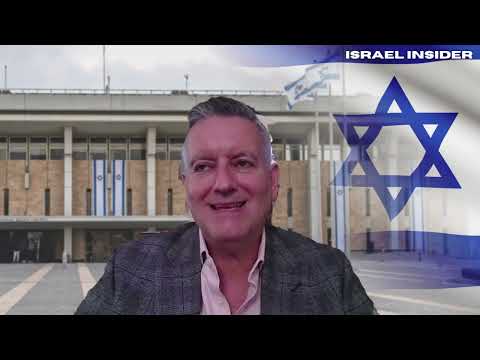 Watch on YouTube
Description
In this week’s Israel Insider, Ashley Perry explains how Gaza’s war reflects a deeper realignment across the Middle East. With Iran’s proxies weakened, Turkey and Qatar—aligned with the Muslim Brotherhood—are seeking influence, while Saudi Arabia and the UAE lead the moderates. Perry explores how this struggle shapes Gaza’s future, the stalled Saudi-Israel normalization, and Trump’s upcoming meeting with MBS. He also reacts to President Trump’s surprise letter urging a pardon for Netanyahu, analyzing its political impact inside Israel and what it signals about Washington’s growing influence over Israeli decision-making.
Transcript Automatic captions
Source: Automatic captions from YouTube, retrieved October 16, 2026. Automatic captions are machine generated and may misspell names and terms; check the video before quoting.
0:09 Hi, good evening from Israel. Tonight again, it's me on my own. We're going to be talking a little bit about Gaza and the regional uh ramifications for what's going on. And the question that I think first needs to be asked uh and the fact that nothing really seems to be changing week by week is what we do see in the background major diplomatic shifts and major restructuring of alliances in the Middle East. And what we now have to ask ourselves is is Gaza becoming the new battleground for power struggle in the Middle East between long-standing rivals perhaps new rivalries. Um, if we look back to, you know, October 7th, 2023, one of the main reasons we now know and we kind of suspected at the time for the invasion, for the massacre was to stop uh Israel's uh very very possible and probable and very likely uh normalization with Saudi Arabia. As we know uh Israel had already normalized uh relations with four Arab countries uh
1:12 UAE, Bahrain, Morocco and Sudan. Uh and we know that none of this could have happened without Saudi say so. And they were always a player behind the scenes, a positive player. And the question was when would Saudi Arabia join the Abraham Accords? When would the most important country in the Muslim and the Arab world uh make peace with Israel? normalize relations with Israel. And that was really the big prize and that was the big moment and perhaps structurally speaking the end of the ArabIsrael conflict once and for all. Not the Israeli Palestine conflict but perhaps you know a real earthquake uh in the region positive earthquake. And this was something the extremists chiefly uh led by Islamic Republic of Iran, the Shiite axis would have certainly been a massive blow for their regional aspirations. If we look at what was happening a month before uh uh October 7th, I believe it was September 9th, President Biden, then
2:14 President Joe Biden talked about an economic corridor that would run from uh India through the Middle East, through Saudi Arabia, through Israel into Europe. This was a major challenge uh not just to Shiite attempted uh hedgemony in the Middle East, but also to China. China's um uh uh belt road project um you know the idea of soft power emanating around the world economic power etc etc this was going to be a pivotal moment not just for the Middle East but far beyond into Asia into Europe and we understood even though Hamas now we know looking at uh um Yakya Sinoir's uh intelligence cache that that was found by the IDF that October 7th had been planned for quite a while. One of the reasons that they couldn't wait any longer was because of the suspected and probably would have happened normalization between Saudi Arabia uh and Israel. And what we have
3:18 seen over the subsequent two-year war is the Shiite axis has largely been dealt a massive blow whether it's uh you know the Syrian regime Bashal Bashar al-Assad though himself not a Shiite very much associated connected coordinated and partnered with um Iranizah we see he's obviously gone from the scene we see a very anti- Iranian uh president in Alshara Um, we see dealt a heavy blow even though they are trying to regroup, rearm, and there's certainly a concern that the Lebanese government is not doing enough to stop that even though it has obligated itself to do so. Um, but Hezbollah has definitely been dealt a heavy blow. Uh, Islamic Jihad and Hamas in Gaza have been dealt a very deadly blow. Again, we have to wait to see if they can regroup and they can rearm.
4:14 Something that they are attempting to do as we speak. We saw in Iran itself that uh what was it 12-day war where Israel certainly dealt a very heavy blow to Iran, not just its ballistic program but its nuclear program. The debate is on exactly how far back it's pushed and whether it can resurrect it, whether it can get back to even some sort of nuclear weapons program, where its 60% weapons grade uranium is, whether it's buried, whether it's destroyed, where it is, whose hands it is, and and what they're doing with it. But it's clear that Iran and its uh Shiite axes proxies around the region were dealt a heavy blow over the last two years. But as we know um you know the the the region of a vacuum and who have stepped into the breach a little bit is Qatar and Turkey.
5:04 They're trying very much to uh claim a certain amount of uh power in the region. And what's most interesting about these two countries are they are very closely aligned to the Muslim Brotherhood. Uh I you know for all those who don't know the Muslim Brotherhood they're are quite an old extremist organization in the Middle East. They're involved in many different aspects. Um whether it's extremist beliefs but the groups like al-Qaeda, ISIS and certainly kamas were have come up out of the Muslim Brotherhood and in fact Hamas is the Palestinian chapter of the Muslim Brotherhood. So it's a it's a very dangerous and extremist organization. Uh one that uh to a certain extent the Erdogan regime in Turkey has modeled itself on one that finds a relatively happy home in Qatar. But let's not forget that is not something which is entertained by other major players in the region. Muslim Brotherhood is actually banned in many countries like Egypt, uh like Jordan. It's certainly no
6:07 friend of the Saudi regime um and others. So what we are seeing is really return to what we were talking about two excuse me two years ago more than two years ago before October 7th um that the region was no longer really uh you know sort of um put into uh Israel and the rest of the Arab world or the Shiite world and the Sunni world. We are now back to the point where we uh can divide the Middle East between extremists and moderates. And what we're seeing is the extremists led by Qatar, led by Turkey very much trying to get a foothold in Gaza. And we see the moderates led by Saudi Arabia and United Arab Emirates who certainly would be preferable not just from Israel's point of view, but from uh most of the world's point of view if they could get a a foothold in Gaza. But at this point in time, neither Saudi Arabia and the UAE want to really uh put boots on the ground, understandably so. Whereas Turkey uh
7:10 certainly have offered Qatar have offered money but Turkey have offered boots on the ground. That for Israel is a non-starter for a number of years. Israel has seen a growing antagonism. I mean I antagonism is antagonism is probably understating it. It's far more than that. certainly coming from the the highest levels. Uh President Erdogan himself and we saw this week um that they've tried to indict I think it's 10 or 12 Israeli senior figures for genocide, war crimes, whatever it is again a sign of Turkeykey's antagonism.
7:44 But what we also should understand that this is not just about Israel. It's not even just about Gaza. It's about hedgemony in the region. for quite a uh you know for centuries there has been power struggles in the region and we haven't seen the rise of Turkey since the end of the Ottoman Empire. We uh a number of years ago we did read at that time foreign minister Dvatulu's um uh you know uh triotize on neoottomanism and the idea that Turkey uh and Turkish power rise again. it will uh regain its hedgemony that was lost at the end of World War I in the region and uh President Erdogan and those around him. Ideologu have certainly had their eyes on uh something greater that uh from beyond it its borders. We see its attempts to uh control uh Syria. We certainly see what it's trying to do in Iraq. Anywhere that Kurds are involved is obviously something very antagonistic to them. But what we also see is the danger of for
8:47 Turkey at least of this um you know Asia, Middle East, Europe economic corridor because it would bypass them. They're very worried about uh Israel Israel's gas resources uh sending it into Europe going around them. Uh all of these things are at play and Qatar we know has played uh what Israel sees as a certainly problematic role in in the region. But these are the two players at the moment who are stepping up and saying we will take a role in the rehabilitation of of Gaza. These are two countries which Israel is obviously most circumspect about. Um but as I said it's not just about Israel at this point.
9:28 It's not even just about Gaza. It's about a power play and it will be very important to see which of these sides will gain in the ascendancy. Uh next week is going to be an absolutely crucial meeting with this in mind. Um we see NBS Muhammad bin Sal the leader Salaman sorry the leader of Saudi Arabia going uh to meet President Trump in the White House. They're going to sign a defense pact. Uh it's assumed it will be something similar to what was signed with Qatar. Uh but most importantly from Israel at least is where do we stand on the subject of normalization? Now, it's clear that normalization will not be signed. There will be no grand declaration on ending, you know, on uh creating diplomatic relations with Israel. That's certainly um off the table at this point. But the question is what can be achieved in this meeting?
10:23 Could there be a path towards normalization? Uh what would that look like and what would be expected of Israel? because it's clear that the Saudis have moved quite a lot on this and and I've talked about this uh you know over the last few months if not few years. Originally Saudi Arabia said that they they and the rest of the Arab world would never make peace with Israel until there's a Palestinian state. Over the years that evolved from the early 2000s to a position where Palestinian state was barely mentioned and in the leadup to October 7th that's where we were.
10:55 there would have been normalization with almost I would say uh no mention of Palestinian statethood or sovereignty. It was not really an issue at that point. It certainly wasn't an issue for any of the other four signatures to the Abraham Accords and it's unlikely um and I can tell you from behind the scenes. It just it it wasn't even a factor. October 7th changed all of that and as I said partly it was meant to and there is a feeling from Saudi Arabia is they can't now you know turn back the clock and they have talked about um the necessity of at least an irrevocable move towards Palestinian statethood. Now perhaps, you know, it's it's it's hard to say what that irrevocable step would be, but what we do know is that it's unlikely that we'll be um you know, receive uh you know, receptive um points of view, especially uh with this government. Perhaps if it was at least something vague, something that could be interpreted in different ways, that could be seen in a positive way. And
11:56 that's certainly what the Trump administration is working on uh with MBS, with the Saudis and also with Israel, what can be achieved because it is very important for President Trump to have this normalization um to at least start moving towards it because he feels this is part of the grand plan that takes into account uh the ceasefire in Gaza and peaceful moves uh around the region. This is something he very much wants to achieve. He understands that they can't go to the uh you know the end line at this point of normalization but what can be achieved and it will be a crucial test uh of Israel's leadership because it probably will mean swallowing a few things that this leadership and this government uh will not uh particularly like where there it won't be uh you know a demand like President Obama for Prime Minister Netanyahu to get up and make a speech like he did at Ban all those years ago uh you know accepting the two-state solution. The Americans know, the Saudis know that that's not going to happen.
12:57 But perhaps it can be something, you know, which which is uh uh you know, ambiguous like as we already saw in the 21 point uh plan, Trump's 21 uh uh point ceasefire plan for Gaza where if we remember, I think it was 18 or 19, one of those towards the end where it does mention Palestinian sovereignty and Palestinian statethood. Now in Israel they sort of brush that off as you know window dressing and not really relevant. There are so many other stages to go through that it just won't really you know matter. Perhaps it can be something along those lines. But it will be very interesting and very important to hear what NBS and the Saudis say while they're in Washington and uh to to get a sense of then what will be expected of Israel. As I've said many times, almost everything that happens in Israel from this point onwards can be seen through the prism of politics, domestic politics, local politics, we are under a year now until the absolute maximum time to hold the next uh general election in Israel. And Prime Minister Netanyahu
14:02 knows that it could be at any point over the next year. He would prefer it further down the line as possible. There are other issues he has to deal with, whether it's the ultraorththodox enlistment issue or trying to pass the budget. But also another thing that he has to watch out for is he can't uh be seen as being weak or accepting anything that even looks suspiciously like acceptance of Palestinian sovereignty um at this point in time. So it'll be quite a balancing act and it will be uh very interesting to see. Uh just a another couple of points before we go to the questions. Gaza, as I said, very little has changed. The yellow line has not moved. Hamas are pretty much controlling the um the western side and Israel's uh controlling the eastern side. There are still 200 terrorists in Rafa. A few of them came out today and were shot dead.
14:54 Uh they tried to attack once again troops and they were shot dead. Uh the reason there's still 200 or 100, some say even as little as 60 terrorists in Rafa uh is because no third country has come along and agreed to take them. Israel and the US have agreed that they can leave as long as they lay down their arms and make some sort of declaratory promise of not returning to terrorism, but they need to go to a third country. At this point in time, that third country still has not come forward. So they still remain uh underground. Uh the big drama of today was an official letter by US President Donald Trump calling on Israel's president uh Bougji Herzog to pardon NetanyO for things that he hasn't even been you know actually convicted of. So it's it's quite a bizarre thing to ask uh for a pardon for something he hasn't convicted but it's part of what President Trump mentioned when he came to the Knesset when he in the middle of a speech suddenly turned to President Herdzog and asked for a pardon there on the plenum floor and there was a promise in a 60-minute
15:56 interview where he would uh take more steps to try and uh relieve uh Prime Minister Netanyo of the legal uh challenges that uh he faces. This certainly is a good playing ground for uh Prime Minister Netanyahu to to have the most powerful man on the planet on his side, someone who's very popular in Israel, someone who's credited with achieving a ceasefire, achieving the return of the hostages. Um, and this is certainly something which Netanyahu would welcome and it also changes the narrative uh to a certain extent around uh as I said his legal challenges. Uh one uh more interesting element that happened uh today is the resignation of uh strategic affairs minister Rond Derma. We've talked about Ron Derma quite a lot and how he's not really a classic minister. He's more a senior advisor to Netanyao. Some call him BB's brain. Um he is probably the closest thing to Netanyao especially on the diplomatic level. He is the man most trusted by Netino especially uh when it
17:01 comes to America and he's been at the center of all major events over the last two years negotiating with the US um the hostage deal everything he has been the man who uh Netanyo has sent to act in hisstead um he's quit um it's not a great surprise uh Ron Derma is a consuate diplomat he's a consuate um um interlocator, but he's not necessarily a politician. According to reports, and I'm sure that there there's some truth to it, he was offered a secure spot in the next liquid uh list for the next elections, but he uh turned that down. He's not someone I think really built for the uh you know the sort of um the the the uh to a certain extent level of politics in Israel, the things that has to be done um the you know the the rough and tumble of it. And it's no great shock that at this point when the hostage deal uh the hostages are home and we we look like we're going to phase two at some
18:05 point of the ceasefire deal uh that he is officially quitting his position. What is clear is he'll still be involved. He'll still be around and many have observers have basically say he will take something akin to Steve Whit's role uh with President Trump. He'll be his advisor. um for issues where you know he can he can get involved in a less than official capacity not necessarily with a government title um but whenever Netanyaho needs him uh he will be there um sourcing out whatever needs to be dealt with but much of the file that he's been dealing with with the US over the last couple of years will be handed over to Ambassador Yil Lighter in Washington so there is a little bit of a shuffle there um as I said Durma will still there in the background and and handy and ready uh whenever he gets that call. Uh and with that, I'm going to open the chat and see what questions there are. Let's see.
19:08 What is Israel doing to secure the release of the remaining four hostages? Well, at the moment it's uh yeah, we are down to the last four, I believe, one foreign national and three Israelis. Um they're waiting. They're pushing the Americans to push um whoever needs to be pushed, whether it's the Qataris, whether it's Hamas directly to release um the last four. That's expected. Israel certainly won't consider stage one, phase one, at an end until every single hostage has been released, Israeli or foreign. Um and there seems to be uh this week um we we did get uh a few hostages uh released including Hadar Golden which has been pretty much his body has been held for 11 years and that was certainly one which had a great emotional resonance in Israel because of this long-standing story uh because that he was held as a bargaining chip for so long. and the fact that he his parents were now after 11 years able to bury him. That was a significant moment and I'm sure that was all related to what's
20:11 going on in the ground with potentially those 200 terrorists hiding in Rafa and some of the other things because it's understood the emotional resonance that the return of Hadar Gold had on the Israeli public. The final four are supposed to be released. That's the deal. That's what Hamas agreed to and Israel is going to push that again. Today, Israel allowed Hamas to uh wander around certain areas beyond the yellow line ostensibly to look for these bodies. Um but at the moment, it doesn't seem that there's any pending hostage uh release coming uh in the next couple of Uh, next question. And Andy Pallik asks, "Is settler violence running a mock or has it been blown out of proportion?" To a certain extent, both uh of the parts of your question are correct. First of all, there are there is a certain sector, a very small sector, and I want to stress that again. And again, we're not talking about more than a few dozen.
21:10 It's it's terrible, and each and every one uh attack is should be condemned and is being condemned. Um, but there are certainly dozens um of uh extremely violent Israelis who live over the Green Line, although we don't know exactly where they live and sometimes these people come from within the Green Line um etc. But it's clear that there has been an uptick in violence against Palestinians and even the IDF uh in Judea and Samaria. Um it certainly is worrying. It's it's it should be dealt with. Um, but let's not forget the army is stretched and Judea and Samaria is a very large area and it's very difficult to find, you know, a few dozen. There were reports on TV that the amount of arrests in the last year done in Judea and Samir against Israelis, against settlers has gone down. Um, but it it it should be condemned. should be uh something dealt with by the authorities, but it also shouldn't be blown out of proportion uh to mean that 500,000 Israelis who live over the green line are all violent and engaged in this sort
22:14 of uh thing. Um is Steven Gilbert asked, "Is Israel trapped in American bear hog where it is no longer where it no longer has freedom to act in Gaza without prior US consent?" Well, this is something definitely debated within Israel exactly where a decisions made uh to do with Gaza, whether they're made in Jerusalem or in Washington DC. To a certain extent, yes, um Israel has become extremely reliant on the US. Israel is actually most worried at this point about a potential US-led UN Security Council resolution to create this international uh force for Gaza because that will tie Israel's hands even more and it could give countries like Qatar and Turkey uh the way in or the way around Israel's uh basic basic no to their presence uh into Gaza. Uh this is something that Israel is trying to influence uh the US on. But at the moment, the US is pretty much the decider of what goes on. Um if it was up to Israel, I'm sure they would not
23:16 release these 200 terrorists uh under Rafa, but the Americans are really really keen for this issue to be resolved. And they believe that the best way, which is their greater strategy, to keep the ceasefire intact is to let these people go. uh to perhaps as Steve Witkov said, use it as a paradigm for how uh Hamas can be disarmed and those who accept uh an end to this war uh can then go into exile and perhaps that could be the pathway towards the demilitarization of Gaza. Uh not a lot of people in Israel are buying that.
23:52 Less and less people by the day believe that Gaza Strip will be demilitarized. Kamas will be disarmed. So exactly what are these international forces going to do? What is the US going to do? There is already talk of a track two if the original 21 uh Trump uh point plan uh for Gaza does not come about because Hamas does not disarm. What happens next? What what is Israel's leeway? What does the US do next? Apparently these are plans being drawn up not just in uh Jerusalem but also in uh DC. At the moment, Israel is going along with the the uh the 21 points. Um they are waiting to see what happens. They don't believe that Hamas will disarm. They don't believe these 21 points will come to fruition. Um but they certainly don't want to go against Americans wishes at this point. So while not to say that there's necessarily a bear hug, but certainly there's a trepidation within uh Jerusalem to do anything that could uh disrupt Donald uh Trump's plans. I
24:55 think we have uh time for one last question. Uh Debie Eden Eden said, "I recently read that the US establishing a large military base in the NEG. Good or bad?" Well, this has come up over the last few days that there is going to be a very large base. I think 10,000 troops, maybe not just US, maybe other troops as well is going to be um is going to be built near Gaza is I think how it's described. Um, but I did read that a White House spokesperson basically said this was just an opinion paper. This is not policy and at the moment there are no plans to do that.
25:31 Um, Israel has welcomed US troops onto its territory. Many times Israel has always had a basic policy that they would not ask a single foreign national certainly not in the US to shed blood on its behalf. Israel fights its wars by, you know, for itself by itself. Yes, it gets American help like it did um in Iran or it certainly gets equipment to fight like it it has done in in Gaza and Lebanon and and elsewhere. But I think it was certainly be uh uh unlikely and perhaps maybe not even overly popular certainly with the decision makers uh to create such a large US uh base in in Israel. At the moment, according to the White House, officially it's not being countenanced. Um, but again, we'll have to wait and see. The fact that it's been raised, at least at some level, means it is being considered, but it doesn't sound like it's uh moving forward at this moment. And with that, I think we've come to the end of this week's Israel Insider. I want to thank you all of those who joined us. Thank you for
26:35 all those who wrote questions. Sorry I'm not able to get to all of them. If some of them are relevant for next week, then please keep them in mind and please uh put them in the chat for next week. Um I'll say good night from Israel. Thank you. And please join me again next week. Thank you.