
Webinar or Talk
20 Years Later: Ivory Towers on Sand: The Failure of Middle East Studies in America - Martin Kramer
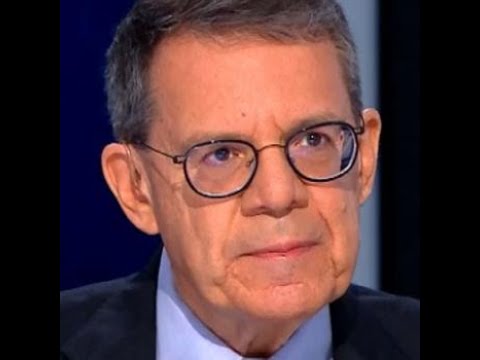 Watch on YouTube
Description
Published six weeks after 9/11, Martin Kramer’s Ivory Towers on Sand rebuked professors of Middle East studies who championed one failed intellectual orthodoxy after another – even as they missed the real story, such as the rise of Islamism. Have Middle East studies improved or further degenerated since 2001? What can outsiders do to help?
Transcript Automatic captions
Source: Automatic captions from YouTube, retrieved November 6, 2026. Automatic captions are machine generated and may misspell names and terms; check the video before quoting.
0:00 Good afternoon and welcome to the Middle East Forums webinar and podcast series featuring talks from the Middle East Forum's various projects. My name is Winfil Meers. I'm the director of Campus Watch and I'll be moderating today's discussion. Today's format will be a 15minute lecture followed by Q&A from myself and the audience. If you in the audience would like to ask a question, please use the Q&A box that is located at the bottom of your screen to type your question. I'm very pleased to introduce today's guest who is Martin Kramer. Uh Martin is the founding president of Shalm College in Jerusalem where he now teaches modern Middle Eastern history. He taught at Tel Aviv University for 25 years after earning his BA and PhD in Middle Eastern history at Princeton University where he studied under Bernard Lewis among others. Today we're going to discuss his 2001 book, Ivory Towers on Sand, the failure of Middle Eastern Studies in America, which appeared about six weeks after 911 and was a landmark work in its critique of
1:02 the academic field of Middle East Studies. As I say, the first 15 minutes will be a lecture by Professor Kramer and then we'll get to Q&A. So, Martin, [clears throat] please proceed. It's good to have you. Welcome. Uh, thanks very much, Win. Uh it's always a privilege to speak for the Middle East Forum and I'm I'm grateful that you've remembered my book after all these years. Um in the public eye, intellectuals are forever remembered for the controversies that they generate. And when I when I die, I suspect the headline will go something like something like this. Martin Kramer, Mid East Studies critic dead at 120.
1:44 Um, nothing I've written or will write, nothing I've done or will do can change that. The explanation is 911. I wrote Ivory Towers on Sand before 911. And if 911 hadn't happened, it would have remained, I think, one more item on my publication list. Uh, but 911 turbocharged it. Uh, and here were some of the headlines. I went back uh to check them. Uh, the New York Times, uh, experts on Islam pointing fingers at one another. Uh, the Washington Post, Middle East studies professors get failing grade. Foreign Affairs, who lost Middle Eastern studies, salon.com, Osama University, question mark. A reviewer in the Philadelphia Inquirer called the book a cluster bomb. and the New Republic reported uh that in that fall's conference of the Middle East Studies Association, my name was booed when mentioned in the plenary session.
2:45 Um now uh I I have no complaint. It's a controversy I invited, not one imposed on me, but I didn't expect this sort of impact. I wrote the book uh thinking only academics would take an interest and read it. Instead, it it became part of a much bigger and heated discussion over uh what made the United States vulnerable on 911. Uh the main line of the argument in the book was that Middle Eastern studies in America had consistently missed the most important developments in the region. Uh one of them was the rise of very radical forms of Islamist extremism. Uh and that claim by me is why the book took off. And let me be clear. I didn't argue that academics or anyone else could or should have predicted 911. Uh let's admit it.
3:38 Even even the greatest experts can't predict such things. Uh allow me to quote Winston Churchill. Uh it is not given to human beings to foresee or to predict to any large extent the unfolding course of events. End of quote. And in fact, nearly all the events that have transformed the Middle East since I started to study it uh were surprises. The October 1973 war, Saddat's visit to Jerusalem, the Soviet invasion of Afghanistan, uh the Iranian revolution, the Iraqi invasion of Kuwait, 911, and and the Arab Spring. I did show that when events failed to conform to academic models, the academics disregarded or distorted the evidence.
4:26 And still worse, uh they poured scorn on anyone who dared to propose another way forward. Um every intellectual endeavor to stay credible has to correct itself. And this was the problem. Not that Middle Eastern studies got some big things wrong, but that they wouldn't acknowledge it and then revisit their assumptions. And that's actually, I think, the greater sin. Uh, but I haven't been asked to discuss what went before 911. You want to know what's happened since and what's happening now.
4:59 The first thing I'd say is that the market share of academics in interpreting the Middle East for Americans is now much smaller than it was uh just after 911. Up till then studying the Middle East and writing about it were very much a a niche industry. Uh the lead producers were university-based academics and a few specialized think tanks. uh if you were smart, you were ambitious, and you didn't have a dog in some Middle Eastern fight, you specialized on something else. Uh sure, the Middle East erupted every so often, but it didn't stay on the front burner or on the front pages for for very long. Right after 911, America demanded to know why they hate us and how do we change them? Um at the time the academic experts were swamped with invites from TV producers, newspaper editors and senior officials and they uh performed unevenly to say the least and that's because academics
6:02 tended to sound one repetitive note. America is to blame and that wasn't so much an analysis as just a profession of of faith. Uh but very quickly the whole ecosystem changed. uh the main effect of 911 was to make the Middle East a matter of very wide concern and that meant that smart people who hadn't given the Middle East much thought made themselves into experts and some did so quite quite credibly. Not only did the region specific think tanks grow, but the bigger general think tanks built out large shops to deal with the Middle East and these alternative experts drove the academics out of the limelight fairly quickly. Uh generally the alternative voices ignored the blame America narrative and they searched for deeper deeper causes and they discovered I think a whole world of of rage and grievance that the academics had I think especially impressive was the way uh top journalists rode 911 to become some of America's leading
7:06 of the Middle East. Uh there is today a very large shelf of books about al-Qaeda, bin Laden, Afghanistan, Iraq, Islamism, the Arab Spring written by journalists. Uh many made the bestseller lists and and won prizes. Uh then there were the uh the military officers uh the diplomats, the officials who served on front lines from from Afghanistan to Iraq to Syria. Uh before before 911, few of them had much on the ground experience in the region. Uh they took an over the horizon view. Uh but the war cycled several million Americans through the Middle East. Uh and many of these people developed a very high resolution knowledge of politics and society and culture. Uh so if you look today at the people summoned to comment on the region, the proportion of them uh who had their boots on the ground is very high and I think it's likely to stay that way for years to come.
8:07 So in some very little of what the public reads or hears about the Middle East today comes from academics. And uh you can see that in the 911 documentaries that have been broadcast in the general media on this 20th anniversary among among the quotable talking heads. Academics are almost entirely absent. So they mostly write and speak for each other in a in a narrow circle or for the slightly wider circle of the farther the farther left. Now if you want more proof, ask yourself this. Does anyone in the field, any credentialed professor of Middle Eastern studies enjoy any broad name recognition in America? Uh, I think the answer is an obvious no. The last one was the late Bernard Lewis, my mentor. Lewis had two New York Times bestsellers right after 911, What Went Wrong and uh, and the Crisis of Islam. They were quick readable syntheses that filled an
9:10 immediate void and they literally flew off off the shelves. But Lewis um well and to some extent also fuogy uh were the ex exceptions that proved uh the rule. And the rule is this academic study of the Middle East doesn't produce highprofile public intellectuals. So, if I were to update my book about the failings of Middle Eastern studies today, I mean, who would care? America hasn't looked to academics for its ideas about the region in a long in a long Uh, and yet, Middle Eastern studies still matter, not because of what academics say or write, but because of what they teach. Uh, the most most prestigious universities, how should I put it? They're no longer the beacons on a hill that they once were. Uh, but their degrees are still coveted. I still get mileage from my Princeton degrees just as a Daniel Pipe still gets mileage from Harvards. Um, these are, you know,
10:13 the most durable brands in America, some predating American independence. Uh so it's not surprising that young people still compete sometimes ferociously to get into these places and and and from there they'll go on to make policy and form opinion and command America's power in the world. Um and my guess is that the indoctrination is as bad as ever. Now I say guess because the classroom isn't public domain. Uh but if academics teach in the classroom what they say and write for the public domain then then it's still closed circle. Uh back around 911 I feel I still felt there were maybe half a dozen universities where a student could find enough balance to get a credential worth having. Uh today um I I wouldn't need all the fingers of one of one hand.
11:11 So, uh, what's to be done? Well, I used to think that the government, uh, could balance things in institutions subsidized by the taxpayer, uh, such as university, Middle East centers. I doubt it. Now, higher ed has an effective lobby in Washington and the White House and Congress don't care much because, you know, in in relative terms, the money is quite small. Uh so yes, by all means, let's have accountability for biased outreach programs and let's have universities disclose foreign funding as required by law. Um but let's not dilute ourselves because this won't make much of a dent. What does seem to work at least in certain cases is shaming.
12:00 Uh of course much of academ shameless and in those places the game is long lost. Um, and I won't name the universities, but even in this era of rampant wokeness, uh, there are university administrations that care about quality. So, calling out uh, error and bias in these settings has some value. Uh, kudos to Campus Watch for doing this. Uh, it's not going to reverse the trend. It's not going to stop it, but it might slow it down. U, but criticism can only do so much.
12:35 just just as important is creating Uh for example, on the disciplinary level, there's the alternative to the Middle East studies association. Uh it's known as the association for the study of the Middle East and Africa or asmia. I'm pleased to be on its board. uh the Middle East Quarterly of the Middle East forum uh and I once had the privilege of editing that journal also makes room for dissenting views. Uh in the field of international relations including the Middle East there is the Alexander Hamilton society.
13:08 Um and there are a few initiatives at the level of individual American institutions uh which I which I won't name. Uh creating alternatives is labor intensive because it involves swimming against the prevailing currents in in academia. Uh success requires cunning and tact and money. Um and there's no package formula because every campus is a planet unto itself and what flies on one will will crash on another. Um but I think it's the only way left open. We're not going to see a revolution in Middle Eastern studies.
13:44 uh a generation or more will have to die out uh before that has a chance of happening. Uh the objective must be I think more modest to create some space for alternative views and free debate on the Middle East. Um to some extent that has been achieved over the past 20 years. I think the challenge for the next 20 years is to enlarge that space and and then to fill it. And so when uh I'll conclude there can't hear you.
14:16 Sorry. Sorry. Now I'm Nanda. Uh thank you for those those stimulating comments. The the um several things occurred to me as you were as you were speaking. Um one of which was the the drop in influence by what we might call star Middle East studies professors. Where are the Bernard Lewises of of today? Um and you mentioned journalists and other commentators to some degree filling these shoes. I guess my my question would be has anyone really filled those shoes though? I mean the qu is the quality of information that is available to the public today regarding the Middle East comparable to the what it was whatever the source whether it's journalists uh who disagree with the Middle East studies status quo or the professors themselves has it [clears throat] increased or decreased over the past 20 25 years do you think?
15:12 Well, my overall impression is that it is probably increased increased in terms of firsthand familiarity with the situation on the ground. That's because, you know, hundreds of people were sent out to cover these things. Um, and they were also sent out to cover things that the Middle East academics couldn't cover and that even people like Bernard Lewis couldn't access. For example, prior to 911, the bookshelf on Saudi Arabia was virtually empty. there was nothing there. Academics didn't work on it either because they couldn't get access or they were afraid that if they got some access and wrote something uncomplentary about Saudi Arabia, it would forever block their universities from ever getting any any funds right from Saudi Arabia. Um then the journalists after 911 began to pick up the story and now we have a very um accounting of um Islamic extremism in Saudi Arabia of some of the leading
16:17 actors in the Saudi royal house. All of this is now is a work of journalists basically uh prying in in in into secret space. Um, and so I think there we've got, you know, a pretty impressive array. Those journalists in the past wouldn't have bothered with the Middle East. Just wasn't big enough story. Remember, you're a journalist. When you're a journalist, the main thing is to get on the bestseller list and to get your stories on page one. And the Middle East didn't provide that. It has provided that for the better part of 20 years now. So just in sheer numbers of people I mean there just many more people doing this than there were before 911. So I'd say yeah there's more out there. There's abs and if and you were asking a question really in absolute terms as to quantity. There's much more out there. What it may not not have and what the likes of Bernard Lewis and Fuad provided is the longer historical um that was something that could only be done by academic historians and uh no
17:21 one is doing it for a wider public today. So we get a lot of reportage of a very high quality. We haven't had sort of a major book uh or even a major article in some place like the Atlantic or the New Yorker or you know putting things in the broader historical um the way it had been done in the past. So we're getting more views um some of them perhaps less radical than what would be available were professors the only source of information on this but as you say they they necessarily lack the depth the the intellectual depth the um historioggraphical knowledge that would come from years of study um even if they do make up for that in some ways by many people having lived there or been there because of the wars. Um we have a question from uh Carrie Hillibbrand, one of our reviewers who says to what practical extent does foreign funding particularly but not exclusively from Saudi Arabia impact on the agenda of Middle East studies and I
18:22 would add also from um the rest of the Gulf uh region there. Do do you know at one point um 20 25 years ago that was that was all the rage was the big donations coming in from Saudi Arabia. um [clears throat] do they play the same role that they once did? What's your view on overall foreign funding in uh Middle East studies and higher education generally if you wish to go beyond that? Right. Um excellent question. Um there is still some money coming in. Um but I think the more the more interesting aspect of this um this nexus of money coming mostly from the Gulf and the universities isn't so much in the field of Middle Eastern studies in particular but these satellite campuses that have been created in some of the Gulf states uh joint programs hospitals being built all sorts of things which are going on and which represent partnerships between American universities and um and and Gulf States. Now, I want it to be
19:25 absolutely clear. I think that many Gulf States uh play a positive role overall in Middle Eastern politics. Um Abraham Accords represents a signal breakthrough. Um but I'm always wary of uh partnerships between institutions which pride themselves on uh promoting um the pursuit of truth and the free and open exchange of ideas and governments which for for which these things are anthma [clears throat] certainly not priorities. Now, if you're sitting in a Middle East studies department in one of these universities which is avidly pursuing a relationship with a moneyed Middle Eastern state, uh you're likely to pull your punches. Um and one effect of that is not so much to you know, scholarship which is sympathetic to these countries, but just to take those the study of those countries off the agenda. you know, no one who wants to advance a career in
20:27 academia is going to focus on on these countries because the their deans and provost might look a scance at it. Uh and um that's and so so you get these sort of black holes of research which no one ventures to fill. Um and um and uh I think that's the and not necessarily because money is coming into Middle Eastern studies but because in the bigger picture these universities are internationalizing in such a way as to um to create a relationship of dependency uh with uh with so certain governments obviously and again it's the non-academics who've managed to keep up our understanding of these of what goes on in these black holes, these academic black holes, and to fill the gap. Um, but I don't think that's going to change anytime soon. The general trend of American institutions of higher education is to is to look abroad for Um, that I think is going to become even
21:31 more uh significant in the COVID era. Uh, as education moves increasingly to an online format. Also, um they're going to be looking more and more for uh for uh student bodies and um partnerships internationally. Um and so um we're just going to have to to live with the fact that the uh the flow of foreign money is a con is is is a is a force that constricts the range of study of the Middle East and the American Academy.
22:07 Thank you. Excellent. We [clears throat] have a question from an anonymous attendee who says um would you say that Middle East studies is driven mainly by liberalthinking Arabists less than sympathetic to the goals of the state of Israel or has that tide largely turned? I will take the liberty of expanding that and asking you the the role of Arabists these days. That's an old term. Uh it's been around a long time. We think of um Protestant missionaries in Lebanon, you know, in the 19th century and forward coming coming forward from that. Um, is that still a viable school of of thought uh within um Middle East studies um or and how does that have an effect on their view of the existence of Israel?
22:52 Well, the liberal Arabists were pushed out of Middle Eastern studies a while ago. Um perhaps the most famous was Malcolm Kerr from UCLA, later president of the American University of Beirut where he was um assassinated later. Um, he wrote the main critique of Edward Say's Orientalism in the International Journal for Middle Eastern Studies. Um, there was a still some degree of about the liberal Arabists. They had their biases and prejudices. They regretted the creation of Israel. No question about that. Uh, but they understood that at some level it had to be accommodated.
23:32 uh provided made the necessary concessions to the Arabs and to the Palestinians specifically in the framework of a peace agreement. Uh that was the position of the liberal But they were pushed aside long ago. Uh and people who determine the pace of Middle Eastern studies today are much more radical. uh they tend to be radical leftists um who fought tooth and nail for their academic positions in the uh in the 80s and 90s as they became a kind of counterestablishment which is now dominant in in the field and their position isn't to find ways in which the Ara world can come to an accommodation with Israel but to completely delegitimize Israel uh they lend their support to the BDS the one-state solution and so forth so Um, there is a whiff of of of nostalgia about this notion that they, you know, the liberal Arabists pose a problem. If
24:34 only there were still some liberal Arabists around, we could probably have a meaningful dialogue with them. uh but instead we're stuck with uh with radicals many of them who themselves come from radical politics within the Middle East and have trans basically Middle East studies association into a kind of lobby uh which resembles nothing so much as um as a union of academics and some benited um dictatorship in the Middle East. that that was going to be one of my next questions to you Martin to segue into that you had you have over the years mentioned and noted the um the increase in sheer percentage of Middle East studies professors whose origins are in the Middle East not simply ancestry but who were themselves born there and who have come to the United States um to work. Uh [clears throat] do you see that trend continuing? you mentioned just now some of the effects of it and please feel free to comment on more of that if you would like but are we going to continue to import faculty
25:37 at the uh the rate we have over the past 20 or 30 years do you think I don't know it's almost a numerical question and I don't have the statist statistical basis on which to a answer that I would say by the way that um um that as a general matter of principle it's people coming from the Middle East to teach in American universities could be a huge asset. I mentioned earlier Ford Ajami. He was one of my teachers as an undergraduate and one of my mentors and a close friend. And if you go on the internet, you'll find many of my tributes to professor Ajami. He was he was a major addition to um to our understanding of the Middle East. Um there's a there there is potentially huge value there. problem is that when people bring with them in their baggage uh the very same commitments that um that in wi to which they were indoctrinated in their country of origin was a good example. He was um he was indoctrinated as a nocosterist as a young man and through his long
26:44 interaction with American values, American mores, American politics and Americans um he had a change of heart. Um so it's really a question of acculturation. Uh we want an amalgam of people with regional knowledge that can sometimes sometimes can't be surpassed when it comes from individuals who come from the region but who are culturated to the values that America generally shares which is openness, tolerance, free exchange of ideas and uh and a willingness to correct course. Uh and that's the problem. It's people who are not prepared to do that because for um because they have they they remain embedded as it were in in one culture and have not succeeded in acculturating to um to the norms which um which make intellectual life in America tolerable.
27:42 Sure. Sure. you have written that when you uh received your PhD in 1981 um so grim was the situation then in hiring historians uh from your with your viewpoint that you didn't bother uh applying for jobs in the United States which is how you one of the ways you landed in in Tel Aviv um and the couple minutes we have remaining um what has happened in the that's 40 years ago now so not only 20 years ago I I was in college then too but not only 20 years ago But but 40 um it doesn't seem to be getting any better in hiring. The gates are still controlled by the people who uh who are at least of similar mind or at least uh equally hostile to someone with your viewpoint as they were when you were coming out of Princeton.
28:32 do you agree with that? and and what can we do is what can anything be done about the um ideological homogeneity that rules Middle Eastern studies and so much of academia now I hate to end on a pessimistic note I okay okay well well prove me wrong then that's all right let me put it this way I mean I I have a hard time even getting invited to to speak on campuses today forget about forget about an academic appointment on an American campus although I have been visiting professor So here and there over the past 10 years or so.
29:08 um I come back to the point I made in my remarks creating alternatives. Um I didn't want to mention and I won't mention specific institutions but here and there you see I'd say shoots coming up from the ground of things which have the potential to create um to create alternatives even within an academic setting. And remember um while say the top tier institutions that the the list is the same as it was when I was a a graduate student once you get down to second tier and third tier there's a a lot of a lot of room for entrepreneurial institutions to make uh to make a mark and to create opportunities. So um you know I said earlier no one can make predictions about the Middle East.
29:53 I don't think anyone can make predictions about Middle Eastern studies and be sure that and be absolutely confident that they'll they'll come to pass. So, I'll just end on the optimistic note that I'd like to end on and uh and uh say that hopefully when we reconvene uh you and I in another 20 years to review the 40-y year anniversary, I'll be able to report on um more progress. and you'll be able to report that you have over campus watch um less issues of concern than than you have today.
30:30 That would be wonderful for for many reasons I would have that. Um last question uh how can our viewers who would like to read your writings, keep up with your thoughts, uh find you on the web? Very easy. Just go to uh Uh you can search for articles and books. You can download ivory towers on sand which is readily available and you can also subscribe and get my mailings of my my latest uh news directly. Highly recommended for those who do it.
31:04 Martin, thank you so much. It's been a pleasure speaking with you. Uh I know on behalf of our audience, we've learned a great deal from you and we appreciate it tremendously. Thank you so much for joining us today. And to all of our viewers and listeners, um thank you for joining us. Hope you have a very pleasant day and um we'll see you next Thank you, Win. Thank you, Martin. Thank you for your work.