
Webinar or Talk
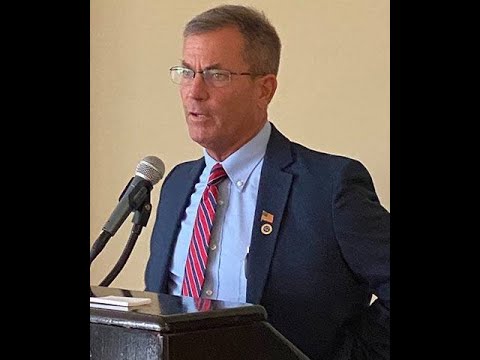
Waging a Counter-Islamist Offensive in America with Christopher Holton
 Watch on YouTube
Description
Christopher Holton has spent much of his career working with American state governments to fight the spread of Islamism. He introduced model legislation prohibiting state courts from considering Shariah law in family and civil court cases, and he lobbied state governments to divest their pension funds from state sponsors of terrorism, such as Iran. Mr. Holton’s latest campaign seeks to establish a “Terrorist Registry” to monitor terrorism offenders set to be released into American communities after serving their prison sentences. Learn more about these initiatives and how state governments are used to counter Islamist threats.
Transcript Automatic captions
Source: Automatic captions from YouTube, retrieved November 2, 2026. Automatic captions are machine generated and may misspell names and terms; check the video before quoting.
0:01 Good afternoon and welcome to the Middle East Forums webinar and podcast series featuring discussions from the Middle East Forums projects. My name is Benjamin Baird and I am the deputy director of Islamist Watch, a project of the Middle East Forum. I'll be your host today for the next 30 minutes. A quick housekeeping note, uh this webinar is approximately 30 minutes in length. Uh at any time you can leave a question below in the Q&A box. uh we'll get to as many of those as we can in the final 10 minutes of this uh webinar. Uh so long as the questions are uh relevant to the topic, we'll get to them in order.
0:38 [snorts] Uh so I'm pleased to introduce our guest today, Christopher Holton. He's the senior analyst and director of state outreach at the Center for Security Policy. Mr. Holton came to the center of security policy after serving as president and marketing director of Blanchard and Company and editor-inchief of Blanchard economic research unit from 1990 to 2003. He holds a BA in history from Tulain University. Christopher, welcome and thank you for joining us Benjamin, thank you very much. It is an honor and a privilege to be with you. Uh I'm a longtime admirer of the Middle East Forum and Islamist Watch. Uh and uh and of course uh Daniel Pipes is a hero to everybody in our uh industry.
1:29 Well, the feeling is certainly mutual uh over here at the Middle East Forum. Uh so first I'll jump right in. Uh for those unfamiliar with your work, please tell us a little bit more about Center for Security Policy uh and about your position there. Well, the Center for Security Policy uh is a national security organization founded in 1988 by my boss Frank Gaffne who was a assistant secretary of defense for international security policy under President Reagan. and he founded the Center for Security Policy to keep Reagan's dream of peace through American strength alive. And that is our mission through today is peace through American strength. Uh I uh handled the state outreach and education efforts for the center uh to uh lies with law enforcement uh elected and appointed officials as well as uh uh individuals and community groups uh across America.
2:34 Okay. Um so you mentioned working with uh law enforcement, state and local governments. So most people, including myself, when you think of counterterrorism work, um, or counter extremism work for that matter, uh, you tend to think about big federal government agencies, the FBI, Department of Home, uh, Homeland Security, even the CIA. Um, how are state and municipal governments, how can we use these institutions, uh, in the war on terrorism in fighting Islamism? Well, you know, the thing is this. Uh, US counterinsurgency doctrine actually says that when we're fighting insurgencies our our methodology is to train local security forces at the community level to battle back against insurgents.
3:26 And we try to replicate that here in the United States. There have been numerous examples of jihadi cells being taken down in the United States due to the alertness of state and local law enforcement. And there also have been examples of uh terrorist attacks which have been uh handled by state and local law enforcement such as the Orlando nightclub shooting. Um, but a prime example would be the book uh the the incident that was outlined in the book Lightning Out of Lebanon, in which a Hezbollah cell was taken down because a local sheriff's deputy in North Carolina, Charlotte, North Carolina, was working a detail at a warehouse. And this was in 1998. and he saw suspicious characters going back and forth with garbage bags full of cash and he reported that up the chain of
4:30 command. It got to the BATF which was the name of of the organization at the time and the FBI. They conducted a investigation and ended up being a Hezbollah cell. Fact of the matter is if it hadn't been for that sheriff's they'd have never found out about it because they wouldn't have been working that detail in the first place. and and had they been there, they probably wouldn't have noticed that it was out of place like the sheriff's deputy did. So, it's very important that state and local law enforcement be educated on the threat from Sharia and jihad.
5:03 I see. Thank you. Um, one of your key uh, accomplishments at Center for Security Policy uh, has been to introduce legislation in various states that quote prohibits state courts from considering foreign, international or religious law. Uh, this type of legislation has been instrumental in keeping Sharia law out of family and civil courts. uh please tell us about your work in this area, but also is Sharia law truly being used and and seen in US courtrooms? Uh how common is this?
5:37 Well, the the name of the legislation that you referred to which we were involved in as part of a movement and I believe Middle East forum was also involved and in fact I remember that you all were involved uh from the very beginning. Um, it's called American Laws for American Courts. And basically what the legislation says is this is that no court in this state, whatever the state is, shall inforce a foreign law or in foreign legal doctrine if the enforcement of that foreign law or foreign legal doctrine or the application of that foreign law or foreign legal doctrine would violate any of the fundamental constitutional rights of any of the parties involved. That's what it says. That is the purpose of the legislation. So, it's not directed at any particular form of law. It's not directed at religious law of any sort.
6:29 It's not directed at international law of any sort. It's not directed at foreign law of any sort. It's directed at any of those that would violate the fundamental constitutional rights of any of the parties involved. So, the purpose of the legislation is to protect fundamental constitutional rights. Now the reason that Sharia is so often brought up in this case is because fundamentally Sharia violates fundamental constitutional rights when it comes up in our court systems because of the very nature of Sharia. And yes, Sharia does come up in state court systems in particular, especially in the area of family law. And we documented that in a book that we wrote called Sharia and American courts. We found dozens of cases in which Sharia came up in state courts and in a few cases the judges ruled in a toxic manner and upheld uh Sharia law uh rulings from places like Pakistan really despicable uh the way that that has happened.
7:33 So you you mentioned that Sharia law is um out of line with our constitution. Can you give me some examples of of that? How Sharia law is It it violates equal protection first of all, which is a fundamental constitutional right. Uh the testimony of a woman is worth exactly half that of a man. Uh so that pretty much the reason it comes up in family law so often is because of that very thing. uh the rights of women are trampled under Sharia whereas in our system in our under our constitution there is equal protection and due process. So very often both of those are trampled under Very important to point out. Uh on another front you scored a major victory against a very prominent American Islamist organization perhaps one of the most well-known Islamist organizations.
8:32 one we talk about at the Middle East forum quite often, the Council on American Islamic Relations or CARE. Uh, tell us about your efforts to expose care for what it truly is. Well, it started back when we we were we've done a considerable amount of law enforcement outreach over the country and we've worked with other partners who have done law enforcement outreach around the country. Uh, and we discovered that PIA also had a law enforcement outreach division that they were going to law enforcement to train law enforcement on how to deal with various aspects of um the Muslim community and and other things. uh in particular uh it went against something that they had done. One of their chapters had published something said don't talk to the FBI. Uh and uh at the same time they're doing outreach to law
9:34 enforcement and then telling people don't cooperate with law enforcement. um we felt like we needed to warn law enforcement about this because if they're out there doing outreach, we need to sound the alarm on that. And basically what we did is we created a resolution for the state level in which it said um uh because of the numerous care officers, members and employees who have been convicted on terrorism and terrorism related charges over the years. We list those in the resolution. They're dozens.
10:16 We think that state and local law enforcement should avoid conducting outreach with that organization. Um, and we uh first thing we did is this was way back in 2017 that it started and and uh first thing we did is we went around to state and local law enforcement, told them a little bit about care and they all said, "Yeah, that's that's somebody we shouldn't be interacting with." Uh so we created the resolution and uh first place we passed it was in Louisiana and then we passed it in Arkansas. We brought it up in South Carolina. It fell short in South Carolina unfortunately.
10:57 Um but there is a prominent state uh right now uh where it's under consideration and we hope that in 2023 we're going to have a major state uh pass a resolution for uh uh directing its law enforcement community to not conduct outreach with care. Very good. Um so so CARE more or less this is a lawful Islamist group. They may have been uh involved on the periphery of some some terrorism investigations in the in the past, but they mostly work within a legal framework to accomplish their goals. Um it's a tough question, I know, but what sort of legislation or policies uh should we enforce to counter groups, lawful Islamist groups like CARE?
11:49 Well, you know, here's the thing. that resolution that that you mentioned uh and the fact that care uh does use some legal methods to promote its agenda. Uh that's those aren't contrary to each other because our resolution simply says look they've had a lot of members employees convicted on terrorism charges. I don't mean indicted or you know suspected and these folks were convicted on terrorism charges. So that's the basis on which we think that uh law enforcement should not conduct outreach with any organization that has had so much so many of its personnel involved in uh being convicted on terrorism charges. Now, uh I don't think we need to direct any of our legislative out outreach on
12:54 the state level at care because everything that we do, American laws for American courts for instance, Iran divestment for instance, uh uh disclosure of foreign gifts to colleges and universities, uh the see something, say something bill, Um, and our new terrorist offender registry, which I know we're going to get to, cares against all that. So, what we do essentially is counter care with with all of that.
13:28 So, we don't have anything specific that we do to go after care uh other than the resolution uh which uh uh we hope will um shine the light on them. Makes Another way that you've worked with state legislatures to disrupt international terrorism, you mentioned it just a moment ago, is is uh the divest from terrorism initiative, which seeks to convince states to stop investing their pension funds with state sponsors of terrorism.
14:06 Most US companies, in my understanding, are banned from doing business with Tyrron. Are there really states who who've invested their pension funds in Iranian companies? Uh, and how does this Okay, this the divest terror initiative was started way back in August of 2004. It was the the brainchild of my boss Frank Gaffne and another brilliant gentleman named Roger Robinson. And you're right, US companies are forbid were forbidden and are forbidden from doing business directly with Iran, but lots of foreign companies have been doing business with Iran all along. And state pension systems invest in stocks of foreign companies and very often they invest in stocks of foreign companies that are doing business in Iran. So a US company is forbidden from doing business in Iran, but a foreign company can do business in Iran and state pension systems which are taxpayer supported
15:10 shouldn't be investing in foreign companies that provide corporate life support to the Ayatollas. And so that was the uh genesis of the divevest terror movement. It was primarily directed at Iran but not exclusively. But Iran obviously is the world's most active state sponsor of terrorism. Has been since the state department started publishing a list of state sponsors of terrorism. Um so uh that effort resulted in divestment of state pension systems uh in about two dozen states which was uh uh instrumental eventually in getting a lot of the foreign companies to quit doing business in Iran because it made them make a choice. Do you want access to US capital markets or do you want to provide corporate life support for the Ayatollas? Which will it be? And so companies like Total SA pulled out of Iran as a result of the divestment movement. And it's much bigger than just
16:15 the Center for Security Policy. We we had a Noah's arc of uh of a coalition to to to to make this successful. Um and so uh that was as successful in terms of the number of states that divested as the South Africa divestment movement of the 1970s and 1980s which got a lot more publicity. now I know the list of state sponsors of terrorism isn't very large. In fact there's just a few states on it. But are there any other countries you think where you could uh aim similar policies towards them? Like Syria for instance? I'm thinking maybe the Hamasled government in the Palestinian territories. Um has has anybody uh looked at expanding the targets of such Unfortunately, it's gone in the opposite
17:19 direction. When we first started the divest terror movement in 2004, Cuba and North Korea were on the list in addition to Sudan and Syria and Iran. Um Sudan was taken off the list uh during the Obama years. Um uh North Korea was taken off the list but then put back on it. Cuba was taken off the list. Um, and uh, today Iran is still on the list and Syria is still on the list, but you know, Syria doesn't exactly have a bustling business climate. So yes, I I I would certainly not be opposed to divestment from the Assad regime because of its support for uh Hamas and Hezbollah over the years, but there just aren't that many companies doing business in Syria like there are in Iran. And that's simply because Syria doesn't have all the oil and gas that Iran does. See, divestment from Iran is important because we need to
18:26 starve them of the money that they could earn from their oil and gas reserves. And unless of course this revolution that's going on becomes successful, in which case it'll be great for everybody and Iran can reenter the uh international oil and gas markets is a legitimate country. Let's all hope and pray for that. So, finally, I'd like to ask you uh about one of your ongoing projects, the terrorist registry. What is the terrorist registry and why do we need Well, it started back in 2017. I was reading a AP article uh indicated that over the next few years, hundreds of people who had been convicted of terrorism and material support for terrorism in the United States since 911 were going to be released from prison.
19:18 So AP wrote an article about that posing the question, is this something to worry about? And they had an expert that they interviewed and the expert that they interviewed was a guy named Randall Todd Royer who now goes by Ishmael Royer. And uh he had spent 13 years in prison. He had he had been a he had been an employee of care and he had gone overseas and received terrorist training from Lashkari Taiba in Pakistan and facilitated other folks to go receive that training. Uh and so he was convicted on terrorism related charges and sentenced to 13 years in prison. He got out. Now he's working for some think tank in Washington DC and uh he uh he he was the expert and they asked him is this something to worry about and I know you'll be shocked by this. I was shocked. He said there's nothing to worry about from these people. Um the con the convicted terrorist said that there's nothing to
20:19 be worried about from convicted terrorists. Um, so anyway, uh, I was dealing with a lot of sheriffs at the time around the country and I went around the country and I every sheriff that I met with, I said, "Hey, showed them this. Look, if somebody moved into your jurisdiction who had been convicted of a terrorism offense, would you want to know it?" And I have yet to come to across a sheriff who said, "No, I don't need to know that." They all said, "Oh, hell yeah. I want to know that. Absolutely. I want to know that. I want to know everything I can about them. I want to know where they are. I want to I want to know what they've done, everything. And so, uh, we modeled it after the sex offender registry, which has been extremely successful over the years. But there sex offender registry is not the only such registry. There's arsonist registry in a lot of states. Uh, there's there's registries for crimes that have a high recidivism rate. Um, and because of the data we have from the Guantanamo
21:26 detainees who have been released, as many as 20% to 30% going back to jihad after they released from Guantanamo, we have evidence that there is a high recidivism rate amongst terrorist So what we did was we went to the state that did the first ever sex offender registry called the Scarlet Letter Law back in 1992. That state happened to be Louisiana. And a couple years ago, well, I guess it'll be three years ago soon, Louisiana passed a law to create the first terrorist offender registry in the United States.
22:05 And that is in the process of being finalized. It only has a onetime cost of $30,000. It's not um uh a a terribly hard thing to do. Uh unfortunately, uh the bureaucracy in the Louisiana State Police has dragged its feet and has not done a great job of instituting the law. Uh so we're in the process of seeing to it that it gets done. And other states have expressed an interest in a terrorist defender registry. That's how it started with the sex offender registry way back in 1992.
22:43 One state passed it, then another state passed it, and eventually you had enough states passed it to where the federal government started to cooperate with them. It doesn't start from the top down. It it it's a it's a bottom up Best of luck uh in that regard. Okay. Uh we're going to move on to our audience questions now during the final 10 minutes. We have a question from Jeffrey Cranes. He asks, "How can we expect to counter the Islamic influence when major Jewish organizations have essentially embraced them in the name of moral equivalence and interfaith dialogue?" Well, look, I'm I'm not going to tell anybody else how to do their business, but you know, you mentioned the care resolution, Benjamin, and we had that in South Carolina, and it was because of opposition from Jewish groups to that resolution that it failed in South Carolina, believe it or not. So Jewish groups came out and defended care who's essentially uh has ties to Hamas whose
23:48 charter says that they want to replace Israel with an Islamic state. Um so it was very disappointing to us that that has occurred. Um so I I I don't really have an answer to that question but I will acknowledge that the issue does exist. And it exists, I want to add, from many different types of organizations, not just Jewish Americans. Oh, no question. I'm Catholic and let me tell you, it it's it's not just Jews. There's no question about it. There's there's problems within the Catholic community for sure and in other Christian communities as well.
24:28 Uh, next question comes from an anonymous attendee. They ask, "How can we help as individuals in the community without jeopardizing our safety and our family?" I mean to look for and report suspicious activities and remain anonymous. Thank you. Wow. To report suspicious activity, I would report it to your local sheriff or police department. I would I would that's where I would start because my experience has been is that local police are much more accountable and responsive to reports like that than the federal authorities are. Uh so that's where I would I would I would report those things uh if you see suspicious activity and and and we've in a few states have passed something called the see something say something act uh which basically says if you report suspicious activity in good faith to a proper even if it ends up not being suspicious
25:32 activity you're immune from civil liability. you can't be sued for it. Um because care has for instance, in the Flying Imm case, you may recall uh at uh the airport in uh Phoenix, Arizona, um uh terrorists facilitated lawsuits uh against people who have reported suspicious activity. Um, so, um, I understand the concern about that and there are things that can be done to, uh, ease those concerns.
26:07 Uh, another anonymous [clears throat] attendee asks if there's a difference between Islamist and Islamic. Very hot button question there. Um, or do you find them to be the same? I don't use the term Islamist. I don't know what that term really means. Um, I use the terms that they use to describe themselves and jihadis describe themselves as jihadis. Um, and uh, so I I I I don't really use the term Another question uh, one moment here uh, from Monolita Mitra asks, "Why has the US government not designated CARE as a terrorist group and banned it? After all, most Islamic countries such as Saudi Arabia, UAE, Egypt, and so on have already done so.
26:57 Yeah, that's a good question. That that is uh that's some of the background that we use uh when we promote our resolution. Um there are things that are not in the resolution but which are key to the resolution such as the fact that CARE has been designated a terrorist group uh by some of our uh Arab Islamic allied countries. Um and why the US doesn't do it? Well, the US has no mechanism for designating domestic organizations. For instance, Antifa has never been designated. There is no list of domestic terrorist organizations. It doesn't exist. There are there are lists that the State Department publishes of foreign terrorist organizations. You have the designation FTO foreign terrorist organization. Um but you don't have one for domestic organizations. Um and Hamas is obviously on the foreign terrorist organization list and that is who care has been primarily affiliated with in
28:00 the past. Um, let's see. Jeff Billingham wants to know, "Are non-citizen terror convicts reliably deported upon release?" So, is the government deporting these people when they get out? How often does that That's a good question. I don't know the answer to it. um that the key term he used there was reliably and I don't trust our government to do anything reliably at this point especially when it comes to uh enforcing immigration law. Um so if I had to hazard a guess, I'd say no, they're not doing it reliably and who knows what's happening.
28:45 Uh, Abe Hack asks, "Is the list of terrorist convictions in the resolution against care comprehensive and how can we get a text of the resolution?" Um, if uh you will supply my email address somehow to the the the the folks uh who uh have viewed this webinar, I can send them the resolution. Um, is it uh every every incident and every uh example we provide in that resolution is rock solid. There are probably some things that we may not have included that may have question marks around them, but the the several that we are rock solid. So, in that standpoint, uh it's comprehensive.
29:37 How do we get a copy of your Sharia law in America courts book? Uh, I think it's available on Amazon. Sharia law and American courts. Um, it's been a few years since we published it. Um, and uh, it used to be available on Amazon. I haven't looked in a while. Um, but, uh, if you can't find it, uh, contact us at the center and we'll see what we can do. All right. I think we're just about out of time for questions. Uh, I'd like to thank our guest today, of course, Christopher Holton for sharing with us today. Um, Chris, we provided your email uh in the chat box below, but could you go ahead and say it for us so that anyone's viewing?
30:19 Sure. I've got a a couple of email addresses, but I'm going to give you the simplest one, and it's not that simple, unfortunately. It's my last name, Holton, holt nentercuritypolicy.org. That's holton centerforcuritypolicy.org. Thanks again, Chris. And to our viewers, thanks for registering for this and other webinar offerings. Uh for those who'd like to do their part in fighting Islamism, I invite you to text Islamist watch to 52886. That's two words, Islamist Watch to You'll receive text and email updates about all of our ongoing activism campaigns, inviting you to send letters to lawmakers, sign petitions, or join our protests and rallies. Once again, that's Islamistwatch to 52886.
31:10 Thanks for tuning in, and keep your eye on your inbox for more Middle East forum webinars. Thank you very much. Thank you, Benjamin. Thank you.