
Webinar or Talk
The Dissolution of the PKK and the End of Its Armed Struggle with Weysi Dag
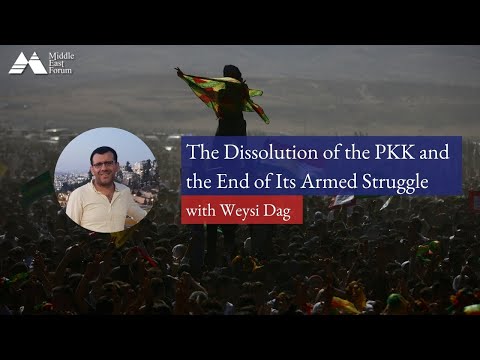 Watch on YouTube
Description
The Turkish state is currently engaged in an initiative to address the Kurdish question. This effort, marked by symbolic gestures like the recent handshake between ultranationalist leaders and pro-Kurdish MPs, PKK leader Abdullah Öcalan’s statements announcing the dissolution of his movement, and the PKK Congress confirming this, is unfolding amid shifting domestic and regional dynamics. This presentation will explore the context, conditions, and timing of this process, tracing the historical failures to solve the Kurdish–Turkish conflict, Turkey’s tight control over every facet of the current initiative, and its apparent focus on marginalizing Kurdish political voices rather than resolving the issue. Is Turkey genuinely seeking peace, or is it merely consolidating power at the expense of Kurdish aspirations?
Dr. Weysi Dag is a research fellow in the department of international relations at the Hebrew University of Jerusalem. He is the author of The Construction of Kurdish Diaspora Communities and Identities: A Case Study of Kurdish Refugees in Berlin and London (Han-Verlag, 2012) and Voices of the Disenfranchised: Knowledge Production by Kurdish-Yezidi Refugees from Below (Macmillan, 2024). He has published his research in a wide range of academic journals and media outlets, including openDemocracy, The Conversation, the Jerusalem Post, the Times of Israel, and Jadaliyya. He holds a Ph.D. and diploma degree from the Free University of Berlin.
Transcript Automatic captions
Source: Automatic captions from YouTube, retrieved October 19, 2026. Automatic captions are machine generated and may misspell names and terms; check the video before quoting.
0:09 Hello and good afternoon. Welcome to the Middle East Forums weekly podcast series. My name is Anav Kalam and I will be moderating today's discussion. Now, the Turkish state is currently engaged in an initiative to address its Kurdish question. This effort marked by symbolic gestures like the recent handshake between ultraationalist leaders and pro- Kurdish PKK leader Abdullah als announcing the dissolution of his move movement and the PKK Congress confirming this is unfolding amid shifting domestic and regional Today's explore the text conditions and timing of this process tracing the historical failures to solve the Kurdish Turkish conflict. Turkey's tight control over every facet of the current initiative and its apparent focus on marginalizing Kurdish political voices rather than resolving the issue. Is Turkey genuinely seeking peace or is it
1:12 merely consolidating power at the expense of Kurdish aspirations? Now to answer these questions and more we are joined today by Dr. Vi Dag who is an author and a research fellow in the department of international relations at the Hebrew University of Jerusalem. Now as always we invite your questions throughout this discussion and if you have a question please feel free to use the Q&A box located at the bottom of your screen to type your question. Now without further ado, I would like to welcome Dr. Vi Dog. It's great to have you on. Thanks for joining us.
1:51 Thank you Anard for having me today. Yeah, of course. Now just to begin and sort of set here, would you mind giving us a sort of bird's eyee overview of the situation with Turkey and the PKK? Yes, of course. Uh the Kurdish conflict in Turkey rem remains one of the most complex and long-standing issue in the Middle East. It's part of a broader Kurdish question that spun four state Turkey, Iraq, Iran, and Syria, reflecting the divided geography of the Kurdish population. Over the past two decades, we've seen a moment of significant change for the Kurds. The fall of Saddam Hussein in 2003 opened space for Kurdish autonomy in Iraq. the Syrian conflict in 2011. Similarly, created a new political reality for the Kurds. Uh many now wonder whether Iran may be the next and whether Turkey represent a final and most difficult chapter in this unfolding process. In this context, the recent decision by the PKK to disarm and begin the process of self dissolution is highly significant.
2:56 While some interpret it as a step toward peace, others see it as a part of broader strategy by Turkish state to limit the potential for Kurdish political transformation and influence in the Middle East. Historically, Turkey has taken hardline approach to Kurdish identity with deep rooted policies of denial, assimilation, and repression. Uh, this legacy continues to shape the relationship between the Turkish state and its Kurdish population today. At the same time, there are growing debate within the Kurdish political affairs about how to engage with Turkish state.
3:31 Some Kurdish politicians and elites have aligned closely with the Turkish state's institutions. Critics argue that this risk marginalizing broader Kurdish demands and alienating part of the own Kurdish communities. These are sensitive and contested questions both politically and morally and they deserve a careful reflection. So with that let's explore some of major development in Turkey and the wider region. Abdullah Jalan the founder of the PKK enters uh talk with Turkish intelligence and other state authorities while in Zoliari confinement in Imran is Iceland. This uh talk took place entirely behind closed doors with a little transparency. Following this developments, David Bacheli, the leader of Turkish tur turkey turkeykey's ultraist party made a symbolic gesture by shaking hands with pro kurdish members of parliament. He then publicly called on to declare an end to the armed kurdish struggle and to dissolve the PKK. Many observer interpreted this act
4:36 as a the beginning of a new political process although it its details remained unclear at the unclear at the time. Shortly afterwards the delegation from the procures den party visited multiple times. Then on February 27 uh 2025 Jalan made a rare and notable public statement. He urged the PKK to abandon its long-standing demands such as statehood, federalism, autonomy, and even cultural rights. Instead, he encouraged organ his organization to shift its focus towards broader ideological and ideologically universalistic and utopian principles such as building a democratic society and promoting so promoting socialism. An also called on PKK to convene a congress to formally lie down its arm and dissolve the organization. His appal emphasized a transition from armed struggle to peaceful legal and political engagement. In May, the PKK held a congress where it officially declared an end to its armed struggle and entrust
5:39 entrusted with the responsibility of guiding the transition process. However, the Pekka itself was not directly involved in the broader negotiations. Instead, it appear to follow lead without participating as equal stakeholders in the talks. While many courts welcome the shift from armed conflict to political path, there are also concerns. Some worry that this development signals a departure from longstanding Kurdish goals and aspirations with the PKK stepping back from its previous central role. There's now an opportunity and perhaps a responsibility to broader Kurdish society to engage with and help shape the future accordish questions. Despite the PKK despite the PKK's unilateral decisions to lie down arms, Turkish government has not addressed a deeper long-standing roots of the Kurdish issue, an issue that affects a million more than combined population in Iraq and Syria. Instead, the government framed this development as the start of a terror-free Turkey, sign simplifying what is in reality deep, deeply complex
6:46 political and national matter into a counterterrorism narrative. Turkey has demanded full disarmament and compliance, but so far has offered no reciprocal steps in return. The government appears to applying a similar approach to Kurdish groups in Rojava and Iran. However, Kurdish forces in those regions have made clear that recent appel does not apply to them and they continue to advocate for federalism and political recognition. So far, Turkey has not initiated a transparent legal or constitutional process, nor has it opened the door to fair and inclusive negotiation or international mediation mechanism that have played a key roles in other peace processes such as in South Africa, Colombia or Northern Ireland. For legal and political reforms remain limited. The government has not implemented the judicial reforms it previously promised and there there have been no meaningful step towards reconlation. Meanwhile, military
7:49 operation have continued and political discourse remain heavily focused on security rather than inclusion or dialogue. So what are Turkey's broader objective in this process? They spend domestic, regional and international dimensions. Domestically, the government appears to have a several political aims. It seeks to secure Kurdish support for new constitution that would serve the evolving need of the Turkish state. It also aimed to strengthen President Erdogan's prospect for reelection at same times while promoting democratic reforms in rhetoric and the Erdogan regime continue to detain democratically elected Kurdish and Turkish mayors rising concern about political inclusivity and regionally especially following the geopolitical shift after October 7 atrocities. Turkey is focus focused on preventing Kurdish forces in northern Syria Rojava from gaining further influence in the region where Iranianbacked actors are weakening. It seeks to limit the Kurdish autonomy in
8:51 Rojava assert its role as dominant regional actors and in doing so Turkey revives elements of its historical influence in relation to Turkey is also working to expand its reach in key areas such as Syria and Iraq with broader strategic ambition that includes symbolic influence over Jerusalem. Intern internationally, Turkey aimed to avoid external criticism regarding its approach to the Kurdish issue and present present itself as a stable, unified and powerful state on the global stage that can solve many international conflicts such as Turkish role in the conflict of Ukraine between Ukraine and Russia. Within the Kurdish political spares, we are witnessing a cautious but notable sense of unity perhaps perhaps more so than we have seen in decades. There are have there have been some uh encouraging development. Many Kurdish group expressed the commitment to unity through uh congress held in Rojava uh on
9:55 April 26. They believe that uh given recent shift Turkish Turkeykey's irrational for continuing military operation in Rojava and uh Kuristan region of Iraq is becoming harder to justify and that the legitimacy of Turkey Turkish military presence in Kurdish region of Iraq and Syria is increasingly questioned. There's also hope that displaced Kurdish communities in this area may begin to return and that economic cooperation with Turkey particularly through Kurdish re Kurdistan region of Iraq could improve.
10:28 However, however, concerns remains if this new fund unity is perceived as an effort to margin marginalize or satine sideline the PKK, it could be counterproductive. There is a risk that Turkey may still find new justification for further military action or political suppression which called undermine the broader goal of peaceful coexistence and regional stability. The disabendment of the PKK also carries important international implications. This development may enhance the global legitimacy of Kurdish political movement and help improve the broader international image. It also challenges the continued use of the terrorist level apply to various Kurdish actors and could help remove a long-standing diplomatic obstacle that may in the Kurdish diaspora have faced in international forums and discussions. To conclude, the end of the PKK's army struggle marks a significant uh and historic mo moment. However, this does not represent a comprehensive resolution without an inclusive political process,
11:32 one that incorporates diverse cordurish voice, a clear legal framework and meaningful international engagement. The path to lasting peace remain answered things. So I now actually I this is my talk and I'm now I look forward to uh having a question and respond to your questions or questions of audience. Ah well fantastic. Many thanks for your presentation. We uh we do have a few questions coming in here. So I will begin with a question from uh Carrie Hillibbrand who asks could you update the status of the Kurdish SFD visav the PKK and Turkey SDF I mean Syrian Democratic Forces is right now engaged in a negotiation with the regime in Damascus Alshara regime and actually the the representative of the Kurdish forces or Kurdishan democratic forces argued that the this negotiation uh is kind of the influenced by the process between
12:39 Turkey and Jalan. So and now the SDF tries to get the the yesterday that was the last time that they had the meeting to negotiate with the the Marcus regime and also the US is involved. We know that uh and right they negotiate and this is a process like the you know we know that Mazun Kuban and Ashara has already um signed a memorandum in uh on March uh 10 and now they negotiate how to implement this uh uh this memorandums but uh the role of the SDF will remain crucial in new Syria.
13:17 Thank you. Now a follow-up question also from Carrie uh how has the relationship between the SDF and Israel shifted? I mean as Mazun Kuban the the general Muslim yesterday or day before yesterday uh declared that there there are no direct ties between Israel and SDF but there are uh very positive sentiments uh sentiments that actually reflect also the view of the Kurdish population and the desire very uh stable and u dynamic relationship but you given the geopolitical and sensitive issues in the in Syria but and also Turkish threat both sides are also careful but uh like this but as I said it's very I mean both the courts uh also the other representative of the court the cordisha administration um declared that the role of Syria I mean that sorry that Syria has to promote the uh peace
14:22 with all of its neighbors within the framework Abrahammer courts and this is also the approach even though uh it is it has been written in the media many times that the courts in Rojava I mean the representative of the courts they actually are very supportive of Abraham court and the one that Syria joins the Abraham court at some point. So and this is also something you know because the Abraham court is a the the the treaty which is crucial for the Middle East to promote peace and uh promote peace and equality and the threat and this is also crucial for the course and the course in Rojava in particular have already um implemented uh the the the the spiritual aspect of this um of this treaty because the the we have multi-religious very inclusive model in Rojaba and this is exactly what the this the the core aspect of Abraham course represents. So and based within this framework we have very positive sentiment and understanding and also
15:27 understanding of security concerns and other concerns but as I said officially because the the issue is very sensitive but also because of Turkey and also the Turkish intervention. uh the so try to because the Turkey in particular like anti-semitism extremely unright and they always dominize Israel and the the the Jews and they connect the courts in order to criminalize the courts and that's why the courts are very careful and the Israeli official I believe are also careful they are aware of this fact and they understand so but all in all they have very positive sentiment and I hope at some point that will be implemented within Premat Abraham And thank you. Now uh I will move on to a question here from the Middle East forums founder and chairman Daniel Pipes who asks can Rojava survive Turkish I mean Rojava has like Rojava has um resisted many times and Turkey invaded multiple times. Rojava the invaded Afrne
16:32 in 2018, Derek Kany in 2019 and Turkey committed ethnic cleansing. That other Turkey tried to invade other part of the Rojava because the Turkish um objective was to remove the Kurdish forces 30 kilometers away from Turkish borders. But the courts have always resisted actually. But now and now the I mean the courts rely on the they made alo statement that they rely on the own forces. they will fight they are well well trained well experienced but it's not about the you know the I think this the the the confrontation on the field that's armed confrontation on the field I don't think that will remain a very relevant issue now for now at least because there's negotiation Americans are involved they try to solve many issues in diplomatic way so but if that's like if the American withdraw themsel and then uh if Turkey invade probably the course like they did in Afne and they will resist but I cannot it's very hypothetical and speculative
17:34 to tell how the the the outcome will look like but uh the course Ro of course in Roa as they have they already made statement that they were resist that they rely on their own people but uh but Turkey even in tishim dami tried Turkey tried to take it over after the fall of Bashar regime um December 8 2014 and the Turkish right multiple times but the course also resisted the Turkish invasion and also the deployment the the deployment it resist al resisted al resisted also the deployment of the jihad is that the Turkey use as proxy like they call the Syrian free army so and that's why it's very hypothetical but it's now the talk they have negotiation a lot of speculation that we hear reportedly and yeah I hope that will not come to the confrontation and they will have they will use the mind to you know through dialogue to promote peace and this is something that is that the region needs but at the end we don't know like the Middle East is something
18:35 that things changing every day. Yep. Every day never a never a boring moment there. Um moving on here to Konari he asks how in your view is the new situation with the PKK seen in Iran? Are the Iranians happy about this? Is there any truth to Turkish support for certain Kurdish opposition activities against the Iranian regime? I mean the course now the P pjak the this is the branch of I mean the branch that represent the courts and many uh claim that this kind of wing of the PKK in Iran and recently they made a statement that the uh that the cast does not apply to them and they uh well the organiz even made they even they start to recruit uh on the social media we could follow that they start recruiting people to prepared that the will you know response in case of there's a
19:38 vacuum of power in the region. Uh but for the Turks, Turkey wants also I mean when it when it's up to Turkey, the all the Kurdish groups in the region, whether in Syria or Iran or somewhere else in Turkey anyways, there are very marginal groups I guess uh that they have to disarm and dis dissolve themselves because Turkey does not tolerate any kind of rep like armed forces but also representation of the courts in general. But all in all the courts actually breast for a kind of vacuum of power because the Iranian regime even though they made the they threat threaten every day the American and all Israel and any other forces but I in my opinion they don't have the power and it's very shaky and it's I think the amount of time that this regime may fall and the courts already uh they prepare themsel to organize themsel and to respond to the Iranian regime to fill the vacuum and We also know, you know, when in 2012 uh 2020 2022 when the Iranian regime killed um
20:41 um Amina Aini, the Kurdish female citizens and there were the Kurdish groups like multiple Kurdish Paka the K and the Kalo boy and they actually they started this um uprising through with the with with the moto of Gingan Azadi. woman life and freedom. freedom. Yeah, that was a very that this this movement challenged the Turkish so the Iranian regime and of course now they look for opportunity to respond to the Iran to any vacuum but the Turkey as I said Turkey wants to marginalize this group as well because for Turkey there's no way that the courts can have a kind of a legal status in the region.
21:34 Sure. Sure. Now, um, something you touched on in your remarks here, can you elaborate further on the sort of divide where we have Turkey and President Erdogan, whose stance on the Kurds is very clear. He's no fan of the Kurds. And meanwhile, we have the Turkishbacked Hayat al Sham in Syria, uh, seemingly more open and at least on the surface, seemingly more neutral to, uh, the Kurds and Kurdish autonomy than, uh, certainly than Turkey is. Can you talk uh more about this divide? I think you know what I think that the actually the Ashara regime is a kind of proxy of the Turkey like Turkey dictate and they implement but they try to play like as nice guys to get legitimacy to get support and they to some extent they they manage to succeed to you know in getting the support from the President Trump for example and many other Arab countries of course are also lobbing for them. So and uh even though I mean this kind the Turkey but Turkey has a most influence on the regime and without Turkey I think
22:38 if it wasn't Turkey the this kind of resolution between the like the Kurdish question in Syria and the uh you know kind of I would say agreement and stability would have been much easier but it is the Turkey that Turkey prevents this actually uh prevent the Damascus regime like a shara regime to uh like you know to how to to behave towards the courts and the even Adan and also other officials of the Turkish state the the they declared that the the that the Kurds have to um integrate uh the force they have to integrate into the um Syrian army which doesn't exist there's no Syrian army actually there's no Syrian state so but for them to integrate into what to dissolve themsel as well that's what Turkey wants to eliminate any kind of power so and the Damascus like Ashara they They had few meetings but uh but this meetings like what the the they draw the red line that the court should not demand the refer federalism or any
23:42 source of autonomy but we will recognize the like certain rights basic rights that they can speak the language. So but uh this is also kind of not stable we so and this is the pro this is the part of the process. So they are negotiating all this um uh this aspects. But as I said, the Turkey plays a very negative role in general uh in um preventing the regime in in Damascus to uh come to terms with the Kurds Kurdish forces in particular and uh yeah this is the Turkey if Turkey of course the role of other powers is also very crucial like the countries Gulf countries and really it's a hope that this country will uh prevail and convince Ashara that he um that he that he does that he should not take um I mean that not that he should take kind of distance from Turkey that he he should not allow Turkey to dictate him how to run the the the country but because for the Turkey Turkey has not
24:44 just the Turkish ambition is not just in Syria actually they have this kind of imperial ambition and even often the Turkish representative claim that they uh will also take Jerusalem so and this is so That's why I bet the Kurds want to eliminate the Kurdish forces which Turkey consider as kind of opponent and kind of obstacle. Yeah. Yeah. Now uh Yeah. Thank you. Thank you. Now um we I think we have time for maybe one more question here. Now the Kurds who live in Syria and the situation from the Kurds who live in say Turkey or Iraq are quite different. Uh can you talk about the differences in ambitions and political feelings and uh and and just goals overall between Kurds inside of Iraq versus Kurds inside of the new HTS Syria or inside of uh Turkey? Yeah, I mean the Kurds in Iraq, they have already managed to uh gain certain status. The Iraq is kind of federalally federal state and
25:46 they have all like according to constitution they have certain rights but actually uh this constitution but the facto they have many challenges like the the Baghdad which is under the influence of Iran makes life very hard to the courts. They refused to pay the salaries for uh like the civil servants and they use the money that they also they use the money that the from the oil in Kurdish region to finance hashabi. So this kind of terrorist militia for example and uh despite the legal status that the court is part of like constitutional recognized and the Kurdish language Kurdish existence are fully recognized in Iraq but in the facto the the things works differently even like the 114 the this um article which was supposed to be implemented to that the kuk belongs to the its own original people but Baghdad regime refused to do that because of Iran.
26:44 Guess the course in Syria they are in a emerging states like they are in the they it's for the first time that they have the kind of opportunities to determine uh their life to shape their life they have been uh oppressed permanently and there were thousand of the courts who were um stripped of the citizenship and uh the Bashar regime like the was extremely panarabist and they considered the course as a threat to the his ideology ology and the courts were persecuted per permanently but since start of civil war the course have now more opportunities they responded to dash they eliminated dash militarily they also um fked against the regime elements often so and now they have a they proved that they um you know the they prove that they can be reliable partner and they also manage to get the the factor recognition they have kind of autonomy in their own region they have a kind of the you know He introduced a model that includes and promote not only the right of the courts
27:47 but also another minor minoritanized communities like Christian, the Yazidi, the Assuri communities but uh it's not recognized. It's kind of the Eura they don't have any um status right now but uh we the courts are hopeful that that will change. So that's why they have negotiation they try to get the other constitutional recognition in Turkey is much different. And the Turkish policy since 1920 in my opinion has not changed denial and containment of the containment of the courts are the strategy of Turkey. Even they started this peace so-called peace process. Uh they call it Turkey terrorfree process. Uh but actually there's no any uh any reforms or any any um attempt to recognize the Kurdish rights to even to recognize uh the Kurdish language any any any rights that the courts can um um express themsel and uh but now as I said the Turkey try to contain the curse and eliminate the
28:51 um voice and integrate them into the Turkish broader Turkish society. So but the courts of course is also the courts are not the same courts though they have all you know the rights they have a extensive awareness of the rights and the challenge the Turkish policy and uh but today we don't we we don't have any or we can we can't talk of any kind of uh status that the courts can um you know even the Turkish Kurdish language sometimes when the Kurdish pro kurdish MP when they talk uh Kurdish in the Turkish parliament the they immediately cut the voice they turn off the micro so that because the language they call it no known language and with this peace process it's not about the peace because that was also your initial questions not that Turkey really interested to solve the Kurdish issue uh the aim to solve the PKK issue PK does not represent the whole Kurdish issue and the Kurdish issue has like the K the Kurdish conflict uh has you know has been here for for for for many many many for many
29:58 hundred years actually not just from the 1920s but it goes before during Ottoman Empire and uh we will see how the curse will act now it's also very important that they now shift the method of struggle from armed to peaceful and legal uh legitimate means that could help so that they gain some rights but it's very complicated all righty well uh thank you very much there's there's a lot to unpack there and I if we had uh another half hour or maybe another hour but uh we have unfortunately reached the end of our podcast for this week. I do want to thank you again uh Vi Dog for joining us today and for providing your insights.
30:40 My pleasure. Thank you. Yes, of course. Now, for those in our audience who would like to follow more of your work and more of your research, is there somewhere where you could uh direct them where I could link to and they could follow more of your work? Yes, I have my social exocial media account uh at D A G WY SI Dwayi and I post everything there whatever I publish. Yeah. Whether opet or journal paper or whatever. Yeah. Yeah. Very good. Well, I will be sure to put that link into the video description if you're watching on YouTube or into the Spotify, Apple, Amazon descriptions if you are listening on those platforms.
31:21 But for our viewers and listeners, I would like to thank you for your participation, for your viewership, your support, and I would invite you to join us on Wednesday for our Israel Insider podcast with Ashley Perry at 3 p.m. Eastern time. We thank you again, and we hope you all have a wonderful day. Thank you. My pleasure. You're welcome.