
Webinar or Talk
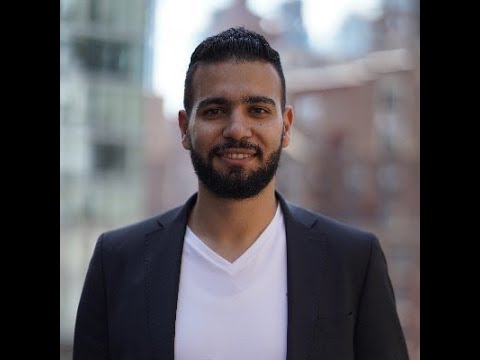
The Plight of Palestinian Christians with Khalil Sayegh
 Watch on YouTube
Description
Raised as a Palestinian Christian with negative stereotypes concerning Jews and Israel, Khalil Sayegh was also discriminated against and threatened by many Muslim neighbors. What is his personal story to attain peace with both Jews and Muslims? What lessons can be drawn from that experience?
Transcript Automatic captions
Source: Automatic captions from YouTube, retrieved November 5, 2026. Automatic captions are machine generated and may misspell names and terms; check the video before quoting.
0:00 All right. Hello everyone. My name is Cliff Smith. I'm the Washington project director of the Middle East Forum. Welcome to our speaker podcast and webinar series. Um this will event will run for about half an hour. It'll be a discussion between myself and my guest and afterwards um we'll take any remaining time to answer questions from um all our guests and you can enter those questions at the bottom of the screen um in the Q&A section. Uh anyhow, today my guest is Halil uh Saiig. Um he is a Palestinian Christian um born in Gaza. We met about two years ago um when he came to the Catholic University of America in Washington DC to discuss uh his life as a Palestinian Christian in Gaza and what um are the issues that Palestinian Christians face. uh like most Palestinians, he was raised with negative stereotypes of Jews and was but was also forced uh was also as a Christian was faced with discrimination, harassment and and other kinds of um trauma from his Muslim neighbors. Um
1:04 this got much worse of course after the 2006 uh takeover of Gaza by um Hamas. Um in 2008 um Khalil um flew fled to the West Bank where he was eventually able to establish residency. Uh after graduating from Bethlehem Bible College with a BA in bi biblical studies um he became a fellow at the Philos. This is an organization that seeks to engage um Christians concerning the Middle East and the challenges there. Um and it is to promote pluralism and accept mutual acceptance in the region. Uh Halo is now um works to find common ground between Jews, Christians and Muslims in that role. Um and he recently moved to Washington DC permanently or at least for the next foreseeable future to continue his work with Philos and to study for his master's degree at in political science at the American University. Welcome Hill.
1:56 Thank you Cliff. Okay, I I'll start off um as we said um and discussing issues with you and we'll take questions from the auding up as a Christian in Gaza and why did you decide to flee to the West Bank? Sure. Thank you for the introduction, Cliff. Um to start with, uh I was born to this uh sort of like complex identity. Sometimes I describe it. I was born as a Palestinian. I I was born as a Greek Orthodox Christian yet I was born also as a refugee. My family uh as they trace back their history to uh 1948 to a city called Meshal in the southern part of Israel today. And um I was born to this identity that um like things around me are shaped by by what happened in 1948 known as the Independence Day of Israel for us Palestinians as we grow up describing it as Nakba, right? this this catastrophe. So So this is what prim this is the primary thing that shaped my
2:59 identity in my childhood. It wasn't so much as my Christianity or being a Christian Palestinian. It was more being a refugee because like being born to a refugee family means you have to attend a specific school. You have to attend an honor school. You have to think of the word in a particular way. And this is this is this is was me born to a refugee family going to honor school. remembering every time that what happened in 1948 was such a catastrophe. Uh actually Mahmud Dish described what happened in 1948 as like we were living in the paradise and all of a sudden like we fall from the paradise and we are waiting for this sort of restoration.
3:38 Right? So this is this is how I grew up thinking of all these things. My father is more of a secular Arab nationalist in the way he see the world. So he always taught me there's no diff between Christian or Muslim. We are all Arabs. We are all Palestinians. This is sort of my upbringing thinking that we are Palestinians. We are ought to fight against this enemy. We are ought to be restored to 1948. And this is how I looked at the world. Yet start starting attending an honor school and being in an over majority Muslim society and over majority Muslim class. Therefore, I was shocked that my Muslim peers are also discriminating against me because I'm Christian. uh people would just make fun of me, make the mark of the cross and spit on it, spit on my face only because I'm Christian. I was shocked because my parents always told me there is no different. We are all Arab. Uh we are we have a common enemy. It's Israel and and we have a common a common cause. So it was it was shocking for me in this regard. Yet I I I managed to to live
4:42 with it. It wasn't like this was sort of uh discrimination against Christian in Gaza. In the contrary, actually the government was much more pro-Christian than they would be pro-Islamist. Yeah. But the Gaza Strip uh since the 50s, I would argue has been a has been a ground for Muslim Brotherhood's ideology. And for years and years they have been successful in indoctrinating the society especially among the law class in Gaza with more of a radical uh understanding of Islam and more of a fanatic understanding and this has reflected in our lives as Christian because our neighbors are people who we are interact with especially in the low class would treat us unfairly but I managed to live with that. Uh but in 2006 after Hamas controlled the Gaza strip things became different because here you have these people who have all these prejudice against Christians who have this very narrow understanding of Islam and and the word uh not only being in the society but they control the government.
5:45 All of a sudden I had to at certain age you have to move from honor school at at the grade nine to to get to 10 you have to go to government school. And at that time all of a sudden my teachers are Hamas members because you know President Abbas asked all the Palestinian Authority teachers not to work anymore. And all of a sudden I'm not only facing harassment from my beers but also from my teachers. And that's was something um new to me and perhaps new to the entire Christian community in Gaza. And this is was the the point in my life where I start thinking no I can't live in this society anymore. I can't live in this city anymore. it's becoming a foreign thing that's um going to the extreme and something that is unattainable when I can't live here anymore. And not to mention, of course, you know, the difficulties that all Palestinians are facing giving the uh separation with the West Bank and the Israeli blockade and the Egyptian blockade that is causing trouble for everyone. And I mean, of course, I understand how Israel see it from their security perspective or
6:49 whatever, but for us, Palestinians, we are all sort of suffering because of this thing. And I sort of looked at the situation. I saw the trajectory of economy of Gaza and everything even as was a 15 years old. But I thought like I I I at that point I started seeing people graduating from college at the age of 22 and not finding jobs and stuff. And I looked and said like there's no way I can do this. I I can't live in this city and I decided to move. And so how did your life change when you were able to go to the West Bank?
7:22 Yeah, that's a good question. I uh people usually think of the Palestinian territories as sort of like there is one experience, one uh one life everywhere within the Palestinian territories. And to a certain extent that's true with regard to their national identity, how they see the world with uh relationship to Israel, all this sort of stuff. But I would argue the Gaza strip since 2006 especially, but even before that has became has not has became have been always much more conservative uh in in terms of its um social order and also much more Islamist. Especially after 2006, the Islamism in Gaza has spread like crazy because the government, the institutions, everything became became Islamist. And thus, this had an an influence on on the Christian in Gaza.
8:11 As a matter of fact, in 2006, we had about 4,000 Christians living in the Gaza Strip among two million Muslims. Um, today we have less than a thousand Christians living in the Gaza Strip. Now, you could gohead. Go ahead. Go You could attribute that to to whole different reasoning, right? There there is a lot of core variables. But one thing that one theme that I always hear Christians speaking about is that it's hard to live under an Islamist regime in the Gaza Strip. We can't do it anymore. We can't feel free anymore. We can't just be insulted all the time and our faith being insulted all the time and and and still live there. And us they they seek refuge outside. Do you this is related to the next question I was going to ask and that is um you know since um um since 1950 the Christian population of the Palestinian territories has went down from roughly 15% um to today it's roughly 2% and as you pointed out in Gaza it's gone down far further. I mean in the last decade it's gone from about 3,000 to about 1,000. I mean you know
9:12 the estimates vary but that's roughly the the situation. So this is obviously this is pronounced in Gaza. It's more pronounced in Gaza than the West Bank, but it's obviously both. What do you see as the driver for this decrease and what does it mean for Palestinian Christians? This is a good question, Cliff, and it's a question that have been raised uh many times and you know sort of the conventional wisdom for that is to to look and to say the conflict is the main source of that. It's Israel, it's the occupation etc. And uh one has to not uh dismiss this claim completely. I think that the occupation and the conflict has uh been one of the main causes of that.
9:53 But this is not specifically or particularly for Christians. This is for all Palestinians. Any land that has conflict, people would want to leave from this land, right? Uh so so it is the case that Palestinian Christians have been the most influenced from this entire conflict and people left due to the conflict. uh but but this is not the only cause. There is other concerns that Christians have and uh there is a study that has been done by the Palestinian center of surveys and uh and and policy studies in Ramallah in 2019 that the Felas project funded and the founding of it was was incredible uh because it sort of pushed against this conventional wisdom. did not deny the existence of the occupation at its influence. Matter of fact, one of the major uh like finding we found is that people blame the occupation which is a regular thing that all Palestinian do. But this the the the the main motives for people leaving one it's economy people are leaving because of economical hardship and two it's their concern of Islam. Uh
10:56 it was really surprising to find that 77% of Palestinian Christians are worried about Hamas's presence in the West Bank and Gaza. 77%. And about 72% are worried about Islamist radicalism who are much more like Salafist ISIS sort of people in the region like Syria and Iraq. They sort of look there and they go like well what if this thing happened here? And more interestingly about 82% and I the numbers are like I might have got it one% wrong or something but in the 80s uh they are concerned about the Palestinian Authority corruption and they don't trust the institutions and they don't trust all of that. Yet all of them still say that uh it is or not all of them, majority of them in the 80s too would say that still the the best solution for the Palestinians is the um sort of sort of state. And it's actually interesting to that we find that Palestinian Christians um like a majority of them would say that uh one
12:00 state solution is the best solution for Isra Palestian conflict unlike their Muslims uh follow Muslims Palestinians they they think differently in that regard and a big minority of of Palestinian Christians which is really sad 49% believe that their Muslims neighbors don't want them in Islam. This is devastated. Yeah. actually that actually relate goes right to another question I was going to ask and that is um so you you would say that the um radical Islam um you more theocratic interpretations you know Muslim Brotherhood solopus whatever you know the form it takes you would say that has been on the increase in the Palestinian territories and among Palestinians in general is that correct sorry again I didn't you think that Islamism radical Islam has been on the increase in recent say the past 10 or 20 years among Palestinians. Is that correct?
12:52 Well, I would I I would say that um I don't know if like perhaps I'll use a different terminology. I'll use uh Islamist or political Islam. Sure. Sure. uh but uh I would say it it has been an increase and I think that the last uh bowling that came out of the uh Palestinian territory especially after the war in in in in May has been concerned for for me personally that over 70% would vote for Hamas. Now you could you could look at this data and say it's a it's such a reactionary thing to the war in Gaza. This is just an emotions. People are angry about uh you know what happened in in between Israel and Gaza. this sort of stuff. Uh but I think it goes deeper than that.
13:33 The Palestinian society is be has became much more religious in the in the last few years as the the data is showing us religion is becoming more and more silient and it's not always a bad thing but in our experience and as as far as the Palestinian Christians concerned as the data show us 77% are worried about Islamist groups. Now you could dismiss that. You could say this is whatever you want to accept it, but that's what the data and the evidence are showing. That is the common concern of of of these people. Now, you could argue that their concern isn't legit legitimal and that Islamist would be good for Christians as some would say, but still Christians are concerned about about Islamists and this is this is a real thing u that they are that they are having. Uh sadly yes this is a trendy thing more than uh more than before and I hope that we'll find a creative way as polician Christians to one combat that but to have the dialogue to to make things better for ourselves.
14:35 Sure. Yeah. It's uh it strikes me as you know Palestinian Christians are are often um sort of between Iraq and a hard place. You know they are um they're Palestinians and um but they are also not accepted by the majority. um uh and they are sort of um you know stuck between some of the radical forces um many of the radical forces in the Palestinian um society but also between Israel. What what do you think what role should they and can Christians play in trying to end the Israel Palestinian Israeli Palestinian conflict?
15:11 Sure. Yeah, this is a good question. I think that the first thing that we I have to really emphasize and perhaps I wasn't clear with that that our faith and our Muslims and Muslims brothers and sisters faith cannot be like distinguished right we are Palestinian we have such a common national identity and I don't think any attempt to like sort of like distinguish us from our the Muslim majority in the Palestinian ter territories would be successful nor would it be helpful for us I mean there are all these negative things that we are experiencing with with some Islamist group and stuff There's a lot of overwhelming uh uh great relationships between Muslims and Christians. And I personally remember days when I was attacked by Islamist and I and I also remember a lot of Muslims who stood up for me, fought for me and and and literally put their lives in stick for myself. So there is this unity and it's still there. However, there are also bad things that are happening. So I think as Palestinian Christian we should uh like keep remain uh firmly in our
16:15 society and in our position stay there and try to be light so we can bring about healing to our society and that we could bridge the the uh this gap between the Israeli society and the Palestinian society. And I think if we can do it uh if we can really reflect on oursel and be uh critical of one the Palestinian society our our policies and politics were in the last um years and if we also can look at the Israeli politics and society and can be critical of them. I think we could be a force for good and we could bring uh majority Muslims and majority Jews in the land to to have better dialogue. However, sadly, I think that Christians being a minority and um have been feeling more and more especially among the elites, I would say, and the clergy stuff that they have been feeling more and more pushed toward uh a defense position where you are always being betrayed as oh you have to prove your Palestinianhood because you are not mus Muslim and because you know
17:18 the the last u you know two decades have been more led by the Islamist sort of national movement not the secular not fat anymore but Hamas and Islam jihad. So Christian leaders feel more they have to be defensive and because they feel they have to be defensive they are trying to prove more their Palestinian right they're trying to to prove more their nationalism and stuff and this is not a helpful position because you just find yourself u following the stream find yourself saying whatever the radicals want you to say in slightly different different form in a more Christian you know uh taste to it but it's still nothing new like you are not really addressing the problems that your society have and I would argue one of the main problems that our society have is the misunderstanding of the other and the protaging the Jews as all bad and there is nothing good can come out of them like always blaming Israel always blaming the west and again there are legit things like you could blame Israel
18:21 for for stuff I mean I'm a big critic of the occupation I think the occupation should end to state solution should be established but there are responsibilities that that we hold especially our leadership and as Christian if I really want to be force for good I have to address these these these things so I can bring people together and of course I'm not claiming that Christians have special vocation on that I think Muslim uh citizens of Palestine have to do this too but Christians have um have this unique position that they should use I believe. Sure. um what is the Palestinian Christians relationship with uh you know non-Palestinian Arab Christians um you know in Egypt, in Syria, in Lebanon or Christians in Israel for that matter? Um is they do they have uh is there much of a relationship? Does it vary from community? Can you speak to that Sure. Yeah. Well well sadly we don't have that strong relationship with Christians in Lebanon or Christian in Egypt as as far as I'm concerned. I think there are a few families in Gaza who trace their themselves back to Egypt
19:26 and things. My family is one of them. They trace themselves u hundreds of years ago to Egypt. So there's this sort of you know affinity toward the Egyptian Coptic Christianity in the northern part of Israel. I know some Christians there feel more connected to the Lebanese. But the majority of Palestinians sadly are disconnected from the Christians in the Arab world. They kind of look at them and they look at their experience and they compare it to themselves. And many times I hear them saying well we are in much better place than they are. Uh but on in general because of you know the separation before because of the Israian conflict and of course you know Israel's control over the West Bank uh there is not as much relationship with the broader Arab world uh because of you know obvious reasons of the lack of connections between the two lands. I would think I would say we have positive relationships with Christians in Jordan and a lot of them are Palestinian descent themselves who who were who flee in the 1948 in Meccba. Um the Christians in Israel we have great relationships.
20:30 Uh matter of fact my cousins are Christians who live in Israel and and and majority of Christians in Israel as far as I know at least uh consider themselves Palestinian Christians themselves. they do not consider themselves Israelis. There is a movement in the north that is growing and considering themselves an Israeli uh Christians but majority of those who speak Arabic at least consider themselves Palestinian Christian and thus we have strong family relationship and blood relationship with those in in Let me ask you one more question on this topic then we'll move on to audience questions. Um there you've spoken to me at times about um Muslim converts to Christianity and told me some of their stories. Um I I don't want to get into any specific story which I know can be very sensitive for a whole lot of reasons, but um what do you think um how do you think this plays out? I mean how do they how are they usually treated um both by Christians by and by Muslims in the region?
21:33 Yeah. You're talking about converts from Islam, right? Yes. Correct. Well, well, it's sad. It's a it's a common thread in the uh Arab Islamic world in general that u if you if you think you are persecuted or discriminated against as Christian descent yourself like myself. Uh I always say look at at convert our our brothers and sisters who converted and you see what persecution really because these are people who their life would be threatened to death sometimes by their family members and extended family and stuff like that. I would say in the West Bank uh I don't think there is any legal actions against them that they wouldn't go to jail for example or investigated with something like that in Gaza we had incidents like that where people being church by Hamas forced to deny their faces stuff like that we never had cases like that however with regard to to the law they are discriminated against because legally they can't convert and once you convert you find yourself stuck you one unable
22:36 uh to get married because you know you can't really get married at church because you're a Christian but on the database of the government you're a Muslim uh and and then two the Christians wouldn't really accept you because they are suspicious of you all the time that oh you are a Muslim you converted why did you convert maybe you work with with some terrorist or whatever and it's it's really sad uh situation so I would say uh their situation similar to the converts in the entire Arab war is really bad and and and something that has to be thought of um carefully and creatively because we know that we wouldn't be all of a sudden able to to change these countries to free liberal democracies. They are uh the first or second amendment or most of these countries are Sharia and Sharia is very clear that this is something completely uh forbidden. So we have to be thoughtful of how do we address this human rights issue in these countries.
23:35 on on that issue. Um um do you this was a question from Richard Helman um from our guest and um do you believe that the US government um or other international community has um what what do you think can they play a helpful role I guess I should say in um dealing with you know the rights violation of the rights of Palestinian Christians in the West Bank and um and so on and so forth. Yeah, I think absolutely. Uh as I I have to be clear with regard to Christian uh uh Palestinian Christians in the West Bank special, there is no institutional discrimination against us from the Palestinian Authority. Uh I think it's more of a societal issue. the the teaching of particular understanding of Islam that encouraged discrimination toward Christians is becoming more and more prevalent like more and more salient sorry in in the West Bank similar to what happened in Gaza and that what is ought to be you know confronted and I I know as a matter of fact from my conversation with
24:38 leadership in the Palestinian authority that they're trying to do that they don't want this to be more spread also because it's threat for themsel too uh as the government of of the West Bank. However, it's a society issue. But that being said, there are there are some laws that has to be, you know, um modified to be more exclusive for everyone and not only for for Muslims in in that in that country and there are things that can be taken and I think the the the United State being one of the major donors for them could pull strings in that regard. could have them do something. And I always say the Palestinian Authority is not a state yet. And uh it's about to be at certain point. We don't know when. I think there's this is something to be decided in negotiation with Israel. But I think that the West, if they really take more seriously issues of human rights, especially freedom of religion, they could always put conditions for the Palestinian authority be before they give them anything, before they are recognized as a state. I think the
25:40 Palestinian Christian issue should be major issue. Especially people who convert and even people who are atheists and don't want to believe or anything they should have the right to to just be whatever they want to be believe whatever they want to uh believe. So I think pressure is always good uh once you know they start negotiating or something right now I don't think anything could be done. Yeah. No I understand. Um um do you believe that um this is from an anonymous attendee and do you believe it is poverty or extremism that poses the greatest threat to younger um Palestinians in Gaza?
26:16 I I I don't see like why is it a question of either or? I mean could be both. I mean poverty is bad uh in the Gaza Strip. I think that the economy like unemployment in Gaza is above 77%. That's crazy. That's not acceptable. That's not something that this is not a society anyone want to live in. So in a in that regard, yes, poverty is a problem. Unemployment is a problem. No one want to not have work but extremism is is is is a problem for for them too. And I will give you just one example in Gaza being under the control of uh of Hamas. If you want to find uh a job in the government, which is by the way the biggest, you know, employer in the in the Palestinian territories, you go to the government office, you try to find a job, and you go and the first question they ask you in Gaza is which mosque do you pray in, right? They don't want to ask you are a Christian. I mean, most likely they know, but they want to know which mo do you pray on? And to be honest, even if
27:18 you are a secular Muslim, it means like you're out. You you wouldn't you wouldn't find the job, right? So there is that, right? There is the fact that you're Christian single you out from even government jobs you can't find job [snorts] single you out in every aspect of the society in Gaza now now the sad part is is after years of living under this regime in Gaza people who are Christians there that don't understand any better don't see the word outside don't understand what is freedom they sort of like come to this mentality where they're thinking oh that's okay because they don't they almost forgot But what does it what it used to look like before Hamas controlled Gaza?
27:58 Before they didn't travel and they are not allowed to travel due to the siege to outside and see what the world look like and what is this suppressive regime look like that we are living in in Gaza. That's something important to understand because many times you talk to people in the Gaza strip and they don't get it. They don't want to say oh no we're not facing problem. There's two reasons to that. One it could be that these people really don't know better. too, they're scared and there are incidents and if you if you do your research where leaders of Christian community in Gaza said stuff and then had to to blow it up had to blow it and they had to apologize because all of a sudden you have uh this very powerful regime coming to you and saying no you can't say this and you you can't help it you just want to survive right and I don't blame them for that.
28:46 One last question. We could talk all day. There's so much to talk about, but um um do you have an opinion on um the closing of the PA's office in DC? Do you believe this had any effect on Palestinian Israeli peace talks? This is from an anonymous attendee. I I don't think it was any help to anyone to be honest. I think that um it's not that I saw that their office here was doing some incredible job. I think it was waste [laughter and clears throat] of money from a Palestinian perspective. You're wasting probably millions of dollars to have these people here living a fancy life and then nothing has been been been done. But to keep the channel open is more more helpful than than to close it.
29:31 Uh however, it hasn't had negative or positive view. I mean, I was concerned at that time when America cut all the relationships with with the Palestinian Authority that the Palestinian Authority would move more toward Russia and Iran and that they would become more and more extremist, especially that they had historical ties to these countries. You know, President Abbas specifically had a unique relationship with the Soviet Union back in the days and uh and and the Palestinian uh uh with the PLO, Palestinian Liberation Organization. some of the members of the executive directors have a great relationship with Iran. So I was concerned about that.
30:06 However, President Abbas choose to wait for the next administration. He said, "Oh, he he most likely thought, oh, Biden will come or someone from the Democrats will come, things will reopen and we'll have this relationship." And I think that was good because we didn't move to to more like you know suppressive sort of regimes outside because I think if the US uh cut relationships with the Palestinian Authority or any Arab country for that say I think the danger would be always that they would move more toward Russia and and Iran and and once you do this you no longer have leverage over them right and once you don't have leverage over them how would you hold them accountable for human rights how would you hold them accountable for peace how would you hold them accountable for all sort of the good things that we want to see in in the Middle East.
30:53 Thank you very much. I really appreciate your perspective. It's always good to hear um you know different people's perspective on these complicated and sensitive issues. Um anyhow, we hope you will join us next time for our our new series. Um and uh just thank you very much for joining us all and we'll talk to you later. Thank you. Bye.