
Webinar or Talk
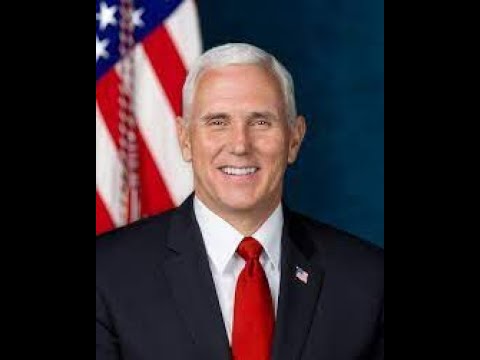
A Conversation with Mike Pence
 Watch on YouTube
Description
Former Vice President Mike Pence will discuss the differences in Middle East policy between the Trump and Biden administrations. Topics will include the Palestinian-Israeli conflict, Turkey, Saudi Arabia, Iran, and Afghanistan. He will be in discussion with Daniel Pipes.
Transcript Automatic captions
Source: Automatic captions from YouTube, retrieved November 6, 2026. Automatic captions are machine generated and may misspell names and terms; check the video before quoting.
0:00 Good afternoon and welcome to the Middle East Forums webinar and podcast series. I am Daniel Pipes, president of the organization and I will be in conversation with former Vice President Mike Pence. The format will be a 30inut conversation between him and me. We will not be taking questions from the audience today. Please note that this event is not for media consumption but is intended for the benefit of the Middle East forums audience. I therefore request members of the media to log off.
0:35 Mike Pence is a lawyer, broadcaster, and politician who served as the 48th vice president of the United States in 2017 to 21. He previously had been the governor of Indiana in 2013 to 17 and a member of the US House of Representatives in Mr. Pence was born and raised in Columbus, Indiana. He graduated from Hanover College and he earned a law degree from Indiana University. So, Mr. Pence, may we begin? Afghanistan is on the top of many people's minds and so I thought I would ask you to begin with long term how much damage do you see the tobacco in Afghanistan doing to the United States?
1:23 Well, first let me thank you Daniel. Thank you for the work of the Middle East forum. Um uh you and I have known each other a long time. I've long appreciated your voice and your work and it's an honor to be with you today. Thanks so much. Um, let let me say I think that the disastrous withdrawal from Afghanistan was a foreign policy humiliation unlike anything our nation has endured since the Iran hostage. And it grieves my heart uh when I think of the loss of 13 US service members and the evil that's rising across Afghanistan today that I know that had our administration been reelected, it never had to happen.
2:11 The deal that we struck with the Taliban in February of 2020 was predicated on on three conditions. Number one, there would be no harm to American service members in Afghanistan. as evidence that the Taliban uh knew we meant business. There wasn't a single American casualty for 18 months in Afghanistan February 20th. There also was an an expectation that they worked with the Afghan national government and an expectation that uh that they commit to not ever becoming a safe harbor for radical Islamic terrorist organizations like al-Qaeda or ISK.
2:50 Um, I was in the Oval Office, Daniel, when President Trump spoke to Muller in Um, the president was addressing him on the speaker phone and he told him, he told him, "This is a good deal. We all want to end the violence, but he made it very clear. Uh, he said, "But uh, if you break this deal, we're going to hit you harder than we've ever hit you before." And I could tell from where I was standing the tone in the Taliban leader's voice and said he knew we meant business supports. Uh this was just a matter of weeks after the president had given the order to take down Kasam Salmani. It was a matter of a few months after our armed forces had taken down uh the last inch of the ISIS caliphate in Syria and uh and eliminated Abu Bakr al-Bagghdadi without one American casualty. And so I I believe in my heart uh that uh that things would have been different. There's a saying uh that I I
3:53 know you aspire to the principle that weakness arouses evil. Uh that peace comes through strength. Uh and I believe that the the the uh the the signals of weakness uh from this administration, not just in Afghanistan, Daniel, but when we saw thousands of rockets raining down from Gaza on Israel and uh for days and days, the Biden administration remained silent about that. We see this administration go back to the table uh and reopen negotiations over the Iran nuclear deal. I think all of those send a message uh of of weakness uh that emboldens uh uh our enemies in uh and across uh the region and the long-term impact of it uh I think uh I I think is going to be very significant and the only answer to that is going to be uh eternal vigilance. Uh we have to demand that this administration uh uh and our military remain vigilant against
4:57 any rising threats. We absolutely have to demand that every American and every American ally is given safe passage out of Afghanistan. And I must tell you, I just think it's unconscionable that we withdrew from uh from Bram Air Force Base and withdrew most of our forces uh and and when the last American soldier uh left uh Kabell airport, we actually left Americans and American allies behind. It just just unthinkable. Um uh it's not the American way and I believe u the impact on our our nation's reputation but also potential rising threat in Afghanistan uh will be very significant.
5:40 Gotcha. You mentioned three instances Afghanistan, Iran and Arab-Israeli of American weaknesses. Would you hazard a an opinion as to why there's this consistent weakness on the part of the Biden administration? I think it I think I think it's very reflective of a philosophy that uh President Biden has um embraced throughout his public career. This this was the administration that remember the uh precipitous and reckless withdrawal of US forces from Iraq that created the very conditions where ISIS was virtually conjured up out of the desert, overran uh vast amounts not only of Syria but of Iraq and it took forces going back in.
6:26 and then our administration letting uh our military go do what needed to be done, give them the rules of engagement and support to go and take down the ISIS caliphate. Um and u but but I also think the support u uh for the Iran nuclear deal of the last administration. I mean, I I have to tell you there there were many elements of progress, and I know you wrote about them, spoke about them often through the Middle East forum, Daniel, but uh but in so many ways, President Trump and our administration changed the dynamics uh across the wider Arab world by standing first with Israel, by welcoming uh Arab allies to join with us uh to isolate Iran. and we and we isolated Iran as never before. Uh and now this administration is going back uh to what wasn't working. They're going back to the very policies that had when we came into office in 2017, the leading state sponsor of terrorism,
7:29 Iran, was sewing violence all across the region. Uh and that was why President Trump got on a plane, went to Riad uh and and called together leaders of Arab nations. Um and uh and in in concert with Israel, um we worked to create new alliances ultimately that came to fruition a year ago in the Abraham You mentioned a philosophy. Could I press you on what that philosophy is of the Biden administration and by extension the Obama administration?
8:02 Well, I I think that the fundamental difference is and and of course this goes back for Democrat administrations u at least to Clinton and perhaps Carter. I'll have to pull one of your books off the shelf just to refresh my memory. It's this notion that America's job in the Middle East is to be an honest broker. And my view is and I think the view of the majority of Americans is our America stands with Israel. We Israel is, as I like to say, our most cherished ally. Uh, and it's been that uncertain message that I think has has created um the failed policies of the past. We we were able to see a year ago, this past week, two Arab nations normalize relations with Israel. I think for the first time in in in three decades. and and that was because we began with an uh stand with Israel, moving the American embassy to Jerusalem,
9:05 recognizing the Golan Heights, um uh standing shouldertosh shoulder uh for Israel's security and prosperity, but also extending a hand uh to Arab nations around around the region who who would join us not only in in achieving peace in the region, but also in isolating um isolating Iran as it sowed violence uh across the region. But I I do think it comes from uh I do think it comes from a long history of liberal democrat policies that have failed in one administration after another. And uh under President Trump and our administration, we changed the dynamics in the region. And um uh and I and uh I tell you that um that that uh I think I think those of us that cherish Israel, those of us that long for peace in the region and end to the threat uh of terrorist violence from places like Iran and elsewhere um should be very concerned now direction of this
10:09 Speaking of being concerned, what about the JCPOA, the joint uh blanking on it? the the the Iran deal. Uh do you think it is possible to end the Iranian nuclear threat through Any chance at all? I I must tell you that I thought one of the best moves our administration made is when um we withdrew the United States from the JCPOA. um a deeply flawed agreement that rightly understood it didn't prevent Iran from obtaining a nuclear weapon. It simply delayed for a decade their ability to pursue a nuclear weapon. And as as uh the president made clear, our administration made clear, we will never allow the United States must never allow Iran to obtain a usable nuclear weapon because we know uh through their repeated and expressed aspirations
11:12 uh the existential threat that that would mean uh to the Jewish state of Israel. And um uh whether we can negotiate that I I'm I think not. I think what the path that we were on was isolating Iran economically, isolating Iran diplomatically uh in the hopes that the rising uh in Iran will will ultimately bring about change in their country. And if studied that deeply, you could could explain much better than I ever could.
11:50 But I remember when I was in the Congress, remember the green revolution that happens during the Obama and again in in a in a a policy we see happening again in another Democrat administration present day under the Obama Biden administration. There was not a public statement for days while people took to the streets for democratic reforms. Particularly many young people took to the streets uh in Tyrron for democratic reforms. And frankly, I I remember I authored a resolution with Howard Burman, the Democrat member of Congress. The late John McCain and Joe Lieberman uh authored the resolution. we came out, Congress supported uh the green revolution uh their aspiration for democracy and reform in Iran. And it was only then that President Obama spoke out. So I I I uh I really believe that the pathway forward should be isolation economically, diplomatically, bringing pressure to bear as we were till the
12:54 last day of our administration and not appeasement, not capitulation. That to me is the pathway toward uh Iran ultimately returning to its malign activities and ultimately being in a position where they can obtain the kinds of weapons that uh that threat threaten Israel and and ultimately threaten the region and the world. Thank you. You mentioned a couple times the Abraham Accords and uh it's now a year since they took place. Uh one year later, how do you assess them? What have they achieved and what is their future?
13:30 Well, for me it was it was one of the most unheralded diplomatic breakthroughs in the last 25 years. Now, of course, it we're all on the south lawn of the White House in the middle of a of a presidential campaign season, but but to be there um with the prime minister of Israel, the president of the United States, and the leaders of two Arab countries as they normalize um and we've seen other nations follow since that day. Um was truly historic. And I also think it it affirmed the approach our administration took, Daniel, which was a a position of of peace through strength. We made it clear that America stands with Israel. And and in in and while we did that, moving the embassy to Jerusalem, while we did that uh recognizing the Golan Heights and other measures, um there were those who said that would make peace less possible. But from from the president uh
14:34 uh to uh throughout our team, there was a deep conviction that the opposite was true. That u in fact uh I heard the president more often than not talk about the possibility of a of a of a peace agreement in the Middle East being more possible if you take what's not negotiable off the table. meaning that that Jerusalem would be the capital uh of the Jewish state of Israel and that uh the man who wrote the art of the deal said if you want to do a deal first you take off the table what's not negotiable uh and then you can all start to talk about what is negotiable and um and I I was must tell you with with a great great uh nod to the extraordinary efforts of Jared Kushner uh special adviser to the president with our ambassador David Freriedman, our diplomatic team went into the region, engaged Arab countries uh and uh and brought us to that moment. And I I think
15:39 when uh when the history of our administration is written, as I tell you, I'm I'm in the process of writing one myself. I think the Abraham Accords will, I pray, loom larger and larger and larger as time goes on. You know, sometimes when you drive away from a mountain range, you look out your rearview mirror, the mountains appear to be bigger the farther away you get. I have a feeling the Abraham Accords will be that as well. that we'll look back, I pray, and see it as a time when when we began to see uh a general sea change across the Arab world, recognizing Israel's right to exist, normalizing relationships, strengthening economic ties, and um but it but it's going to take American leadership uh and a willingness to continue to build on the Abraham Accords. And uh uh that a year on is yet to be seen from this administration. We saw it as a beginning, not an end. Uh but again the signals that President Biden, the Biden
16:41 administration uh are sending in re-entering the Iran nuclear deal, the disastrous withdrawal from Afghanistan, a silence for so long while rockets rain down from Gaza uh on Israel. Um all bowed very ill toward for us being able to build on the progress that we made a year ago. Secretary Blinken, Secretary of State Blink did uh celebrate the Abraham Accords a few days ago. So that has not been repudiated. However, the approach of your administration to the Palestinian Israeli conflict has been Uh you focused on the Arab states in Israel. You focused, as you have mentioned a couple times, on standing by Israel. It is an honest broker. It is instead focusing, as traditionally has been the case for decades, on the Palestinians, satisfying the Palestinians. How well in your mind is that going?
17:42 Well, and as I said before on the Abraham course, we they have not I appreciate the acknowledgement, but they're just a beginning. We hope they will build on the progress that we made a year ago. And I I think you put it very well. our administration. It's important to remember I was in the cabinet room um when the president welcomed uh President Abbas uh to the West Wing and made it very clear to him that we were interested in peace in the region uh but that they needed to come to the table. Uh they needed to to engage in good faith with Israeli leaders. uh and when they failed to do that over a period of a year or so, the president made the decision that we would end uh US financial assistance.
18:34 Now again, this administration's going back on the path of focusing on uh on on in so many areas on a policy of appeasement, but now trying to appease and and please the forces within the Palestinian Authority, we think will will likely just lead us to the same place as it did before. I I will tell you that um that I I I continue to believe that that everything we proved in the last four years in that region was a clear and unambiguous signal uh of American support for Israel.
19:13 uh is is the pathway toward progress and uh and making that a center of our policy in the region and but extending a hand to those who would work in good faith whether it be Arab states or even the Palestinian Authority ought to be what this administration is doing but again they're going back to the same models that failed for generations. Speaking of the Arab states, President President Trump's first trip abroad was memorably to Saudi Arabia and there's been a intense focus in your administration on Saudi Arabia. Uh due to the unfortunate events, tragic events in Istanbul a few years ago, there are many Americans who want to ostracize Muhammad Ben Salman and downgrade US ties to Saudi Arabia. What is your view on that?
20:08 I think it's important that those who were responsible for that barbaric murder are held to account and the United States never speaks um uh in any other manner um about u I I think the the horror that the American people felt in the in the wake of that. That that being said, I think much of the progress that we made uh over the over the four years of our administration was because um from from President Trump on down, we we sought to um engage the critical nations in the world on isolating Iran and and and the beginning with the terrorism conference in Saudi Arabia, uh the relation bill uh the the ability um to Arabia and other I think it's vital for us to be able to make real progress
21:11 being the leading state sponsor of terror. So, I don't I don't think we ever I don't think we ever should uh speak in any manner other than uh with with the deepest uh uh disgust uh about that barbaric murder of the journalist. But but that being said, I think that when when you think of the long train of terror at the hands of uh of the Iranian regime, uh we need to work with nations uh and the leadership of nations across the region in every way to isolate Iran.
21:47 Good point. In Turkey, uh there was a lot of uh diplomacy between Washington and Ankura during your four years. In retrospect, how do you assess your administration's stance visa v Turkish adventurism in Syria and Libya? Was it tough enough? Well, let me just say in our President Trump made it clear that we we didn't want American forces in harm's way any longer than they had to be. And the decision the president made to withdraw American troops from the Syrian and Turkish border uh was born of that impulse. But when when Turkey sent tanks across the border and started taking down uh Syrian defense forces that have been our allies in the fight against ISIS. Uh the president tapped me and the secretary of state to fly to Ankura. Uh we did. Uh and after hours of negotiations, we were able to secure a 5-day ceasefire
22:52 uh coordinated with our allies in Syria, the Syrian defense forces that were able to evacuate their personnel uh from the border region. Uh and ultimately the president made the decision to have a uh a limited amount of forces in uh in northern Syria to secure our interest there and look after the uh the interest of our allies um and and the Kurds that had fought uh alongside us. And I believe that was the correct decision. Um I I I will I will say that u the status quo that I perceive is underway for this administration uh I think is proper but with the disaster in Afghanistan uh the with Iran um I I I really believe that uh we we have to make sure uh that uh that not only that ISIS K doesn't use Afghanistan as a safe harbor or al-Qaeda uh but that uh that ISIS doesn't find a
23:57 way back uh because it would destabilize uh obviously it would threaten US interests in the region but I believe it would also create uh the kind of instability uh in the region that could justify even more adventurism uh by Turkey that seemed very anxious to uh to move forward militarily but the ceasefire that we had secured was able uh able to bring that bring that to an and get our allies out of harm's way. Understood. Uh final two questions are a little bit more uh domestic uh about American Islamism and about immigration. Your administration came to office very clearly opposing radical Islamic groups. Yet executive branch's funding to domestic Islamist organizations tripled from the Obama era. Any thoughts on how this happened?
24:50 Well, that's the first I heard of it. I'd be interested to know what uh organizations were supported. Clearly, we embrace uh all of our religious communities in this country and um and support and celebrate those religious traditions. But I think one of the things our administration did clearly and you've been one of the you've been one of the great voices is calling out radical Islamic terrorism. Thank you. uh where it arises and we just marked the 20th anniversary of 911 and I I actually heard that the details of 911 including uh the perpetrators of 911 is actually only being taught in 14 states, public schools, high schools around the country. You know that that has to change. Daniel, um I was in Washington DC on September the 11th. I I uh I just did my first podcast where I I spoke to to children, one of which was unborn at the time. Uh mother was expecting and
25:56 another one that was a very little girl. Both of whom lost their fathers, one in combat, one in the North Tower. Talked with them. Their lives had obviously been utterly changed forever by that day, as had been thousands. the lives of every American impacted. We have to teach that. We have to make sure that our children, our grandchildren understand that while we we cherish the freedom of religion of of every faith in this country, uh that's enshrined in our bill of rights and our constitution that uh that radical Islamic terrorism represent the kind of threat that brought that brought that violence uh and that September 11th uh has inspired uh violence on our shores since so we think of the terrible shooting in Florida uh and elsewhere. But um but it will the only thing that will protect us from as it has the last 20 years from another major terrorist event on our
27:00 soil is going to be vigilance and an understanding of this generation and next about real the real threat of radical Islam and terrorism. Indeed. Indeed. Uh it was dismaying to me to see how this past 911 was transformed from an attack by the Islamists of the United States to an attack by the United States on Islam. Very distressing. Final question. We're almost out of time. Uh how do you assess the Biden administration's efforts to address the threat of terrorism coming across the Mexican border?
27:37 Well, what is happening on our southern border is a disgrace and it is the direct result of decisions made by President Biden literally on his first day in office. I mean that our administration came into office, President Donald Trump was elected on a promise to secure our border and end illegal immigration. We built hundreds of miles of a border wall. We funded our border security. But we also negotiated an agreement that's come to be known colloquially as remain in Mexico that that essentially ended asylum abuse on our southern border. rightly understood. Uh the crisis of illegal immigration is driven certainly by people that that sneak across the border by dangerous people that bring drugs and contraband across the border. But a large majority of the people coming across our border and I would say the vast majority of those that you see
28:40 under the under the bridge in Texas today and elsewhere are coming across the border prior to our change applying for asylum. And the way it would work, Daniel, is if you applied for asylum that uh you would be essentially uh stopped, processed, you'd be given a court date maybe a year to a year and a half later. And at that point, you'd be released into the country. Um and and less than one or two% of the people who applied for asylum ever came to their asylum hearing. What our administration achieved was an agreement with Mexico that uh that required Mexico to accept all of the asylum applicants back into Mexico to remain in Mexico while we were processing their asylum when this was put into effect and and it was achieved because President Trump uh told the Mexican authorities that if they didn't allow us to do that on the
29:43 entire border, we were going to do a 10% tariff on all all the goods coming across the border. Every lock, stock, and barrel was going to be tariff. He asked me and the Secretary of State to negotiate with the Mexican delegation. In two short days, we achieved an agreement that once it went into effect, we reduced illegal immigration on our southern border and the crisis at our southern border by 90%. And on day one, President Biden rescended the remain in Mexico order as well as other policies that had also been working. And to no no one's surprise who understands this um the cartels immediately went about what they do and that it's essentially uh gathering people up in the northern triangle countries in Central America and from elsewhere um and having them pay money to bring them up on a long and dangerous journey to the border to apply for asylum and disappear into the country. We we know why it is happening right now. Uh, I saw today that uh that
30:49 uh that several dozen Republican governors are now calling on um President Biden to take a meeting to talk about ending the crisis. This is the worst crisis at our southern border in 20 years. And at a time when our nation is still wrestling uh with uh what remains of the COVID pandemic, we we we have to take into account that people are coming into the country, are not being tested, are being sent to communities around the country, adding to the challenges uh that we face. And uh I I just think uh again it's uh it represents the kind of failed leadership uh that that we've witnessed in uh that uh frankly uh frankly we've witnessed on the southern border and in a whole range of areas uh of this administration. And um uh and it's the reason why we're going to be leaning into this effort. We're going to be calling it out. Uh, and I'm going to continue to travel all across the country supporting Republicans that are standing for office in state house races
31:52 and and for the House and the Senate across America. My my my hope and aspiration is that that we we win the Congress back in 22 and we win America back in 24. Very good. Thank you so much, Vice President Pence. We've come to the end of our webinar. I most appreciate you joining me. I would also like to thank my colleagues Cliff Smith for arranging this interview and Stacy Roman for her behind thescenes work. Should you wish to learn more about the Middle East forum, please visit us at amyforum.org to see our writings and broadcasts. You can also sign up for our mailings. So with that, I thank you again, Vice President. Wish you well in your work and your career and uh appreciate your Thank you, Daniel. Good to be with you.